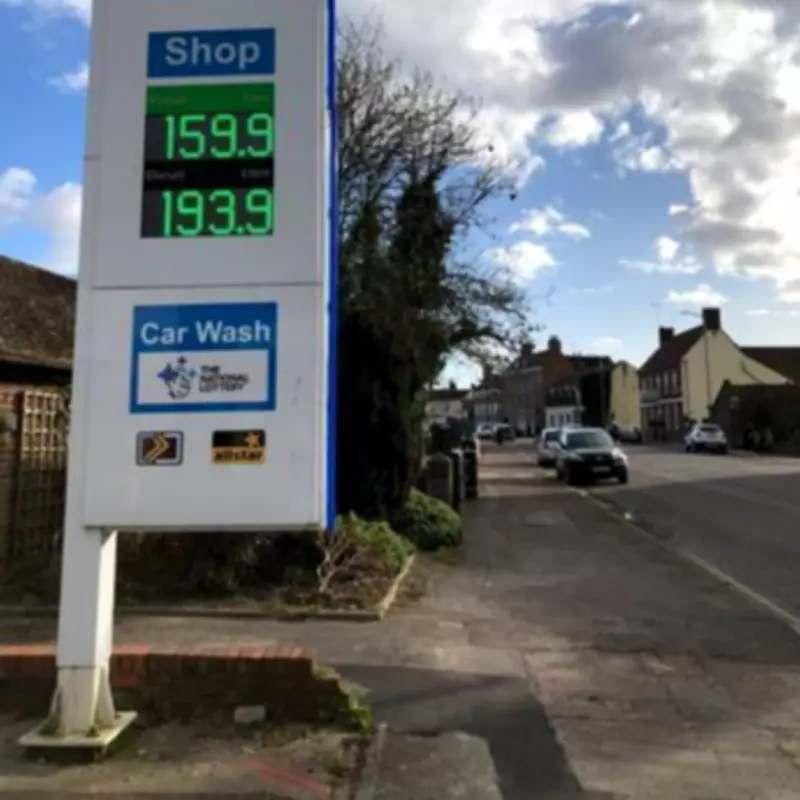
Petrol prices at UK forecourts are edging downwards despite the ongoing Iran conflict, but experts are urging motorists not to celebrate. The average price of petrol currently stands at 156.82p per litre, down from a peak of 158.17p on April 13. However, this remains significantly higher than the 131.71p per litre seen before the war broke out.
Conflict and Market Uncertainty
Tensions between the US and Iran continue to simmer, with the Strait of Hormuz yet to resume normal operations. US President Donald Trump announced today that the US is putting its planned mission to escort stranded vessels through the Strait of Hormuz on hold, stating the pause would last 'for a short period of time' to allow for a potential peace deal with Iran.
Brent Crude oil remained above $100 a barrel on Wednesday morning, considerably higher than the $70 price tag seen prior to the conflict. Experts cautioned motorists against expecting any significant further drop in fuel costs.

Expert Warnings
Samuel Mather-Holgate, MD and IFA at Swindon-based Mather and Murray Financial, said he anticipated pump prices would stay elevated. He warned: 'Do not be fooled by a slight reprieve in fuel costs. With Captain Calamity in the White House, anything is possible and despite Marco Rubio declaring all the US goals have been achieved, Iran holds all of Trump's infamous cards. This conflict is nowhere near over, and the possibility of escalation is not just a possibility but a probability. £2 per litre is not off the table and motorists should buckle up for a bumpy ride.'
Tony Redondo, founder at Newquay-based Cosmos Currency Exchange, said a return to pre-war levels was unlikely. He explained: 'Petrol prices dipping while oil stays above $100 may seem contradictory, but it's a classic case of market lag. Pump prices reflect wholesale refined fuel costs and retailer margins rather than crude directly, the so-called 'rocket and feather' effect, where prices spike instantly on bad news but fall slowly as conditions stabilise.'
Market Dynamics
Redondo added: 'The current dip to 156.82p suggests the risk premium is easing as traders price in a potential pause in the Strait of Hormuz blockade. However, a return to pre-war levels near 140p remains unlikely while Brent stays above $100, with most analysts placing the floor around 150p. Should the conflict escalate or the blockade tighten, prices could surge toward 170p.'
The Strait carries roughly 20% of global oil, so even with supply physically flowing, traders price in insurance against a sudden shutdown. Recent headlines about a pause offer only temporary relief. The market remains on a knife-edge until a permanent diplomatic resolution is reached.