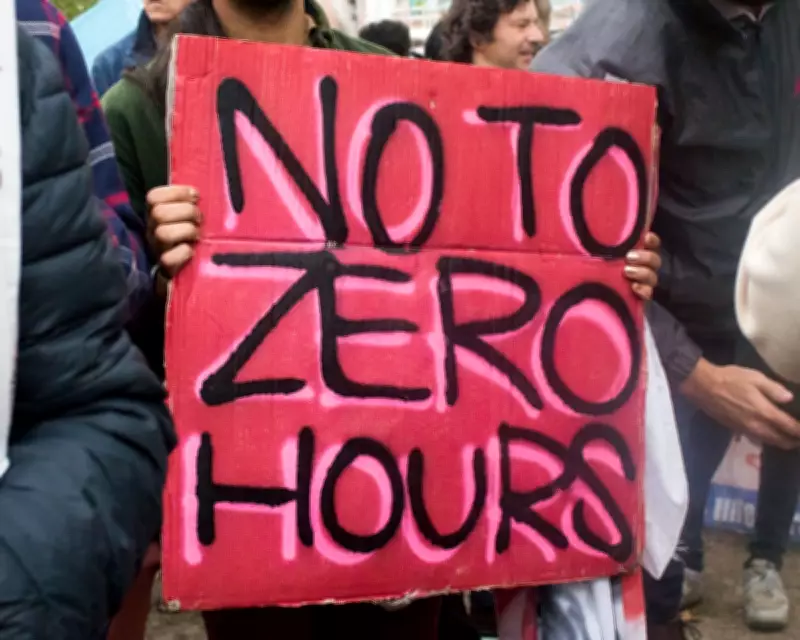
Unions and employers have criticised ministers after the government detailed plans to ban zero-hours contracts, proposing a guaranteed minimum working week of between eight and 20 hours based on regular working hours.
Government Proposals
Under rules expected to come into force next year, employers must offer staff on zero-hours or short-hours contracts—including agency workers—a minimum number of hours each week based on their regular working pattern. In a consultation launched on Tuesday, the government expressed a preference for guaranteeing between eight and 20 hours a week if current contracts are at or below that level.
Businesses would determine a worker's regular hours over a 12-week reference period under the preferred option. Workers could choose to remain on zero-hours contracts but would be eligible for compensation if shifts are changed at short notice.

Context and Criticism
Over one million people in the UK work on zero-hours contracts, spanning sectors from hospitality to healthcare. The changes are part of Labour's Employment Rights Act, enacted late last year, which faced significant opposition from Conservatives and business groups.
Business Secretary Peter Kyle said: "It's not right that people can work regular hours but still have no certainty about their pay from week to week. These vital changes will mean more certainty for millions and save the lowest paid workers hundreds of pounds."
Union Disappointment
Unions expressed disappointment that the government backed a guarantee of no more than 20 hours a week, which could be less than half the regular hours of some currently on zero-hours contracts. Joanne Thomas, general secretary of Usdaw, said: "It is deeply disappointing that the government is intending not to give all workers the right to a guaranteed hours contract, despite that being the very clear manifesto commitment." She noted that young people, women, disabled workers, and minority communities are disproportionately affected.
The Trades Union Congress warned against "bad faith scaremongering" that could leave many workers facing ongoing job insecurity. General Secretary Paul Nowak said: "Workers should know how much they'll be earning from week to week instead of being at the whim of a bad employer who could cut shifts last minute."
Employer Concerns
Employer groups warned that over-regulation could put jobs at risk, particularly for young people facing an employment squeeze. They called for a longer reference period and the right to retain zero-hours contracts in some circumstances. Kate Nicholls, chair of UKHospitality, said retaining access to zero-hours contracts was "crucial" and proposed a 26-week reference period to account for seasonal work patterns. She cautioned: "There is a danger that over-regulating flexible work actually increases work instability rather than decrease it."
Helen Dickinson, chief executive of the British Retail Consortium, said: "With over a million young people out of work or education, government cannot afford to get this wrong. Crack down on bad employers by all means, but not by adding costs and rules that deter good employers from hiring." The BRC argued that a 12-week reference period could force retailers to reduce part-time hires during busy periods like Christmas, and that classifying contracts up to 20 hours as low-hours would be disproportionate.