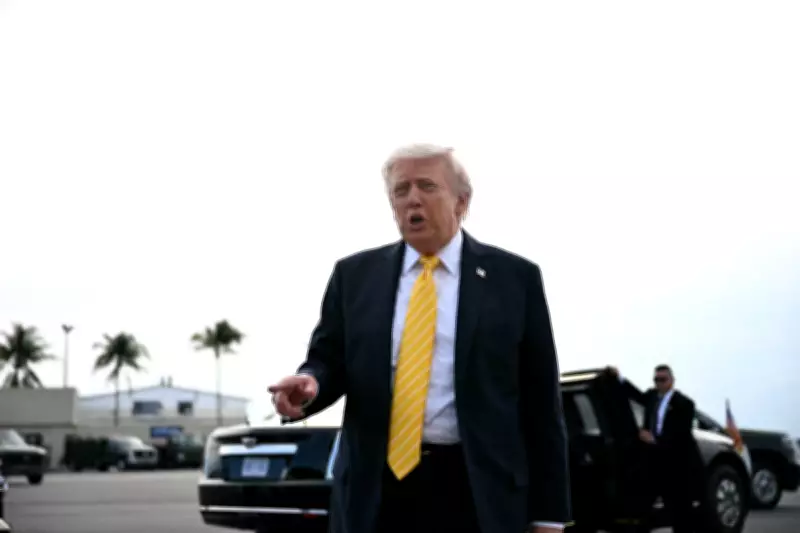
President Donald Trump possesses a potential 'nuclear option' to reduce US gas prices, which have surged amid the ongoing conflict with Iran, according to a new report. The strategy involves limiting American oil exports to boost domestic supply. As the world's leading oil producer, generating a record 13.6 million barrels per day in 2025, the US could ease pressure at the pump by retaining more crude at home.
However, this approach, which the Trump administration has so far opposed, is not a guaranteed solution. Its effects may be limited, and it could risk tipping the global economy into recession, industry insiders told CNN. The White House faces mounting pressure as domestic fuel costs soar, largely due to duelling blockades in the Strait of Hormuz, which previously carried about 20 percent of the world's oil.
Current Gas Prices and Economic Impact
On Wednesday, oil prices hovered around $100 per barrel, and the national average cost for a gallon of gas stood at $4.53, up from $2.98 just before the conflict erupted on February 28, according to AAA. Americans have spent $23.9 billion more on gas year-over-year in the past two months, Patrick DeHaan, head of petroleum analysis at GasBuddy, said Monday.

The 'Nuclear Option' Explained
Trump could theoretically curb US oil exports, redirecting millions of barrels sent overseas daily back into the domestic economy. Several nations have already taken similar steps. In March, China imposed limits on refined fuel exports, and in April, Russia barred companies from exporting gasoline until the end of July.
However, senior administration officials have made clear this option is not under serious consideration. Interior Secretary Doug Burgum and Energy Secretary Chris Wright have both stated publicly that the White House is not pursuing such a move. Still, some lawmakers are pressing for a reevaluation.
'It's common sense,' Rep. Ro Khanna, a California Democrat, told Fox News last month. 'Why would we be sending our oil overseas when Americans are getting fleeced at the pump? We should have our oil supply for Americans. That would bring down the price.'
Such a move would not be without precedent. In 1975, President Gerald Ford signed the Energy Policy and Conservation Act, which effectively prohibited most US crude exports to shore up domestic supply. The ban, with limited exceptions, remained in effect for four decades until Congress lifted it in 2015.
Risks and Long-Term Consequences
Barring US companies from shipping oil overseas carries significant risks, and any effect on domestic prices may fade over time, industry insiders told CNN. Matt Smith, an oil analyst at Kpler, explained that while the US is a net exporter, it still imports about 6.5 million barrels of crude daily. US refineries are optimized for processing a blend of foreign and domestic oil, often mixing domestic light crude with heavier crudes from Latin America, the Middle East, and Canada.
Robert Auers, a manager at RBN Energy, noted that curbing oil exports might lower US gas prices in the short term, but long-term costs could outweigh gains. If the administration caps exports, US companies might scale back production, and some could shut down entirely.
'You could bring prices way down next week. But that impact would fade over time. A year from now, prices might not be any different than today,' Auers told CNN.
Some insiders expressed willingness to take the gamble. Vikas Dwivedi, a global energy strategist at Macquarie Group, believes cutting oil exports would dramatically reduce gas prices in time for the midterm elections, and US refiners could weather the storm. 'I can't believe I'm saying this. For my entire career, I would have said, 'A ban won't work. Don't do it. This is nonsense,'' Dwivedi said.
However, while US consumers could benefit, many countries reliant on US exports could face catastrophic consequences, potentially upending the global economy. 'Suddenly, you could be risking a global recession. And we can't be insulated from that. It would come full circle,' Dwivedi added.
'You would start a whole new trade war,' Auers said. Bob McNally, president of Rapidan Energy Group, noted: 'We would permanently ruin our reputation as an arsenal of energy.'