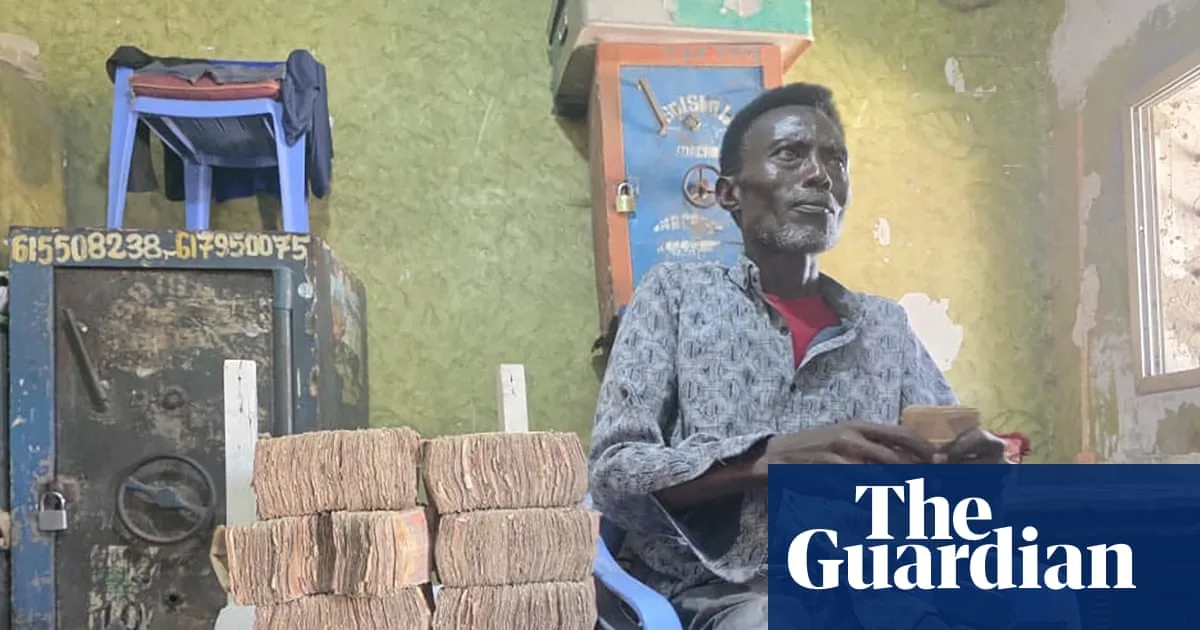
Muse Omar Jama, 49, sits in his Mogadishu office surrounded by stacks of banknotes, lamenting that a government decree mandating acceptance of the Somali shilling is not being enforced. For over three decades, Jama has worked as an exchange trader in the Bakara market, but now his livelihood is under threat.
The battered metal safes he shares with other traders are filled with millions of Somali shillings that have suddenly become worthless. 'It's like we went bankrupt overnight,' he says.
The Rejection of the Shilling
Last month, fed up with greasy, ripped, and aged banknotes, a handful of Mogadishu traders decided to stop accepting them. Soon, businesses, shops, and even bus drivers followed suit, and the decision spread to regions outside the capital.
The impact on prices was immediate. Everyday expenses such as groceries, medicines, and public transport surged. For example, a small bag of powdered milk more than doubled in price.
Amid global food price rises and Somalia's ongoing drought, the poorest are bearing the brunt of an economy that is becoming completely 'dollarised.'
Why the Shilling Lost Value
Somalia is one of the most remittance-dependent countries in the world. The diaspora sends billions annually, primarily in US dollars, via informal money-transfer operators known as hawala. The heavy presence of international bodies—such as the UN, aid organisations, foreign forces, and security firms—has further reinforced the use of US dollars.
Somalia has not printed any banknotes since 1991, when the government of Siad Barre was overthrown and the central bank ceased to operate. The 1,000 Somali shilling note became the only officially recognised money in circulation, but in the absence of a unified currency, the US dollar and mobile phone transfers have become increasingly common.
Before the revolt, people from all walks of life would come to Jama's office to exchange shillings for dollars via mobile money. Now, like hundreds of thousands of others not paid in dollars through banks, Jama's life has been turned upside down.
'Prior to the rejection of the Somali shilling, I was able to cover basics like rent, electricity, and water,' says Jama. He now walks three miles (5 km) to work because bus drivers no longer accept shillings.
'The rejection has hurt poor people the most, even beggars. They used to receive a couple of thousand shillings from passersby, which helped them purchase food. Now their notes are worthless,' Jama adds.
When beggars approach him to exchange shillings for mobile money in dollars, he must turn them away because his safes, shelves, and tables are already full of shillings he cannot exchange anywhere.
Protests and Government Response
On 4 May, dozens of exchange traders staged a protest, waving wads of old banknotes and shouting: 'Somalia is the only country without a currency.' Jama was too disillusioned to join them. 'It doesn't seem like things will ever be the same again. Our currency is dead,' he says.
Asha Ali Ahmed, 39, who sells vegetables at a market stall in Mogadishu, shares similar concerns. 'We were raised off the earnings from this vegetable stand,' she says. She would take shillings to the farming town of Afgoye to buy vegetables, then return to Mogadishu to sell them.
Now farmers refuse to accept shillings and request payments in mobile money, increasing vegetable prices. 'Vegetables were already expensive because of the drought. The rejection of the shilling only exacerbated our situation,' she says.
Somalia is enduring a dire drought that has caused widespread crop failures, raised food prices, and disrupted livelihoods. According to the World Food Programme, nearly a third of the population—6.5 million people—face severe hunger, and 2 million children under five suffer acute malnutrition.
'Most people who bought vegetables from my stand could only afford to pay in shillings. Paying with mobile money means they have to pay more, and most can't afford it,' says Ahmed.
In a televised press conference, the federal government announced that rejecting the Somali shilling would constitute a crime and ordered traders and businesses to continue accepting it. But Jama and others doubt the ruling can be enforced by the fragile state.
'The government's decree is good, but we need action to back it. There are no police helping us,' he says. 'What would help is for the government to go to businesses and hold people accountable for refusing the shilling. Even fines would help.'
Jama leans back in his chair. Across the street, guards stand watch behind mounted machine guns at the ministry of foreign affairs. 'Millions are going to suffer,' he says quietly. 'More families will be pushed into poverty.'