Somalia is once again in the grip of a deadly drought, but this time, most humanitarian aid is not reaching those in need. The country, one of the most vulnerable to climate shocks, is experiencing its worst drought on record in 2026, according to experts.
Livelihoods Destroyed
Abdi Ahmed Farah, a 70-year-old pastoralist, has lost most of his hundreds of goats due to the lack of rain over three years. He is in debt from buying water, and his family survives on one meal a day of rice with sugar and oil. His wife, who gave birth three weeks ago, produces only occasional drops of breast milk. Farah has considered abandoning his family because he cannot provide for them.
The drought has dried up rivers, withered crops, and displaced thousands. Production of staple crops like maize and sorghum during the October-December rainy season was the lowest on record, according to the UN Food and Agriculture Organization.

Children at Risk
Food security experts warn that nearly half a million children could face severe acute malnutrition, surpassing the numbers during droughts in 2011 and 2022. Hameed Nuru, the UN World Food Program director for Somalia, stated: "2026 is the worst year on record for Somalia in terms of drought. Children have started dying."
The Somali government and UN estimate that 6.5 million people face crisis levels of hunger, a third of the population and a 25% increase since January. Aid agencies are struggling to respond, with funding drastically reduced.
Aid Cuts and Rising Prices
The crisis is compounded by aid cuts, most notably from the Trump administration, and rising prices due to the Iran war. Somalia imports 70% of its food and most of its fuel from the Middle East. Aid funding dropped to $531 million in 2025, compared to $2.38 billion in 2022. The World Food Program aimed to help 2 million people but has reached only 300,000 due to funding gaps.
In Usgure village, community leader Abshir Hirsi Ali said the local economy has collapsed. Shops closed, food rations ran low, and some families drank dirty rainwater, leading to fever outbreaks. Save the Children brings water occasionally, but private water trucks have quadrupled prices, and a 50-kg bag of flour costs $40.
Displacement and Conflict
Decades of conflict have displaced millions, and the drought has displaced another 200,000 this year. Families flee across harsh landscapes with limited supplies. Kevin Mackey of World Vision said: "People are on the move… and when people move, people die."
Shukri, a 20-year-old mother of four in a displacement camp, said her children got diarrhea from dirty water and malnourishment worsened. Fadumo, a mother of seven who fled to Mogadishu, said: "Conflict made our situation even worse, forcing us to flee."
Dire Outlook
Antoine Grand of the International Committee of the Red Cross warned: "Unless there is a sudden and substantial response from donors, the outlook is deeply concerning. A drought of similar severity in 2022 received a response five times greater."
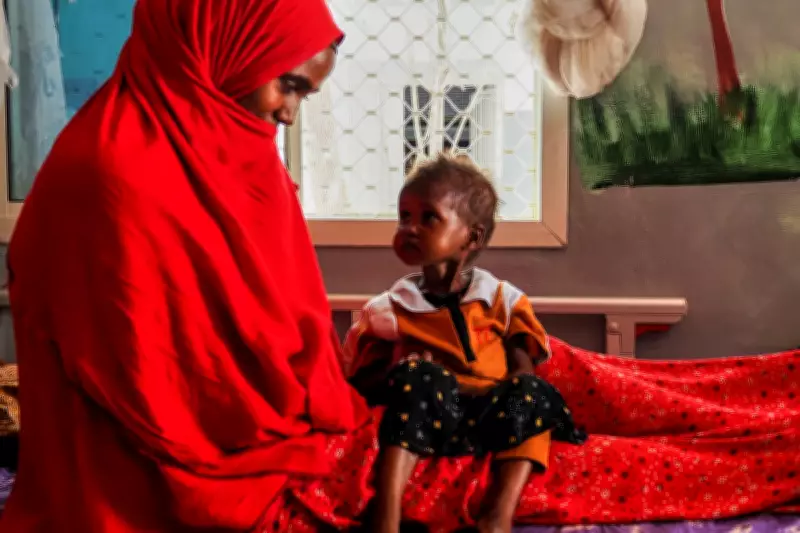
In Qardho hospital, a center for severe acute malnutrition rarely has therapeutic milk in stock. One 4-year-old, Farhia, weighs only 7.5 kg. Her mother said: "I don't know what to hope for, or see how we can get back to what we had."