Paris is often imagined as a city of cafes, couture, and impressionism, but some of its most dynamic cultural currents stem from the French-speaking Black diaspora. With Europe's largest Black population and the world's second-largest rap scene, the city has become a nexus for Black cultural exchange. This week, Achille Tenkiang, a Cameroonian-American culture writer, and Liz Gomis, executive director of Maison des Mondes Africains (MansA), a Paris-based cultural institution, spoke about how Black French culture has gained visibility in the capital and beyond.
Black Culture, en Français
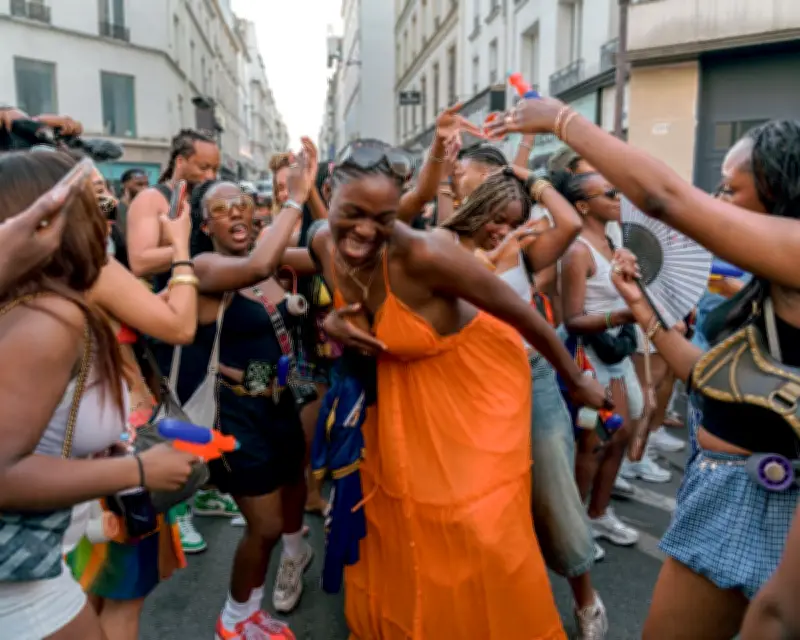
France is home to the second-largest rap scene globally and Europe's largest Black population. At the annual Fête de la Musique, a Parisian street party now dominated by African French sounds, Black revellers from across the diaspora gather. This explosion challenges the idea that Paris's cultural reputation is owed exclusively to its traditional institutions. African and Caribbean communities have reshaped the city's culture. Paris draws together communities from west, central, and north Africa, as well as the Caribbean, creating conditions for encounters that are rare elsewhere. According to Tenkiang, what distinguishes Paris from other diaspora hubs is the granularity of African identity it sustains. Unlike other cities that may flatten diverse origins into a single Black immigrant category, Paris allows Cameroonian, Malian, Senegalese, and Congolese identities to remain distinctive and dynamic. Exchanges in music, language, and ideas happen organically due to the city's density and walkability. "French is ours," says Tenkiang, noting how generations of African and Caribbean speakers have infused the language with new rhythms and references. Gomis adds that Paris is not the source of Afro-francophone creativity but a place where its many currents influence each other.
How Did Paris Become a Capital for Black Cultural Exchange?
Black cultural exchange has a long history in Paris. Gomis traces the roots of African-Parisian cultural life to literary salons in the 1920s. Long before postwar migration transformed the city, Martinican sisters and writers Paulette, Jane, and Andrée Nardal had already imagined Paris as a meeting place for Black intellectual life. At their home, future politicians such as Aimé Césaire and Léopold Sédar Senghor exchanged ideas that shaped the négritude movement. Postwar migration from Senegal, Côte d'Ivoire, and elsewhere established larger Afro-francophone communities. In the 1960s, the French government's Bumidom initiative, which addressed labour shortages and quelled independence movements overseas, brought migration from French territories such as Guadeloupe, Martinique, Guyane, and Réunion. Living away from their homelands, people established new cultural spaces. "We had to create another form to exist," says Gomis. Those spaces blossomed: in the 1970s, musicians and producers from across the diaspora used Paris as a recording, touring, and distribution hub. By the 1980s and 1990s, Black communities began shaping the city's cultural life more visibly. Sapeurs (Black dandies) from Congo-Brazzaville transformed elegance into performance, while Caribbean, west African, and central African communities gathered in clubs and house parties.
Black or French? A Generation Refuses to Choose
Black culture is now part of France's cultural mainstream, but neither Gomis nor Tenkiang believe this represents a sudden awakening. The difference, they argue, is that the scene has become more confident and legible to the outside world. Technology has allowed younger artists to reach audiences without waiting for traditional gatekeepers, while a new generation has grown up unwilling to choose between Black or French identities. Walking through Paris today, Tenkiang says, means seeing young people wearing locs, natural hair, and brightly patterned clothing with an ease that was far less common a generation ago. "Our parents were taught that these parts of themselves weren't worth preserving," he says. "This generation is saying no." That confidence is reflected in the French language: African and Caribbean slang from the banlieues, the working-class areas encircling Paris, have entered everyday vernacular. French rap has long used metaphor, double entendre, and wordplay to articulate life in the suburbs. Today, artists such as Gazo (of Guinean descent from Saint-Denis) and Meryl (a Martinican rapper weaving French and Creole) continue these traditions. On the global stage, artists including Aya Nakamura, Tayc, and Tiakola have crossed over to anglophone markets.
When Will Black Artists Get Their Flowers?
Greater visibility does not necessarily translate into power. Gomis describes a paradox: "People think we are the hype, and at the same time we don't exist in the actual cultural, political or media landscape. So we create." Commercial success does not equate to structural change. That tension surfaced sharply in 2024, when President Macron supported Aya Nakamura performing at the Paris Olympics opening ceremony. A furore arose from the far right, questioning whether a Malian-born Muslim woman who grew up in a Paris banlieue was French enough to represent the country. Tenkiang says the debate blazed because this generation is not willing to be invisible. Yet cultural influence has consistently come before institutional recognition. The Congolese-French artist Theodora, whose song Kongolese Sous BBL swept the Victoires de la Musique this year, captured that duality when she told a crowd she was performing for "all the weird girls who grew up in the suburbs" of France. The 22-year-old's music is danced to by uncles in Kinshasa and Abidjan as much as by Parisian audiences. The banlieues, as one saying has it, influence Paris, and Paris influences the world. In the absence of widespread recognition, independent structures have emerged. Brands such as Maison Château Rouge, founded by fashion designer Youssouf Fofana and built on African printed fabrics, sit alongside festivals, creative spaces, and public initiatives like MansA. This is evidence of a community increasingly investing in its own infrastructure.
Will Paris Continue to Reign Supreme?
Gomis believes the future might lie in a more distributed network, with cities such as Abidjan, often described as the "Paris of west Africa," starting to rival the capital as a hub for Afro-francophone artists. Tenkiang is less sure, pointing to Parisian infrastructure that few African cities can yet match: transport links, publishers, galleries, and fashion houses that make Paris an easier and relatively cheaper place for artists to circulate. Paris, then, is less the origin of Afro-francophone culture than one of its great meeting places: a city where ideas, languages, and traditions from across Africa and its diasporas meet, evolve, and become newly visible. Its cultural relevance, once tethered to a narrow idea of French heritage, is now sustained by the communities that have always shaped it from within. Understanding Paris today means recognising that some of its most influential cultural stories aren't memorialised in boulevards and monuments—despite emerging from the streets.