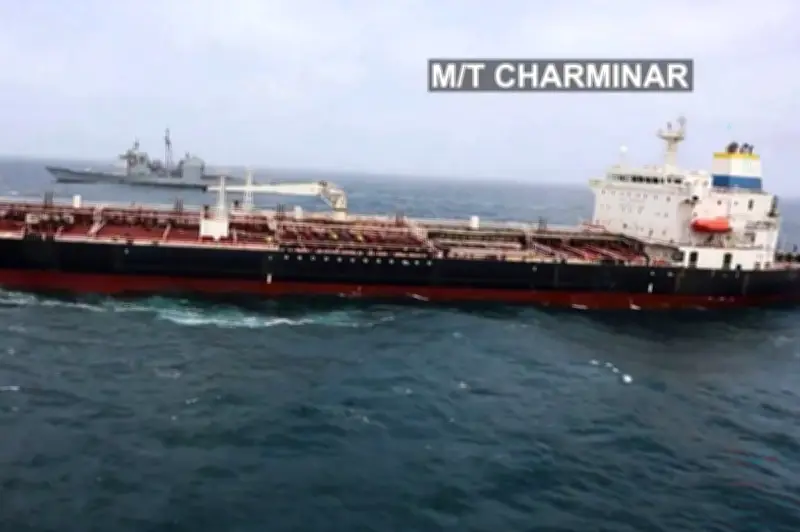
A US warship stopped a tanker as part of a blockade of Iranian ports and vessels. Renewed fighting has pushed oil prices higher, with Brent crude jumping above $100 a barrel before falling to $96 on Friday, up from $71 earlier this month. Gas prices have also surged ahead of the winter refill season in Europe.
The Bank of England's monetary policy committee is expected to vote on Thursday to hold interest rates at 3.75% until at least December, by a margin of seven to two, echoing its June decision when two officials voted to raise rates to curb inflation.
Economists warn of rate hike risk
Sanjay Raja, chief UK economist at Deutsche Bank, said the calculation could change if airstrikes intensify and sea channels remain blocked. “We see upside risks to the interest rate outlook in the near term, with much dependent on the duration of the unfolding energy shock,” he noted.
George Buckley, chief UK and euro area economist at Nomura, said financial markets signal higher oil prices will translate into higher interest rates. “At $90 they would see the need for one and a half quarter-point hikes. At $100 there would be a need for two 25 basis point hikes,” he said.
Oil price scenarios
Mohamed El-Erian, a former chief economist at the International Monetary Fund, said a sustained increase to $90 a barrel could rewrite UK policymakers’ forecasts. “Should oil prices remain above $90 a barrel, an important ‘if’, then headline inflation would face significant upward pressure,” he said, adding that this would heighten concerns over indirect effects like rising food prices due to diesel costs.
Ruth Gregory, deputy chief UK economist at Capital Economics, outlined a worst-case scenario: if inflation rises to 7% due to the conflict, UK interest rates would likely rise from 3.75% to 4.75%.
UK economic resilience tested
Harvinder Kalirai, chief global currency strategist at Alpine Macro, said he expects the Bank to “look through the oil shock and political noise” to hold rates for now before resuming cuts next year. He argued that UK demand is not strong enough to sustain a pass-through from the energy shock, forcing firms to absorb higher costs.
Costas Milas, economics professor at the University of Liverpool, said oil price shocks trigger long bouts of inflation and should be tackled quickly. “This is too uncomfortable for the BoE to stay inactive not least because the public remains dissatisfied with the BoE,” he said, suggesting a rate rise as early as September.
David Aikman, head of the National Institute of Economic and Social Research, said: “The longer inflation remains above target, the greater the chance inflation expectations shift and wages respond – and hence the Bank needing to hike rates.”
Financial markets also anticipate a hike at the European Central Bank's next meeting on 10 September, after it raised rates in June for the first time since 2023 in response to higher inflation caused by the conflict in Iran.