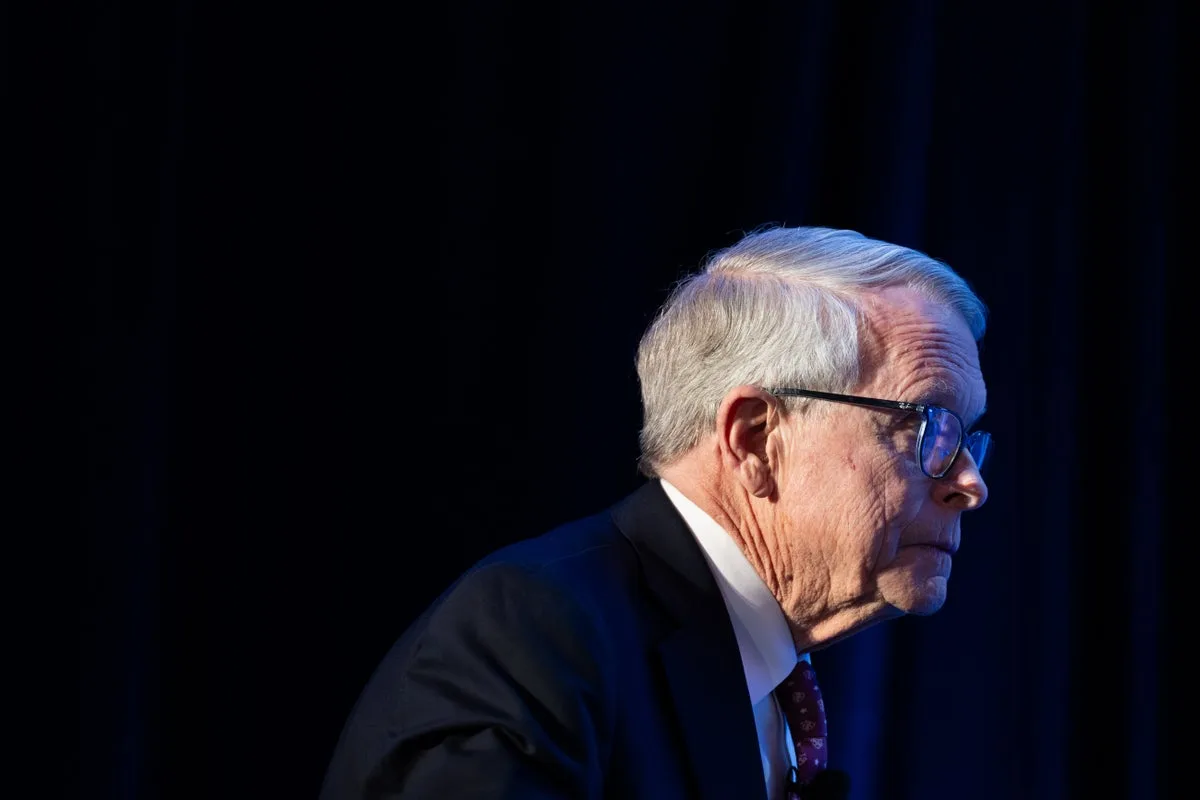
Ohio, a leading destination for data centers, has suspended a key tax break that has been instrumental in attracting the massive facilities needed to power and train artificial intelligence chatbots. The decision, announced Wednesday by Republican Governor Mike DeWine, comes as tax incentives for energy-intensive AI data centers increasingly impact state budgets, and the industry faces mounting pressure to cover the full costs of its vast computing infrastructure.
Rising Costs and Opposition
The value of Ohio's tax exemption has skyrocketed, far exceeding initial projections, as opposition to data centers spreads across cities, suburbs, and towns. Lawmakers have formed a committee to study the impact, while residents are attempting to bypass the GOP-controlled Legislature and place a referendum on November's midterm ballot that would permanently ban hyperscale data centers—potentially the strictest statewide prohibition in the United States.
Governor DeWine's office cited the increasing use of the tax break and the Legislature's new research initiative as reasons for the "pause" in granting new applications. "The governor felt it was the right time to let citizens and businesses know we're pausing new offers of this tax incentive while that process plays out," said spokesperson Dan Tierney on Thursday. DeWine has emphasized his support for data centers, calling them a critical component of today's economy, and noted that the roughly $37 billion in data center-related investments in 2024 and 2025 have been worthwhile.
Financial Impact
In 2024, the state had projected the exemption would total $136 million in fiscal 2025 and $142 million in fiscal 2026, based on historical data. However, the actual figures reached $554 million in 2024 and nearly $1.6 billion in 2025, according to state reports. The potential resumption of the tax break could occur under a new governor, as DeWine is term-limited. The Republican nominee, Vivek Ramaswamy, an Ivy League-educated biotech billionaire, has advocated for transforming the Ohio River Valley into the next Silicon Valley. Both Ramaswamy and Democratic nominee Amy Acton may share the midterm ballot with a citizen-led effort to ban data center construction across Ohio, which faces a July 1 deadline to gather over 400,000 voter signatures.
National Context
State tax breaks for the data center industry are facing growing criticism from governors and lawmakers nationwide. The costs are likely rising as data center and AI-related investments drive higher consumer spending, and tech giants continue to increase their spending commitments to hyperscale data centers. In Virginia, negotiations between the state House and Senate have been stalled for months over a Senate Democrat proposal to eliminate the roughly $1.6 billion annual tax break. According to the National Conference of State Legislatures, 38 states offer some form of sales tax break for data centers. Many of these were approved more than five years ago, when data centers were a smaller part of the economy, before the late 2022 launch of OpenAI's ChatGPT triggered an intensifying buildout of increasingly large data centers.
Ohio's Exemption Details
Ohio's exemption is broad, applying not only to construction materials but also to expensive equipment such as server racks and cooling systems. Operators may replace server racks every couple of years as technology improves. DeWine's order came as a surprise to many. Dorsey Hager, executive secretary-treasurer of the Columbus/Central Ohio Building and Construction Trades Council, expressed disappointment and concern that developers in the midst of finalizing plans or permits might reconsider their projects. Lawmakers acknowledged the opposition when announcing the joint data center committee on May 13. "We're well aware of initiatives to limit Ohio data center development during this critical point in America's history," said state Representative Adam Holmes at a news conference. "This public concern has become a priority issue for us and could have a dramatic impact on Ohio and America's future."