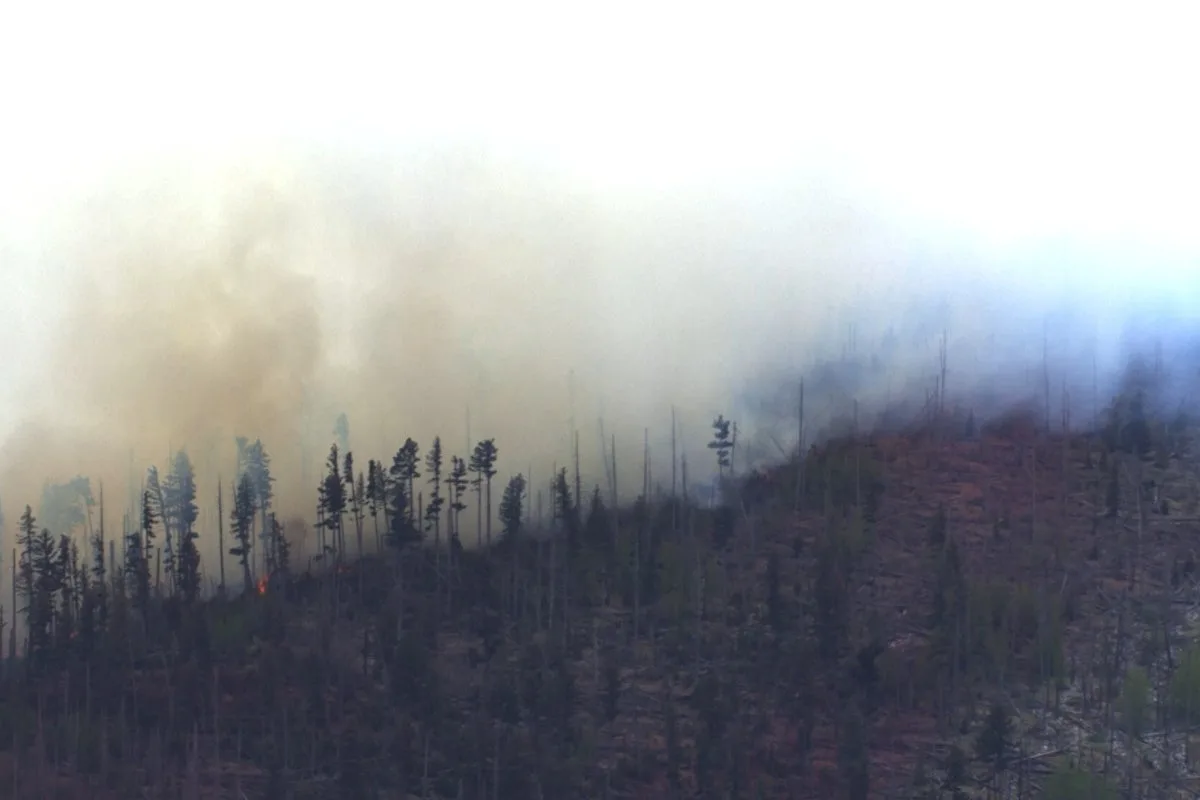
A small medical plane crashed in the mountains near Ruidoso, New Mexico, early Thursday, killing all four people on board and igniting a wildfire that had grown to 35 acres by midday, officials said. The aircraft, operated by Trans Aero MedEvac, was on a medical transport mission when it went down in the Capitan Mountains, a remote and rugged area.
Lincoln County Manager Jason Burns confirmed the deaths of the flight crew and medical personnel, whose names have not been released. “Our hearts and prayers go out to the families, loved ones, friends and colleagues of those who lost their lives in this tragic incident,” Burns said at a news conference. The blaze, fueled by dry and windy conditions, prompted concerns from local authorities, who are working with the U.S. Forest Service to contain it.
The flight departed from Roswell Air Center and was headed to Sierra Blanca Regional Airport, according to the Federal Aviation Administration (FAA). The plane was reported overdue after communications and radar contact were lost. The FAA and National Transportation Safety Board (NTSB) will investigate the crash.
Trans Aero MedEvac, which has operated in southeastern New Mexico and west Texas since 1966, expressed condolences. The crash site, located in steep, rocky terrain, required crews to hike the last half-mile to reach it. The cause of the accident remains unknown.
This incident marks the latest in a series of fatal medical plane crashes. According to NTSB records, there have been 25 such crashes over the past 25 years, killing nearly 70 people. Notable recent crashes include a jet that struck a Philadelphia neighbourhood in January 2025, killing eight, and a crash on the Navajo Nation in Arizona in August that claimed four lives.
Aviation safety expert Jeff Guzzetti noted that medical evacuation plane flights are generally no more dangerous than other flights, as they travel between airports. However, helicopter medical flights are riskier due to frequent landings at improvised sites. A study covering 20 years up to 2020 found that over 70% of air medical fatalities occurred on helicopters.