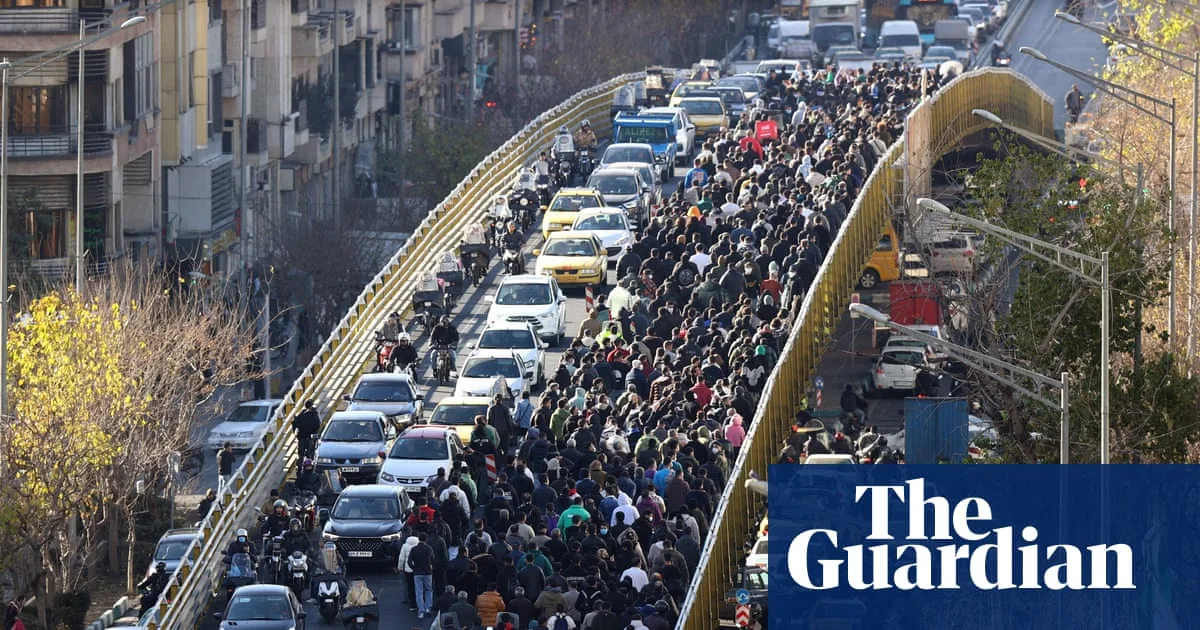
Tens of thousands of Iranians have taken to the streets in the largest protests since 2022, driven by a dramatic collapse in the value of the national currency and soaring inflation. The demonstrations, now entering their fourth day, have spread from the capital Tehran to cities including Isfahan, where merchants shut their shops and students occupied university campuses.
The Iranian rial plunged to a historic low of 1.42m against the US dollar on Sunday, a drop of more than 56% in six months. Food prices have risen by 72% compared with the same period last year, pushing many families to breaking point. “What will my children eat? Do we have to bring suitcases of cash to simply buy bread?” asked Alborz, a textile merchant in Isfahan who closed his shop to join the protests.
Although the unrest began over economic hardship, protesters have increasingly directed their anger at the government. Chants of “death to the dictator” and “woman, life, freedom” have been heard, echoing slogans from the 2022 protests that followed the death of Mahsa Amini. Social media footage shows demonstrators throwing stones at security forces and blocking roads, despite the risk of arrest.
Iran’s president, Masoud Pezeshkian, has called for dialogue, saying the government should listen to the “legitimate demands” of protesters. However, many activists are wary, believing the offer is an attempt to co-opt the movement. “You must be naive to think Iranians trust this government or the regime,” said Farhad, a 19-year-old student. He and others reported that security forces had confiscated student IDs, beaten protesters, and fired metal pellets.
The protests come amid heightened international tension, with US President Donald Trump suggesting on Monday that he might consider striking Iran again over alleged nuclear activity. Iran has faced severe sanctions that have exacerbated the economic crisis, as the country struggles to access frozen funds abroad and imports have become increasingly expensive.