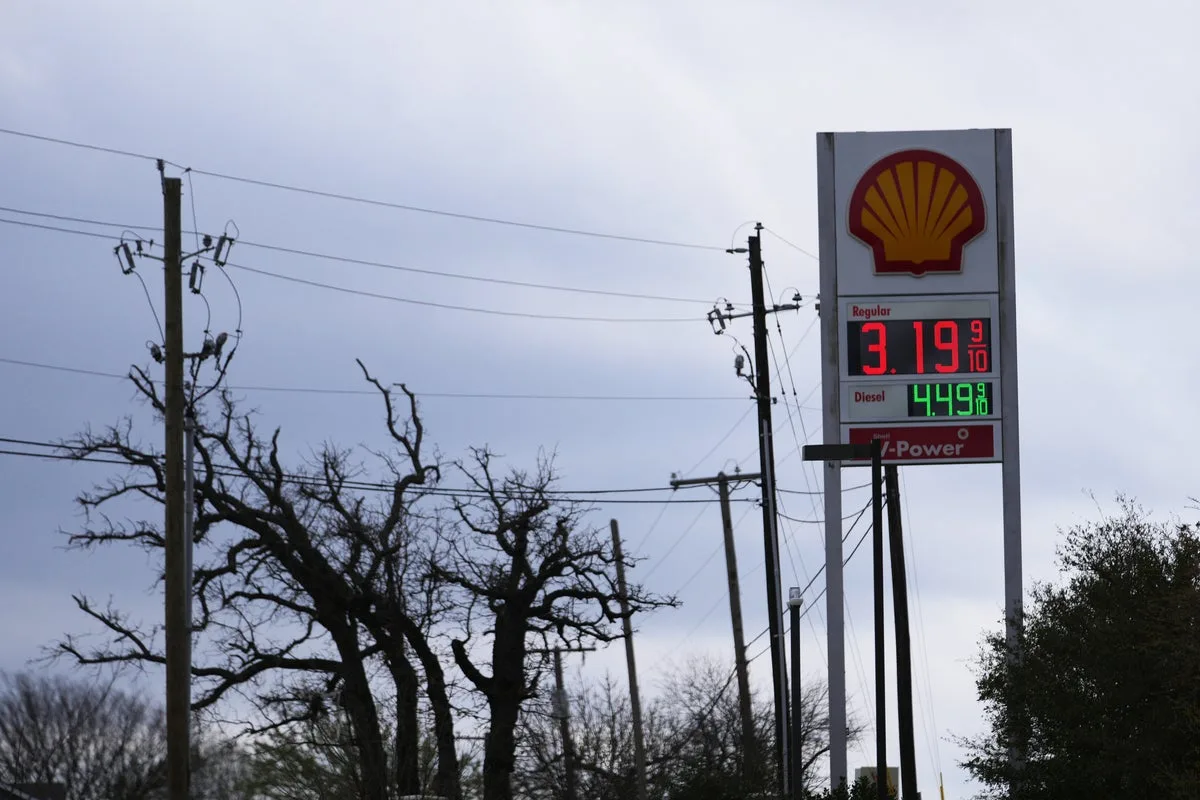
The price of crude oil surpassed $110 a barrel on Monday, reaching levels not seen since 2022, as the Iran war disrupts worldwide energy production. Consumers are feeling immediate economic pain at the petrol pump, but the impact extends far beyond drivers. Nearly all goods, including food, rely on transportation that becomes more expensive with higher gasoline, diesel and jet fuel prices.
The spike in oil prices is expected to be a major factor for US inflation, with experts warning that the longer the conflict lasts, the more significant the economic shock will be. Gregory Daco, chief economist at EY-Parthenon, said: 'The longer this lasts, the more significant the shock would be.'
In the US, the average price of regular petrol rose to $3.48 per gallon on Monday, up 17% since the US and Israel attacked Iran. Prices vary widely by state: California drivers paid $5.20 per gallon, while Louisiana, which has its own oil production and refineries, averaged $3.04. The impact is likely to be felt more acutely in Asia and Europe, which are more dependent on Middle Eastern oil and gas.
Diesel prices also climbed, reaching $4.65 per gallon in the US, a 23% jump since the war began. Patrick De Haan, a petroleum analyst at GasBuddy, described it as 'a massive jolt to the logistics, trucking, and agriculture sectors.' The effective closure of the Strait of Hormuz, which carries a fifth of the world’s crude oil and liquefied natural gas, has already caused shipping disruptions, and rising fuel costs will add to the burden.
Home energy bills are also likely to rise, with Europe’s benchmark natural gas price increasing 75% since the war started. This could affect the cost of products made from natural gas, such as plastics, rubber and nitrogen fertiliser. While the spike may not immediately impact US grocery stores, food economist David Ortega warned that if oil prices remain high for a month or more, 'we’re in different territory,' as higher fuel and fertiliser costs will eventually be passed on to consumers.