

Global Economic Crisis Looms as Iran Conflict Threatens Oil and Gas Supply Routes
Fears are intensifying that the world could face an economic shock far more severe than the Covid pandemic within weeks, as escalating conflict in Iran jeopardises critical global oil and gas supplies. Analysts are sounding alarms that this situation could precipitate widespread food shortages, grounded flights, and panic-buying, with nations at risk of depleting their fuel and energy reserves if key maritime corridors remain obstructed.
From Price Hikes to Full-Blown Supply Crunch
According to industry experts, the crisis has evolved beyond mere inflationary pressures to pose a genuine threat of a comprehensive supply crunch. Some countries may struggle to secure sufficient energy to meet domestic demand, potentially triggering a domino effect across the global economy. This could impact everything from international air travel to agricultural food production, with dire consequences for daily life and industrial operations.
The Strait of Hormuz, a vital artery for global energy, remains at the epicentre of this unfolding drama. Approximately one-fifth of the world's oil and gas transits through this narrow waterway daily, making its closure a catastrophic scenario for energy markets worldwide.

Projected Price Surges and Economic Emergency
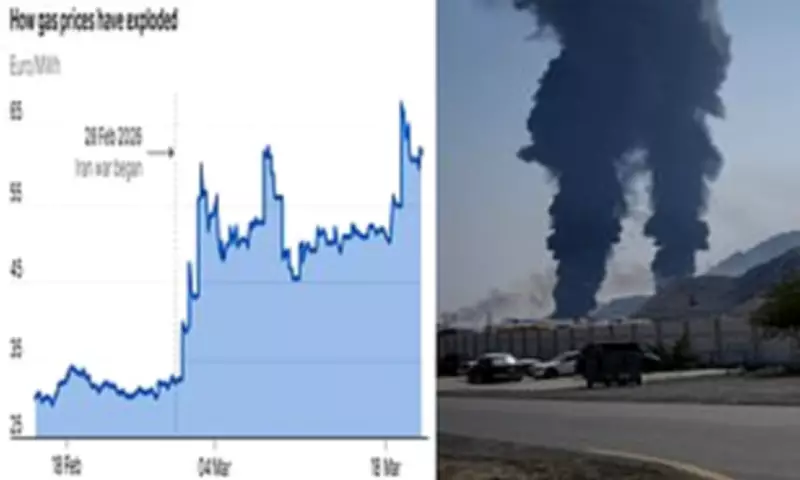
Bank of America has issued a stark warning, indicating that European gas prices could skyrocket from around €29 to as high as €500 this winter if the strait remains shut for an extended period. This would far exceed the price levels witnessed following Russia's invasion of Ukraine, potentially igniting what analysts describe as a full-blown economic emergency across Europe, the United Kingdom, and large swathes of Asia.
Such a spike would cause energy costs to spiral uncontrollably, forcing industries to implement drastic cutbacks and operational reductions. The situation has deteriorated rapidly after recent strikes targeted major energy infrastructure in Iran and Qatar, including facilities responsible for a significant share of global gas supplies. Disruptions are expected to persist for months or even years as extensive repairs are undertaken.
Signs of Panic and Impending Shortages
Oil markets are already exhibiting clear signs of panic, with supplies becoming far tighter than official price indicators suggest, as nations engage in a frantic race to secure fuel reserves. Kurt Barrow, vice-president of oil at S&P Global Energy, cautioned that the world could soon confront outright shortages and rationing if the disruption continues unabated.
'If the Strait stays closed for two months, you'll have plants without feedstock and we'll get real rationing. We'll have panic buying and hoarding,' Barrow stated emphatically.
Analysts estimate that millions of barrels per day have already been removed from the market due to damaged infrastructure and transport disruptions, heightening the risk that global supply chains could seize up entirely if the conflict prolongs.
Severe Knock-On Effects Across Sectors
Jeff Currie, an energy expert at the Carlyle Group, warned that the knock-on effects could be both severe and immediate, impacting everything from travel to food production. 'We may need to ground planes, shut chemical plants and accept lower crop yields,' Currie explained.
He further emphasised that oil and gas underpin substantial segments of the global economy, meaning shortages would not merely drive up prices but could swiftly disrupt transport networks, manufacturing processes, and agricultural outputs. Current market data underscores this volatility, with actual barrels of the Dubai basket and Oman's Murban fetching close to $170 per barrel as Asian refiners scramble to procure available supplies.
Jet fuel deliveries have already reached alarming levels, hitting $210 in Rotterdam and $240 in Singapore, reflecting the mounting pressure on aviation sectors.
Risk of Further Escalation and Regional Spread
Concerns are mounting that the crisis could worsen significantly if the conflict spreads to other crucial shipping routes, particularly in the Red Sea where vital energy supplies also transit. Helima Croft, a former CIA analyst now at RBC Capital, highlighted this precarious possibility.

'We continue to watch for any signs that the Houthis may enter the conflict and imperil the Red Sea,' Croft noted, warning that even limited escalation could send prices surging anew and deepen the crisis. 'Even just a few missiles or drones fired into the Bab el-Mandeb Strait would push oil prices several legs higher,' she added, underscoring the fragile state of global energy security.





