

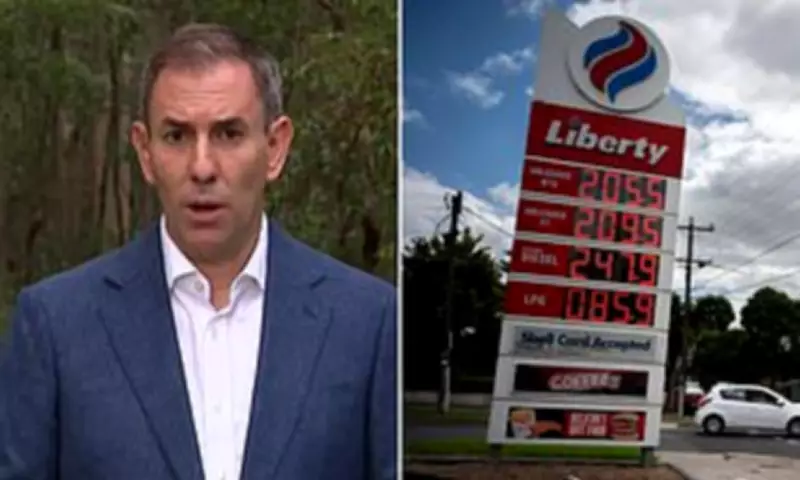
Treasury Warns of Inflation Surge to Near 5% as Middle East Crisis Escalates
Treasurer Jim Chalmers has issued a stark warning that inflation could surge to nearly five per cent, driven by the deepening conflict in the Middle East which threatens to push global oil prices even higher and destabilise Australia's economy. Speaking exclusively on Sky News this Sunday, Chalmers disclosed that Treasury is urgently modelling the economic fallout from the crisis, including the potential impact of a sustained spike in oil prices.
Modelling Reveals Inflation Could Reach 'Mid to High Fours'
Chalmers indicated that inflation could rise to the 'mid to high fours', a significant jump from the current rate of 3.8 per cent, which already exceeds the Reserve Bank's target range of two to three per cent. He emphasised that the severity and duration of the price shock from the Middle East are critical factors. 'It depends a bit, not just on the severity of this price shock coming out of the Middle East, but also its duration,' he explained.
The Treasurer confirmed that Treasury has been running multiple scenarios ahead of the federal budget on May 12, mirroring efforts by major private banks. 'We run a number of scenarios as well just like the private banks do. We've got a couple of months to finalise the Treasury forecast for the Budget in May,' he said. 'So obviously we are working through scenarios and contingencies like this pretty much every day as we try and land these forecasts for the budget.'

Oil Prices Hover Near $100, Fueling Inflation Concerns
Early modelling suggests inflation could push close to five per cent if oil prices remain elevated. On Sunday, oil prices were just below USD$100, having hovered at this level for several days, well above the USD$60 seen in February. Last week, prices surged as high as USD$120, triggering major inflation alarms. Chalmers noted, 'If we were putting pencils down on those forecasts today, we'd have inflation peaking somewhere between the mid to high fours. But there's a little ways to run yet. And the biggest variable … is really how long this drags out for.'
Despite the growing inflation threat, Treasury's modelling does not indicate a recession. Chalmers clarified, 'They (Treasury) expect there to be a hit to growth, but not a hit to growth that would deliver a shrinking economy in the quarters to come.' The scenarios reveal higher inflation and slower growth, but not the 'dramatic contraction' that would signal a recession.
Government Considers Reforms Amid Household Financial Pressure
Chalmers warned that the escalating Middle East conflict and the financial pressure on households mean the Albanese government must consider serious reforms in the upcoming budget. 'I see developments around the world and pressures on Australians here at home, not as a reason to go slower, but a reason to go further,' he asserted.
He confirmed the government has no plans to change the fuel excise, stressing that ministers are working closely with the ACCC to prevent price gouging by service stations and businesses. 'This is not something we have been considering... we do understand and share the concern that motorists around Australia have,' he said. Additionally, the government has relaxed fuel standards, a move expected to inject an extra 100 million litres of fuel into the market monthly.
Reserve Bank Meeting and Opposition Criticism
The Reserve Bank is set to meet next week, with markets placing a 66 per cent chance that rates will be lifted to 4.10 per cent on Tuesday, amid concerns they could go even higher later this year. Meanwhile, the Opposition argues the Albanese government failed to prepare Australia for the inflation shock now affecting households.
Nationals Leader Matt Canavan criticised the government's inability to control inflation before the crisis, leaving families vulnerable. 'If we were back in the range, in the RBA range of two to three per cent… then this shock from the Iran crisis could be better withstood by Australian families,' he told Sky News.






