IMF Warns of Global Recession Risk from Unprecedented Energy Crisis
IMF Warns Global Recession Risk from Energy Crisis

The International Monetary Fund has issued a stark warning that the escalating US-Israel conflict with Iran threatens to create an "energy crisis of an unprecedented scale" that could push the global economy into recession. This dire assessment comes as Australian Treasurer Jim Chalmers prepares to attend the IMF's spring meetings in Washington DC, where he will advocate for a lasting resolution to the hostilities.

Blockade of Hormuz Strait Intensifies Economic Pressure

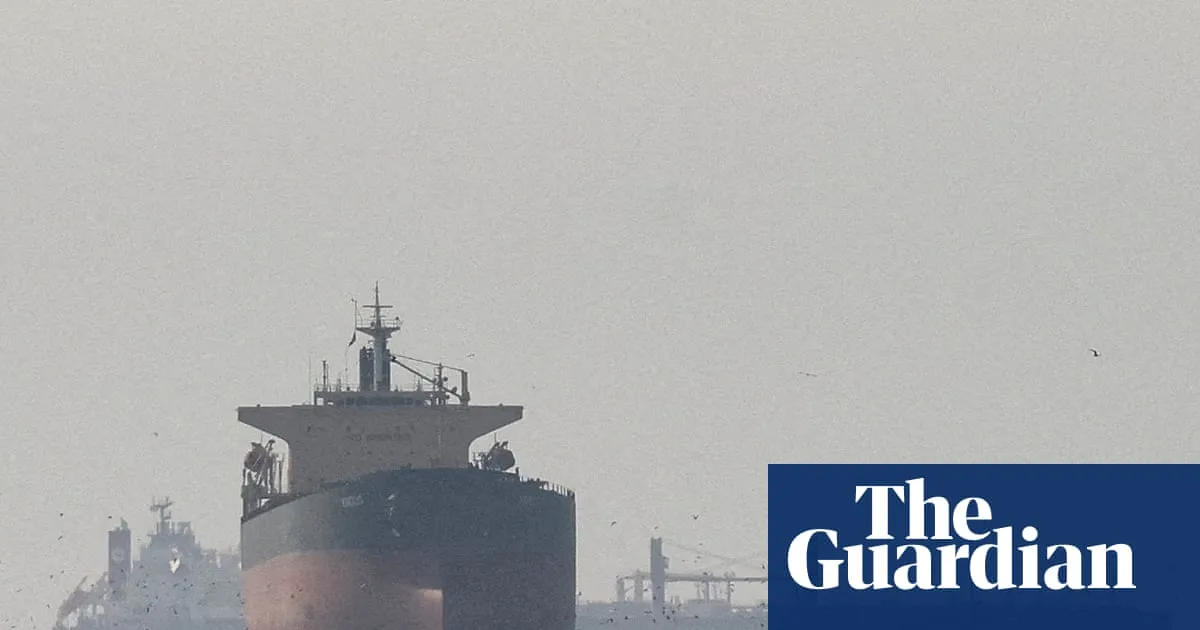
As the United States initiates a blockade of the strategically vital Strait of Hormuz, aiming to pressure Iran back to negotiations, IMF Chief Economist Pierre-Olivier Gourinchas declared that "the world economy faces another difficult test." He emphasized that the closure of this critical maritime passage, coupled with potential damage to key energy infrastructure in the hydrocarbon-rich region, raises the specter of a major global energy crisis if the conflict persists.

Australian Households and Businesses Bear the Brunt

With soaring fuel costs severely impacting household and business confidence across Australia, Treasurer Chalmers is set to hold bilateral discussions with counterparts from major fuel-supplying nations, including South Korea, Singapore, Japan, and China. In a recent statement, Chalmers lamented that Australians are "paying a hefty price for events on the other side of the world," and he will continue to push for an enduring ceasefire and the reopening of the Strait of Hormuz, which he described as essential for global economic stability.

Wide Pickt banner — collaborative shopping lists app for Telegram, phone mockup with grocery list

IMF Outlines Three Economic Scenarios

The IMF's latest World Economic Outlook report presents three distinct scenarios based on the conflict's trajectory. In the most optimistic baseline scenario, assuming the war concludes within weeks and energy markets normalize by mid-year, global growth would be only 0.2 percentage points below pre-war forecasts at 3.1% for the year. However, inflation would rise to 4.4% in 2026, significantly higher than the previous estimate of 3.8%.

Under this scenario, Australia's economy is projected to grow at a steady 2% in 2026, a slight downgrade from earlier forecasts, with inflation averaging 4% this year before easing to 3.2% by 2027. Unemployment is expected to remain low, hovering around 4%.

Pessimistic Projections Signal Recession Risk

In a more adverse scenario, with oil prices averaging around $100 per barrel through 2026, global growth would slow to 2.5% this year, down from the 3.3% forecast in January, while inflation climbs to 4.4%. The most severe scenario, involving a persistent energy shock with oil prices reaching $110 this year and $125 next, predicts global growth plunging to just 2% in 2026 and inflation averaging 5.8%.

The IMF report cautions that this could edge the world dangerously close to a global recession, defined as growth below 2%, an event that has occurred only four times since 1980, including during the global financial crisis and the COVID-19 pandemic. The impact on Australia under these worst-case scenarios was not specifically modeled by the IMF.

Budget Preparations Amid Economic Uncertainty

With Australia's federal budget due on May 12, Chalmers described the current period as "a dangerous moment for the global economy," noting that the government is navigating "extreme uncertainty" while crafting a budget focused on resilience and reform. Prime Minister Anthony Albanese has pledged Labor's most ambitious budget yet, arguing that the fuel crisis underscores the urgent need for structural reforms.

Speculation abounds that the budget may include adjustments to tax discounts and negative gearing rules for property investors, potential additional taxes on booming LNG exports, and reforms to electric vehicle and battery subsidies. The government has also indicated a drive for additional budgetary savings, even as higher commodity prices are expected to generate substantial extra tax revenue.

Pickt after-article banner — collaborative shopping lists app with family illustration

IMF Advises Against Broad Fiscal Stimulus

Amid expectations of further cost-of-living relief in the upcoming budget, Gourinchas warned governments to avoid "popular" non-targeted support measures. He stressed that, given elevated budget deficits and rising public debt, any fiscal assistance should be narrowly targeted and temporary. Avoiding fiscal stimulus is particularly crucial when inflation is rising, to prevent complicating central banks' efforts to manage economic stability.