

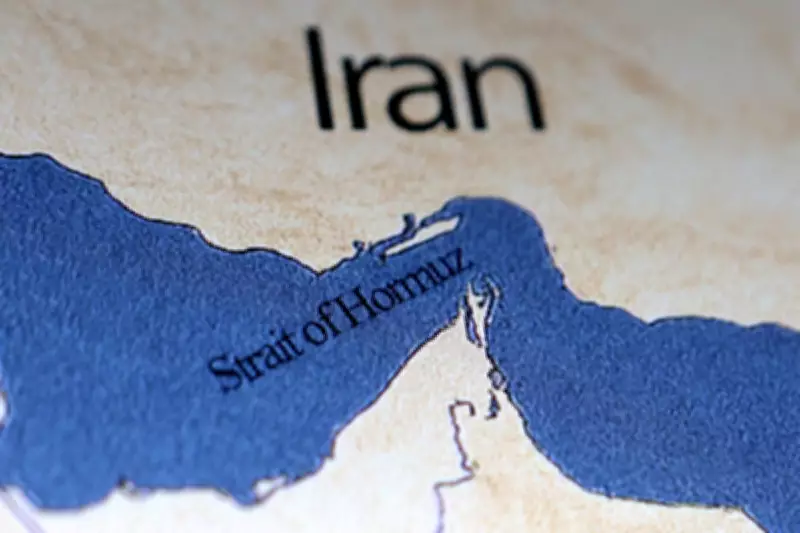
Hormuz Strait Shutdown Sparks Global Economic Alarm After Military Strikes
Shipping through the strategically vital Strait of Hormuz has effectively ceased in the aftermath of US-Israel missile attacks on Iran, as companies rapidly imposed transport restrictions. This narrow channel, located on Iran's southern border and linking the Persian Gulf with the Gulf of Oman, serves as a critical artery for global trade.
Key Shipping Route Paralyzed Amid Escalating Conflict
The strait facilitates approximately one-fifth of all seaborne crude oil globally, alongside one-fifth of worldwide liquefied natural gas (LNG) shipments and about one-third of global urea fertilizer trade. Joseph Capurso, head of global economics at the Commonwealth Bank of Australia, emphasized the severity of the situation, stating, "Of all the possible Middle East scenarios, the current state of play is one of the worst for the global economy." He warned that escalation is likely before de-escalation, with Iran's degraded military capabilities posing an uncertain threat to block the strait, which could sharply increase oil and gas prices.
Market Reactions and Investor Sentiment
Initially, Brent crude oil surged by as much as 13% to $81.57 per barrel, marking its highest level in over a year, before moderating to $77.53, still up 6.4% from the previous week. Asian sharemarkets recovered from early losses but remained 1.5% lower, while Australian stocks edged higher as traders shifted into goldminers and LNG exporters. Despite expectations of continued bombing, investors found some reassurance in former US President Donald Trump's comments about potentially easing sanctions if Iran's new leadership proves pragmatic.

However, analysts at UBS cautioned clients about potential disruptions, noting that while a full physical closure of Hormuz would be challenging, Iran could attempt to disrupt traffic, leading shipping companies and insurers to avoid the crossing. They highlighted that such a disruption could exceed the magnitude of the 2022 loss of Russian supply, which drove prices above $120 per barrel.
Economic Impacts and Inflationary Pressures
Johnathan McMenamin, head of economic forecasts at Barrenjoey, described rising oil prices as stagflationary, directly increasing inflation through higher fuel costs while reducing economic growth by limiting consumer spending. Shane Oliver, chief economist at AMP, estimated that each $1 rise in global oil prices adds 1 cent per litre to petrol, potentially pushing unleaded fuel in major cities to $2.20-$2.40 per litre if prices exceed $100 per barrel.
The Reserve Bank faces a delicate balancing act, needing to address inflationary pressures without further damaging growth, especially after the post-Ukraine war energy price spikes. Richard Yetsenga, ANZ's chief economist, pointed out that most Asian countries, except Malaysia, are net oil importers, with Japan, South Korea, Taiwan, Singapore, and Hong Kong importing over 80% of their energy. Sustained higher oil prices could lead to national income losses and reignite political pressures in the region.
Global Ramifications and Energy Security Concerns
China, which imports nearly all of Iran's 1.6 million barrels of daily crude oil exports, condemned the attacks, with Foreign Minister Wang Yi criticizing the strikes as unacceptable. The conflict threatens to damage fragile US-China trade relations and complicate upcoming diplomatic negotiations. In Europe, Citi analysts warned that a prolonged closure of the strait could triple wholesale gas prices to $100 per megawatt hour, though still below the peaks seen after Russia's invasion of Ukraine. Such price increases would have significant inflation implications for the continent.
Despite the risks, Yetsenga noted the global economy's resilience to recent shocks, suggesting it may weather this crisis. However, the human cost of conflict remains a grave concern, overshadowing economic calculations.






