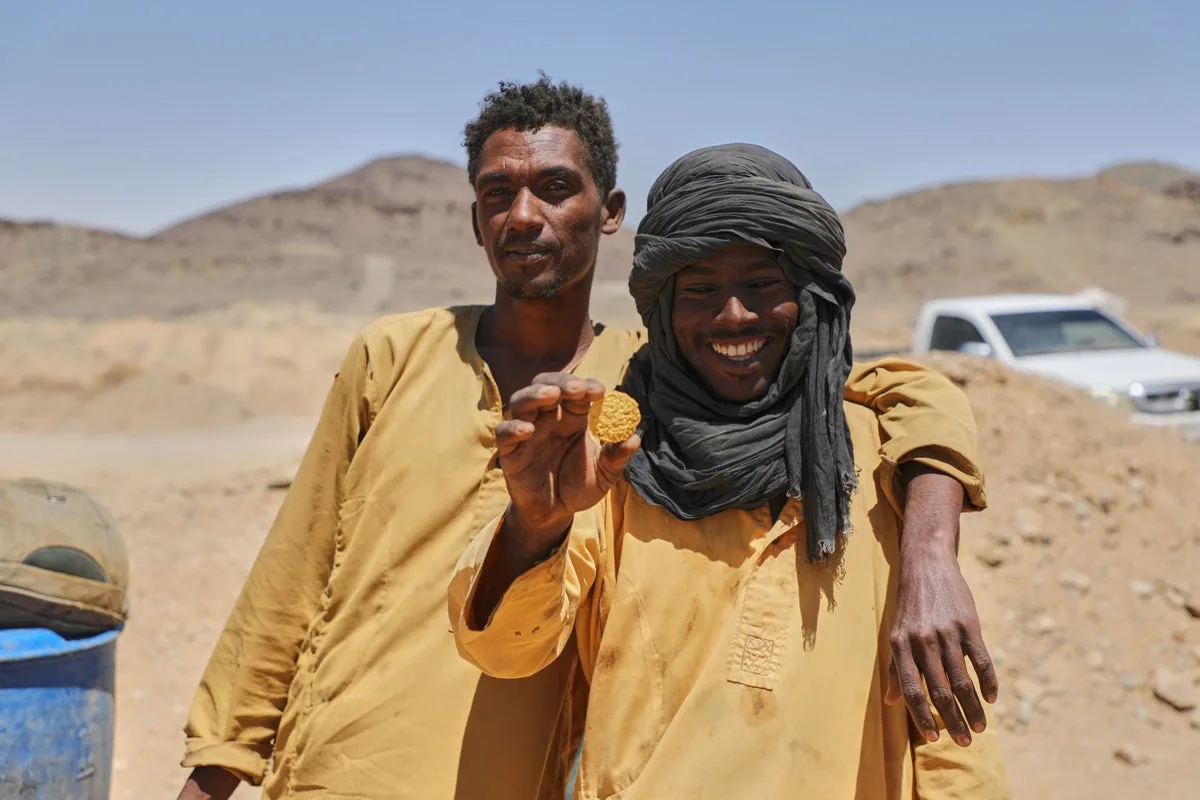
In northern Sudan, unregulated miners use metal detectors to search for gold in the town of Dalgo Mahas, operating without basic safety measures. These artisanal mines are central to Sudan's war economy, which has pushed parts of the country into famine.
Gold became a major revenue source after South Sudan's secession in 2011, accounting for 70% of national revenues. The ongoing conflict between the military and the Rapid Support Forces is fuelled by smuggled gold, with paramilitaries controlling gold-producing areas in Darfur and Kordofan, according to UN experts.
The war has killed at least 59,000 people and created the world's largest humanitarian crisis, displacing over 10 million. Many displaced people have turned to mining. Atta al-Khazin, a former farmer, said, 'Gold mining is the only thing I can rely on.' Zahir Adam, a father from el-Fasher, noted that many have 'no other option.'
Sudan produced 70 tons of gold last year, up from 64 tons in 2024, making it one of Africa's top producers. Artisanal mining accounts for most extraction, with miners using toxic mercury to recover gold, a process that endangers both workers and nearby communities.
Safety standards are widely ignored, leading to frequent deadly collapses. Last month, seven miners died in a Red Sea province collapse, and 13 were killed in South Kordofan in January. More than 50% of gold is smuggled out of the country, according to a 2024 UN report.
Efforts to regulate the industry by a civilian transitional government were aborted by a military coup in 2021 and the war that began in 2023.