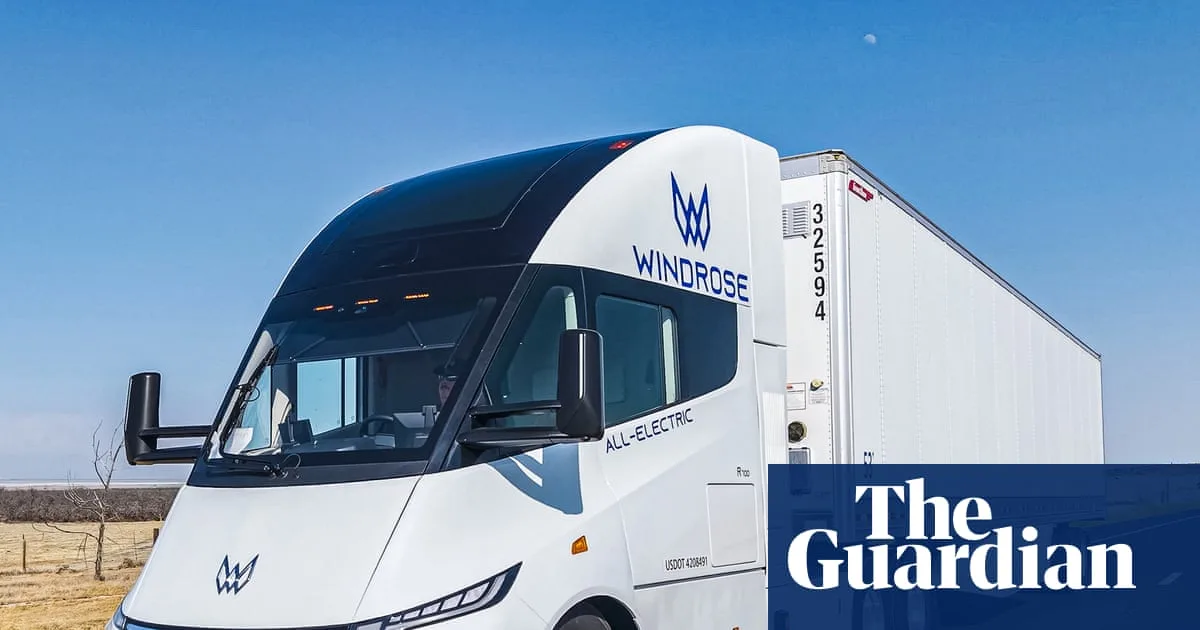
Electric Trucks Challenge Diesel Dominance in Australia's Tough Terrain
Electric Trucks Challenge Diesel Dominance in Australia

Chinese electric truck manufacturer Windrose has demonstrated that its all-electric prime mover can outperform diesel counterparts on one of Australia's most challenging routes. During a trial last year, the vehicle hauled 68 tonnes of steel up Mount Ousley, near Sydney, overtaking most diesel trucks. Bo Christensen, a fleet electrification specialist who followed the truck, noted, 'It's a very tough run, but we were overtaking pretty much all the trucks going up the hill. We did it pretty comfortably.'

Fuel Security Concerns Drive Interest in Electric Trucks

The ongoing conflict in Iran and threats to the Strait of Hormuz have sent diesel prices soaring, highlighting Australia's heavy reliance on imported fuel. In response, the Australian government announced a $10 billion fuel security package, including $3.2 billion to store an additional billion litres of diesel and jet fuel. However, little attention has been paid to electrifying the truck fleet as a solution. Windrose founder Wen Han remarked, 'Unfortunately what’s happening in Iran is reminding people that hoping for cheaper diesel is not a strategy.'

Windrose's Ambitions in Australia

Windrose expects to sell hundreds of its trucks in Australia this year, having already sold ten units at $450,000 each. By 2030, Han aims to sell 100,000 trucks globally, with 20,000 in Australia. The Mount Ousley test, using steel from BlueScope, was one of several trials before final certification. Han noted scepticism from potential customers but believes performance will win them over: 'We just have to go and prove it. Then we see this whiplash from ‘I don’t believe you’ to, ‘can I get this truck yesterday?’'

Wide Pickt banner — collaborative shopping lists app for Telegram, phone mockup with grocery list

The Windrose truck boasts a range of nearly 700 kilometres and can recharge from zero to 60% in about 35 minutes, with planned upgrades to improve both metrics. It is competing with other heavy-duty electric trucks from Volvo, Sany, Daimler, Foton, and Deepway, all entering the Australian market.

Slow Adoption Despite Growing Interest

According to Mov3ment, 332 electric trucks and vans were sold in Australia last year, including 79 heavy-duty models—triple the previous year. Companies like Ikea, Woolworths, Australia Post, and Coca-Cola have introduced electric trucks. Next week, Zenobē will deploy 30 electric trucks in Melbourne and Sydney for Winnings. However, Bruce Hardy of the Energy Futures Foundation says Australia has 'radically fallen behind,' with only 0.7% of new truck sales electric, compared to 20% in China, 7% in Germany, and 2% in the UK.

Transport emissions remain high and are projected to be the largest source by 2030. Heavy vehicles account for about a quarter of transport emissions. Hardy notes that 80% of Australia's diesel trucks could be electrified with current models, and over half will reach replacement age in five years. 'If we don’t offer a meaningful pathway, we lock in diesel trucks for another 15 years,' he warns.

Challenges for Small Operators

Electric trucks are significantly more expensive than diesel, posing a challenge for the 98% of trucking companies that are small operators. Todd Hacking of Heavy Vehicle Industry Australia says, 'These companies have 130 years of history with internal combustion engines. Battery electric trucks are more expensive and change operations, but we are saying don’t bury your head in the sand.' He believes prices will fall and operators love driving them, but government assistance is needed.

Hacking also points out that 80% of road freight emissions come from 20% of vehicles doing long-haul trips, so decarbonisation efforts should focus on heavier trucks. Additionally, biodiesel could be used in existing diesel engines as a transition.

Pickt after-article banner — collaborative shopping lists app with family illustration

Charging Infrastructure Key to Adoption

Access to chargers remains a major hurdle. For last-mile deliveries, trucks can charge overnight at depots, but long-haul freight requires widespread charging networks. Daniel Bleakley of New Energy Transport says, 'We should be on a war footing for this, right now. This is exclusively a fossil fuel crisis—there’s no crisis in wind or solar production.' NewVolt, with a $25.3 million grant, is building three open-access charging hubs near Melbourne and planning up to 60 hubs for long-haul routes between Adelaide, Melbourne, Sydney, and Brisbane. Christensen notes that while the technology seems new to Australians, Chinese companies have been developing it for over a decade: 'It’s new to us. But it’s not new.'