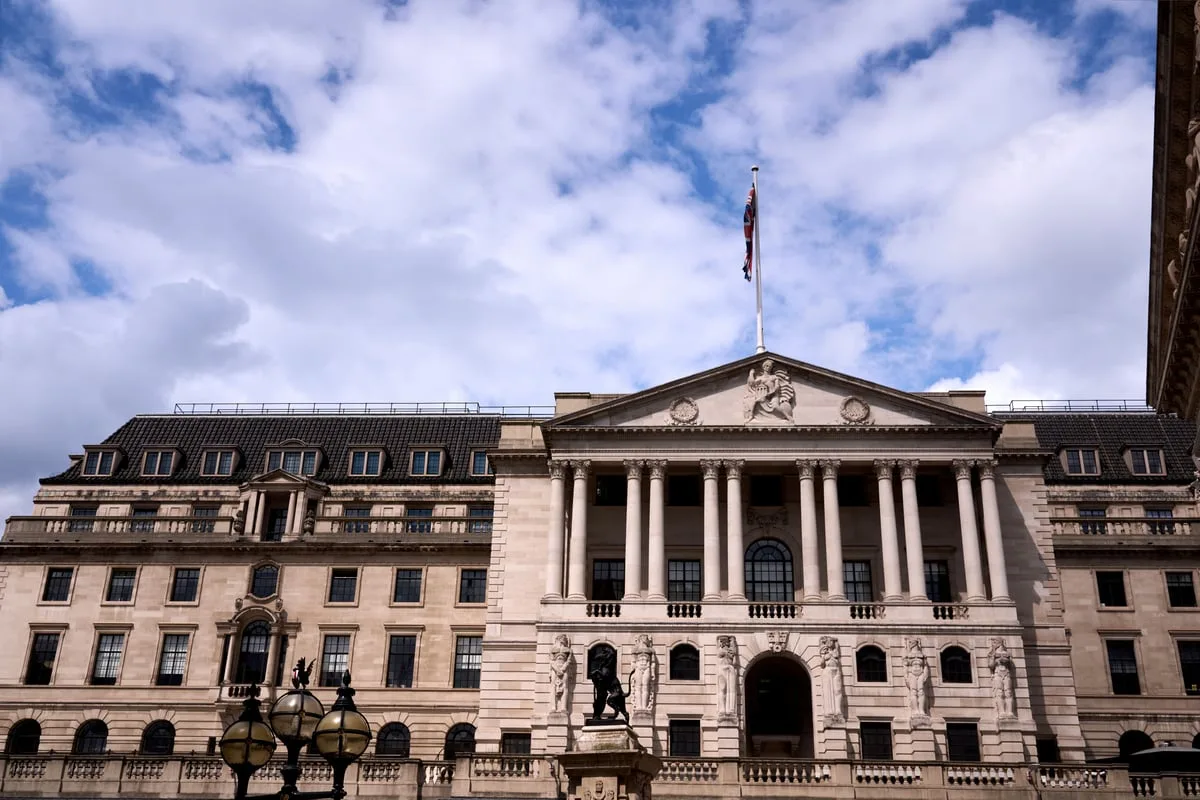
The Bank of England has left interest rates unchanged at 3.75% in a unanimous vote by all nine members of its Monetary Policy Committee, the first time they have all agreed since September 2021. The decision comes as policymakers revised up inflation forecasts due to rising energy prices linked to the war in the Middle East.
Governor Andrew Bailey said: 'War in the Middle East has pushed up global energy prices. You can already see that at the petrol pump and, if it lasts, it will feed into higher household energy bills later in the year.' He added that the Bank 'stands ready to act' to ensure inflation returns to its 2% target.
The Consumer Prices Index fell to 3% in January, but the MPC now expects inflation to remain around 3% in the second quarter of 2026, up from a previous forecast of 2.1%. Higher wholesale gas prices could add around 0.75 percentage points to inflation over the third quarter, potentially pushing CPI to 3.5%.
Some MPC members indicated that rates may need to rise if the conflict is prolonged and causes a severe price shock. Rate-setter Swati Dhingra warned of 'severe and longer-lasting constraints on oil and gas supply', while Catherine Mann said the balance had shifted 'towards considering a longer hold, or even a hike at some point'.
Households face further pressure as Britain's biggest lenders have been hiking mortgage rates in recent weeks, with hundreds of homeowner deals vanishing from the market.