Brent crude breached $100 a barrel on Thursday after Yemen's Houthi militias threatened Saudi oil exports via the Bab al-Mandab strait, opening a fresh front in the Middle East crisis and stoking fears the oil price could surge to $120 a barrel.
In a matter of days, the price of Brent crude jumped by more than 13%, as the tentative recovery of shipping through the Strait of Hormuz ground to a halt amid the breakdown of the US-Iran ceasefire.
What has happened?
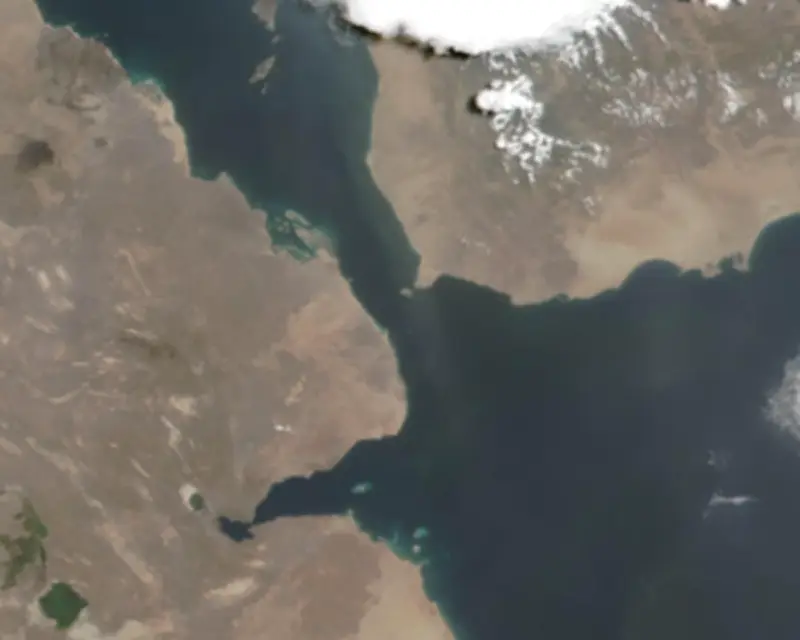
The Houthis sent an email to shipping companies on Monday warning them not to load and unload at Saudi ports or else face being targeted “in any location” within its reach. The group, which controls Yemen's capital and its north-western territory along the Bab al-Mandab, reiterated the threat the following day, claiming that at least six ships had changed course.
The trade route through the southern entrance to the Red Sea carried about 4.1m barrels of crude oil and refined petroleum products each day last year, roughly 5% of the global total. In the months since the US-Israeli strikes on Iran at the end of February, volumes through Bab al-Mandab have surged as it became a vital alternative export route for Saudi Arabia, which rerouted oil via a pipeline from its Abqaiq processing plant to the Yanbu export terminal on its west coast, channelling about 75% of its usual exports via the Red Sea.
Rystad Energy vessel-tracking data indicates that approximately 2.5m barrels a day of these Yanbu volumes are moving south through Bab al-Mandab to customers in India and China.
What does this mean for oil prices?
Since peace talks between the US and Iran broke down, Brent crude has climbed by more than a quarter to over $100 a barrel. A senior Houthi official said this week that its policing of Saudi crude exports via Bab al-Mandab would cause oil prices to “skyrocket to $200 a barrel in a dreadful shock” for the market. In a video statement, a Houthi military spokesperson described it as an “equation of ‘an eye for an eye’” after accusing Riyadh of breaching a four-year ceasefire earlier this month.
Saudi Arabia's military warned that all Houthi threats would “be dealt with swiftly and firmly, as such threats are a blatant violation of international law and fall under acts of maritime piracy”. At least five Saudi-linked oil tankers bound for Bab al-Mandab turned back, according to maritime intelligence data from Windward, of which four were carrying Saudi-origin cargo. An oil tanker destined for China is understood to have reversed course after leaving Yanbu.
On Thursday, the Houthis said they had hit two Saudi tankers, with a Riyadh news agency later confirming that one was ablaze. Full avoidance of the waterway requires rerouting around Africa via the Cape of Good Hope, roughly doubling the voyage length and adding an estimated $2m-$2.5m in cost for each transit.
What about road fuels and gas?
Fatih Birol, head of the International Energy Agency, warned that many refineries had reduced production of fuel products to avoid the surging cost of crude, creating greater stress on global fuel supplies. Goldman Sachs said global supplies of diesel have been under pressure regardless of the resumption of US-Iran hostilities, owing to refinery outages in the Middle East and Russia, where Ukrainian drone attacks have reduced refining capacity by 80%.
Simon Williams, head of policy at the UK motoring group RAC, said fuel prices are “shooting up like a rocket”. The average price of diesel on British forecourts has climbed by almost 8p, or 5%, to 172.14p a litre in the past fortnight, while petrol has risen by 5p to 155.57p, a 3% increase.
Birol said global gas supplies are expected to remain tight in the run-up to winter as European buyers attempt to refill depleted gas storage facilities. Clémence Dubois, head of global campaigns at the green group 350.org, said: “One of the world’s critical choke points remains closed as attempts to reopen it have failed. Now, we see a second critical choke point on the knife’s edge. That should terrify anyone who still thinks fossil fuel dependence is a safe bet ...”