

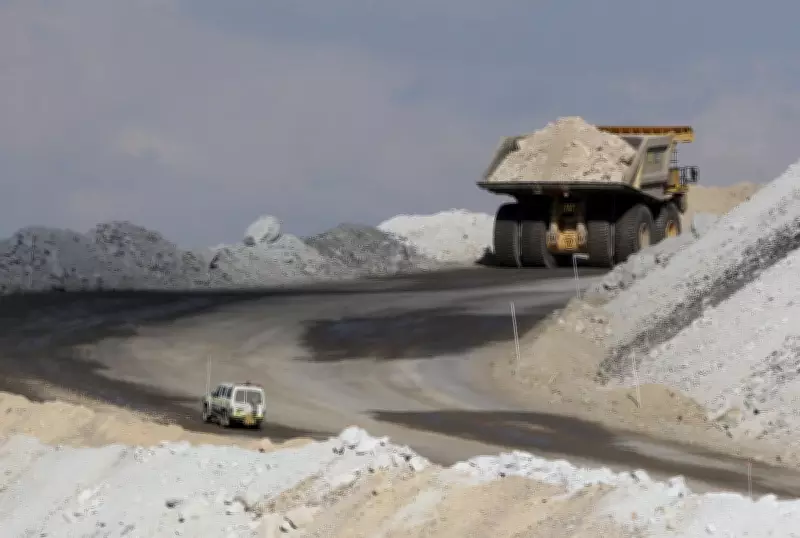
A new report from the International Energy Agency (IEA) has revealed that methane emissions from Australian coalmines are more than double the official figures reported to the United Nations. The findings have prompted climate experts to call for urgent and drastic reductions in the potent greenhouse gas.
IEA Report Highlights Underreporting
The IEA’s Global Methane Tracker, released on Monday, estimates that Australia’s coalmines, particularly in Queensland and New South Wales, emitted 1.7 million tonnes of methane in 2025. In contrast, the Australian government’s latest emissions data, compiled under the UN climate agreement, reports only 0.82 million tonnes of methane from coalmines—equivalent to 25 million tonnes of carbon dioxide.
The discrepancy arises because the IEA incorporates satellite measurements of methane releases, a method not used by the Australian government. Previous IEA reports have also found that methane emissions from Australia’s coal and gas sector could be 60% higher than official figures.

Expert Reactions
Dr Sabina Assan, a methane analyst at energy thinktank Ember, described the IEA findings as a “wake-up call.” She stated: “Once again, methane emissions from Australia’s coal sector remain drastically underreported. The size of potential emissions should serve as a wake-up call for Australia to align its policies with climate science and commit to rapid cuts in coalmine methane—one of the cheapest and fastest ways to reduce warming today.”
Tim Baxter, an Australian climate and energy analyst, echoed these sentiments, emphasising that “urgent, permanent and drastic emissions cuts” of methane could deliver significant benefits while efforts to reduce fossil fuel use continue. He noted that Australia, as one of the world’s largest coal exporters, bears a major responsibility to curb methane emissions from coal.
Methane’s Impact on Climate
Methane has caused approximately 30% of global heating since the Industrial Revolution, according to the IEA. The gas is about 80 times more potent than carbon dioxide over a 20-year period, but it breaks down in the atmosphere in roughly 12 years, compared to CO2 which lasts over a century. This makes methane reductions a key strategy for rapidly slowing global warming.
The IEA report states that 35% of human-caused methane emissions come from the fossil fuel sector, yet there is no sign of these emissions declining despite proven mitigation methods.
Australia’s Methane Estimation Methods Questioned
Baxter criticised the Australian government’s approach, saying: “The Australian government is increasingly isolated when it comes to defending its coalmine methane estimation methods. Essentially all independent assessments of Australia’s methods reveal enormous gaps. The IEA’s latest report is just one among a large choir signing the tune that there is something very wrong with the way Australia estimates its fossil methane emissions, but the federal government refuses to hear.”
According to official data, Australia’s agricultural sector is the largest methane emitter at 2.25 million tonnes, compared to 1.17 million tonnes from the energy industry. Official figures also show that methane emissions from coalmines have declined from a peak of 1.2 million tonnes in 2007 to 0.8 million tonnes in 2024. However, Ember argues that this decline may partly reflect a shift towards estimating emissions rather than directly measuring them.
A UN-backed study of one Queensland coalmine, which used airborne monitoring equipment, found that methane emissions were likely three to eight times higher than official reports. In response, the Australian government established an expert panel in 2024 to review methane measurement methods.
Guardian Australia has contacted the office of Climate and Energy Minister Chris Bowen for comment.






