
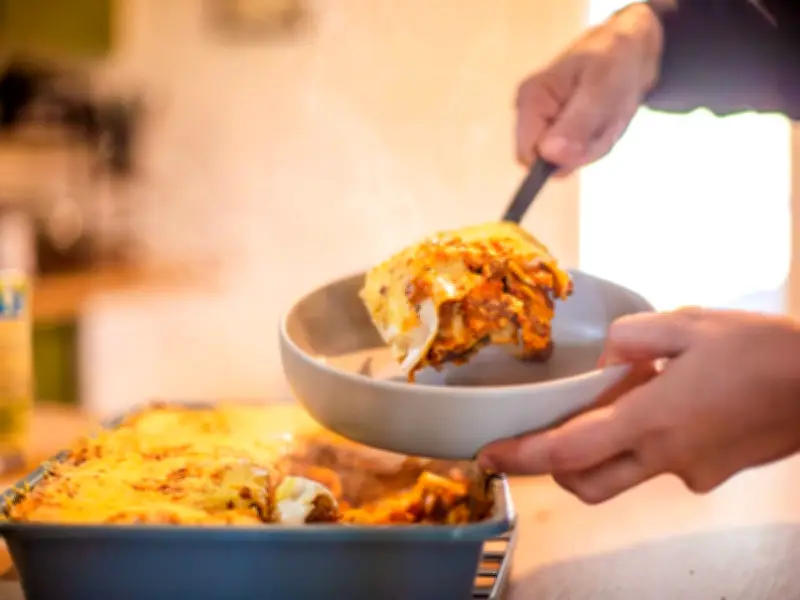
Making the perfect homemade lasagne can be challenging, but six chefs have shared their expert advice to help you achieve restaurant-quality results. From soaking pasta sheets to using a cinnamon stick, these tips address common pitfalls and elevate the dish.
Soak Dried Pasta Sheets to Avoid Crunchy Edges
James Cotton, development chef at Brakes Foodservice, explained that many home cooks struggle with undercooked bottom pasta layers. He recommends soaking dried lasagne sheets in boiled water for about 10 minutes before layering. This pre-cooks the pasta slightly. Additionally, spread a thin layer of béchamel sauce at the bottom of the dish before adding the first pasta sheets to provide moisture and prevent crunchy edges.
Cotton also advises covering the lasagne tightly with foil for the first 20 to 30 minutes of baking to trap steam, then removing it to brown the cheese for another 10 to 15 minutes. His secret ingredient is a pinch of cinnamon or a cinnamon stick added to the meat sauce while simmering, which pairs well with tomato-based dishes. Remember to remove the cinnamon stick before assembling.
Prepare Lasagne in Advance for Better Texture and Flavor
Jesse Kempner, head chef at Mindful Chef, suggests making lasagne a day ahead or at least in the morning. This allows the sauces to soften the dried pasta sheets and improves the structure. The sauce also develops deeper flavor over time. Additionally, letting the lasagne rest before slicing prevents it from becoming watery or messy.
Use a Blend of Meats for a Richer Ragù
Chef Enzo Oliveri, Cirio Ambassador and President of the Italian Chefs Federation (FIC UK), emphasizes that the ragù sauce is the foundation of authentic lasagne. He uses a combination of beef and pork, as pork adds richness and sweetness due to its higher fat content. This fat enhances the tomato flavor, creating a more balanced sauce.
Oliveri follows a consistent layering order: pasta sheet, ragù, béchamel, and a generous dusting of Parmesan cheese. He recommends five or six thin layers for optimal balance. He also stresses spreading béchamel on the base to prevent sticking and allowing the lasagne to rest for 15 to 20 minutes after baking for neat slices.
Béchamel Base Prevents Overcooking and Drying
Yassir Chair, chef founder of Tagine & Grill and Afuego Burger, highlights that spreading a thin layer of béchamel on the dish's base before adding pasta creates a protective cushion. This prevents the bottom layer from overcooking, drying out, or becoming tough, resulting in a consistent, silky texture throughout.
Thin Pasta, Rich Sauce, and Generous Parmesan
Maurillo Molteni, head chef at TOZI restaurant & bar, prefers thin pasta, a rich bolognese sauce, and not-too-thick béchamel. He is generous with Parmesan in every layer and always makes lasagne the day before, letting it rest overnight to allow the ingredients to bond.




