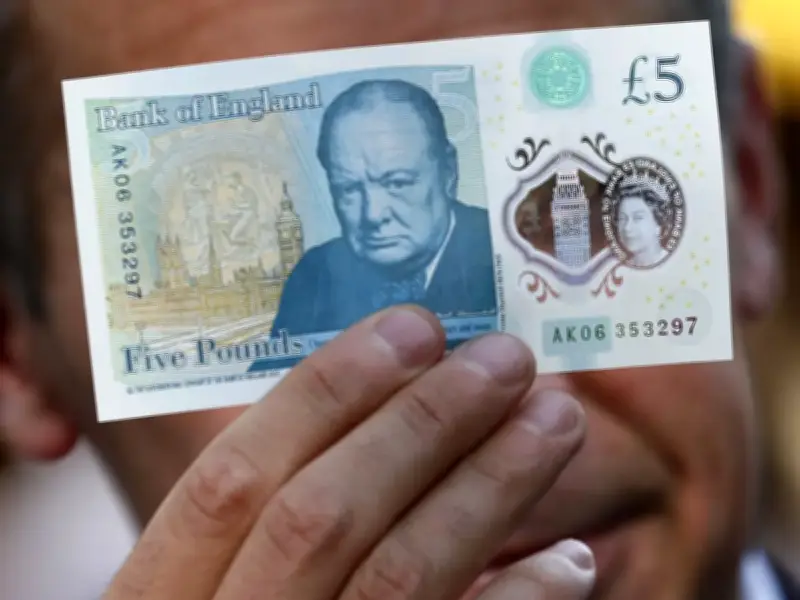
The Bank of England has announced that the Atlantic puffin, barn owl, buff-tailed bumblebee and European hedgehog will feature on the next series of banknotes, replacing the current notes that showcase Sir Winston Churchill, Jane Austen, JMW Turner and Alan Turing. The first denomination from the new series will be launched over the next few years, the Bank said.
The Bank added that the process of designing, testing and printing banknotes to ensure they are high-quality, resilient and accessible takes years. As the designs are only in very early stages, they will be unveiled closer to their launch.
Public consultation results
The decision on which animals to include was made after nearly 500,000 people responded to a public consultation. They chose from a shortlist of 18 options across three categories – mammals, birds, and amphibians, insects and fish – developed in collaboration with a panel of UK wildlife experts. The Bank used the feedback to decide on the four animals, with one for each denomination of banknote.
The barn owl, buff-tailed bumblebee and European hedgehog were the most popular animals in their respective categories. The Bank said that the Atlantic puffin was selected because it was the most popular marine animal, adding that its inclusion will add variety to the series, making the denominations easier to distinguish and giving an opportunity to celebrate the British coastline.
Selection criteria and design details
The red fox, which was in the mammals category, received more nominations than the Atlantic puffin, with 244,651. In the birds category, the common kingfisher also received more nominations than the Atlantic puffin, at 211,277 compared with 183,137 for the Atlantic puffin. The Bank has said previously that it would not necessarily choose the four animals with the highest number of responses, as it is important that the animals represent different environments from across the UK.
The Bank said the decision on which selected animal will feature on which denomination will be made in due course and announced closer to launch. The animals will feature as the central imagery, but other elements from nature will also be included. Other shortlisted animals may also potentially be included to complete the designs, it added.
Background and next steps
Historical figures who have helped shape thought, innovation, leadership and values have been showcased on Bank of England banknotes since 1970. The first of the current series has been in circulation since 2016, when £5 banknotes featuring Sir Winston Churchill were issued. The current series also features Jane Austen on the £10, JMW Turner on the £20 and Alan Turing on the £50.
The rise in payment technologies such as contactless and mobile wallets has given people an increasing array of alternatives to banknotes and coins. On June 3, the Bank launched a consultation asking the public which animals they would prefer to see used as the central images on the next series. The consultation ran for a month and received 478,531 responses – the most the Bank has ever received to a banknote imagery consultation. Those responding placed 2,549,003 selections across the shortlist of 18 animals.
The next series of banknotes will also continue to include a portrait of the monarch. Victoria Cleland, Bank of England chief cashier, said: “I am delighted that nearly half a million people responded to our wildlife imagery consultation, showing that cash still matters.”
Rhys Phillips, the Bank’s incoming chief cashier who will be responsible for delivering the new series of notes, said: “It’s fantastic to see how engaged the public have been in this choice. With these animals as the focus for the design, we can deliver a new series of banknotes that are secure and represent the UK at its best.”
The shortlisted animals for the 2026 wildlife imagery consultation included mammals such as the European hedgehog (259,665), red fox (244,651), brown hare (130,614), grey seal (92,043), pine marten (82,773) and bottlenose dolphin (48,847); birds such as the barn owl (270,596), common kingfisher (211,277), Atlantic puffin (183,137), great-spotted woodpecker (86,839), white-tailed eagle (46,109) and Eurasian curlew (44,521); and amphibians, insects and fish such as the buff-tailed bumblebee (360,399), emperor dragonfly (143,894), common frog (120,382), marsh fritillary butterfly (108,467), basking shark (69,699) and Atlantic salmon (45,090). The Bank will now work to design, test and produce the banknotes, combining the announced imagery with cutting-edge security features and materials science.