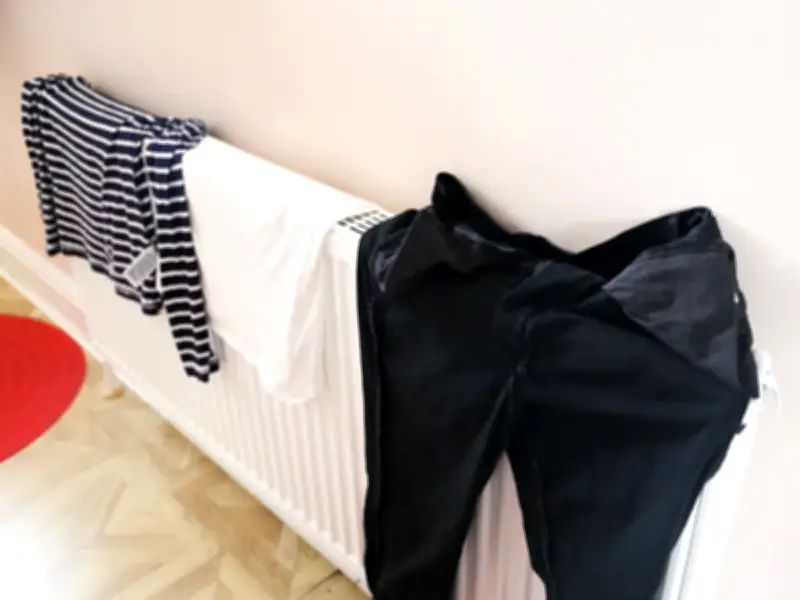
Households across the UK are being warned never to dry clothes on radiators. With temperatures dropping as winter approaches, drying washing outdoors is almost impossible for many.
Hanging damp clothes over a radiator can seem like a convenient and cheaper way to get clothes dry instead of using a tumble dryer. However, radiator specialists at Stelrad warn that covering standard room radiators with laundry can stop heat from circulating around your home, and the moisture released while drying can contribute to condensation.
Why covering radiators is a problem
Chris Harvey at Stelrad explains why households should reconsider the habit. “Putting damp washing over a warm radiator might seem like making good use of heat you’re already paying for, particularly when you’re trying to avoid running another appliance,” says Chris. “But covering the radiator can obstruct the circulation of warm air, making it harder to heat the room effectively. If that leaves you feeling cold, you may end up turning up the thermostat or keeping the heating on for longer.”
As well as obstructing heat, drying washing indoors releases moisture into the air. Without proper ventilation, this can cause condensation to form on colder surfaces, including windows and external walls. “The water in your washing has to go somewhere. As the clothes dry, that moisture moves into the air, and it needs a way to leave the home,” Chris explains. “If it repeatedly settles on cold surfaces and those areas remain damp, conditions can develop that allow mould to grow. That’s why keeping the room warm and managing ventilation need to go together.”
Better ways to dry clothes indoors
Drying washing on an airer also releases moisture. So when drying clothes indoors, Stelrad recommends spreading them out on a freestanding airer, leaving space between garments and keeping the radiator clear. “You want warm air to circulate around both the room and your washing,” adds Chris. “Avoid pushing a full airer directly against the radiator or packing clothes so tightly together that they struggle to dry.”
Chris also advises checking garment care labels before using an additional spin cycle. “Where suitable, this can remove more water before you hang the washing up, leaving less moisture to evaporate indoors.”
Ventilation is key
Opening a window can also help remove moisture from your home while washing dries. “It can feel counterintuitive to ventilate a room when you’re paying to heat it, but blocking vents or keeping a damp room sealed up can allow moisture to build,” Chris says. “Turning the heating higher is not a substitute for removing that moisture. If condensation keeps returning, or you notice persistent damp or mould, investigate the cause rather than simply increasing the temperature.”
Chris also issued advice on drying clothes on a heated towel rail: “Even when a product is designed for drying towels, the moisture still needs managing. Avoid overloading it and make sure the room has suitable ventilation. The aim is to dry your washing while allowing your heating to do its job, without leaving excess moisture trapped inside your home.”