In the evolving landscape of gratuity practices, a new deceptive trend called 'tip baiting' has emerged as a significant problem within food and grocery delivery services. This controversial practice involves customers offering substantial upfront tips to guarantee prompt service through delivery apps, only to drastically reduce or entirely remove those tips after their orders have been successfully delivered.
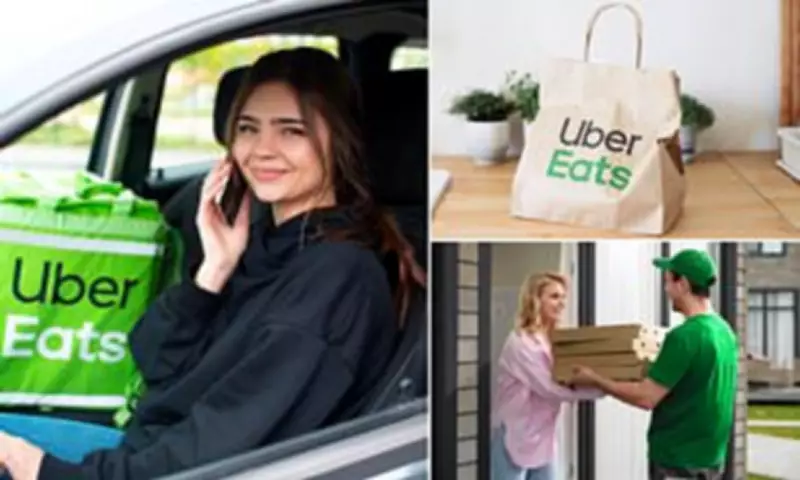
Uber Eats Takes Decisive Action Against Tip Manipulation
Major delivery platform Uber Eats has implemented a significant policy change in response to the growing prevalence of tip baiting incidents. The company has updated its tipping feature to eliminate the capability for customers to modify their tips after making the initial selection, according to numerous user reports and complaints circulating on social media platforms.
'I've noticed that since Uber Eats eliminated tip editing, service has gone way down,' one frustrated customer detailed in a Reddit post. 'I used to tip generously to ensure prompt delivery and that drivers wouldn't mishandle my food. Now, regardless of how poor the service might be, I cannot adjust the tip downward - only increase it if I choose.'

Customer Frustration and Delivery Driver Perspectives
The policy change has generated mixed reactions from both customers and delivery workers. One customer recounted a particularly disappointing experience: 'Just today, a driver carelessly tossed my food in some random spot in my building instead of delivering it to my door or handing it to the concierge. When I contacted customer service about this poor service, they refused to eliminate or reduce the tip I had already provided.'
Other customers have expressed similar frustrations with the new system, with one declaring the app 'garbage' after encountering comparable service issues. However, some social media users have defended the policy change, highlighting the negative impact tip baiting has on delivery drivers.
'Too many customers took advantage of the situation by tip baiting,' one commenter explained. 'Imagine you waited thirty minutes at a restaurant and then drove ten miles expecting to make $20. Then, despite providing perfect service, the customer removes the tip entirely. How would that make you feel as a driver trying to earn a living?'
The Broader Tipping Culture Controversy
This development represents just the latest controversy in an increasingly complex tipping ecosystem that has expanded far beyond traditional restaurant settings. A representative from Uber Eats clarified to media outlets that, following order completion, customers can still potentially reduce or remove their tips by contacting the app's customer support directly, though this process is more formalized than the previous instant editing capability.
The tip baiting phenomenon has become sufficiently widespread that several major players in food delivery are reportedly considering or implementing measures to address the deceptive practice. This reflects broader societal tensions around tipping expectations and practices that have intensified in recent years.
Additional Tipping Controversies Emerge
Parallel to the delivery app controversies, other sectors are experiencing their own tipping-related conflicts. One customer expressed shock when a pizza establishment requested two separate gratuities for a simple takeout order - one designated for the delivery driver and another 'for those preparing your meal.'
'I just wanted dinner, not a guilt-powered funding round for everyone in the supply chain,' the customer remarked on social media platform X.
Another recent incident involved Texas Roadhouse, where customers discovered the restaurant calculating suggested tip percentages based on the post-tax total rather than the pre-tax amount - a practice that contradicts traditional tipping etiquette. 'Texas Roadhouse suggestions are out of control,' one diner complained on Reddit after noticing the fine print indicating 'Tip is calculated after tax and before discounts.'

Further controversies have emerged nationwide, including an Italian restaurant in Las Vegas that faced criticism for automatically adding a tip to receipts before presenting them to customers, then requesting an additional gratuity on top. Similarly, patrons at a Maryland seafood restaurant were dismayed when their server physically crossed out the 15 percent tip option on a $260 bill, making it appear the suggested amount 'wouldn't be good enough for her,' despite what the diners described as merely 'decent' service.
Evolving Tipping Standards and Customer Backlash
These incidents highlight how tipping expectations have transformed dramatically within a relatively short timeframe. Just a decade ago, 15 percent was widely considered the standard gratuity for satisfactory service. Today, that baseline has frequently escalated to 20 percent or higher across restaurants, bars, coffee shops, and various service industries.
The fundamental principle that gratuities should represent a percentage of the pre-tax total - not including taxes the customer never actually consumed - appears increasingly challenged by new business practices. As tipping culture continues to evolve and expand into new service areas, conflicts between customer expectations, worker compensation models, and business practices seem likely to persist.
Some consumers have adopted extreme positions in response to these developments. 'Do yourself a huge favor and don't use food delivery apps,' one social media user advised. 'You're paying a substantial premium for this service on top of already expensive food items, regardless of tipping. Just go collect your food yourself.'
Others have proposed different approaches: 'Never tip upfront,' one commenter suggested, while another elaborated: 'Bribes are paid in advance. Tips should be voluntarily provided as rewards for genuinely good service received.'
As businesses implement new policies like Uber Eats' tip editing restriction and customers navigate increasingly complex gratuity expectations, the fundamental question remains: How has contemporary tipping culture transformed your dining and food ordering experiences?