Seafood Industry Bets on Meat-Like Packaging to Boost US Consumption
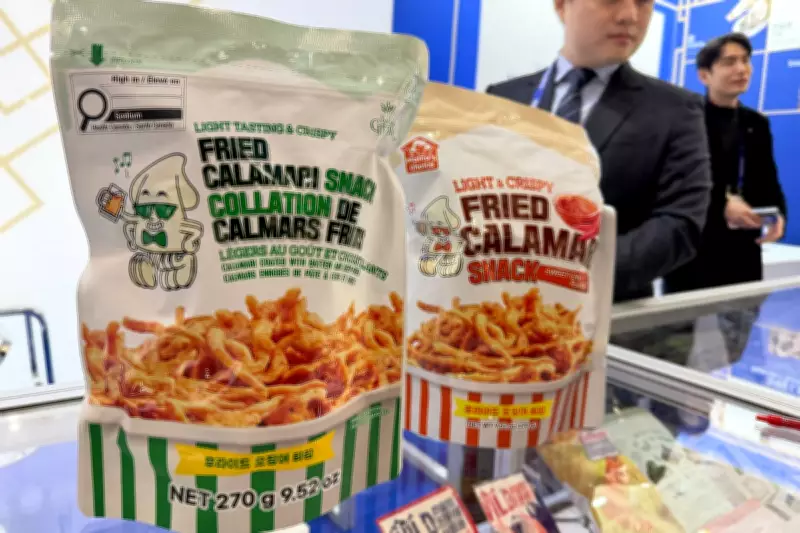
The American seafood industry is making a bold strategic pivot, transforming aquatic fare into familiar meat-like forms in an attempt to overcome the nation's longstanding aversion to fish. This innovative approach was prominently displayed at the recent Seafood Expo North America in Boston, where hundreds of companies showcased products designed to make seafood appear and taste less like its original form.
Stagnant Consumption Figures
Americans consume a mere 19 pounds of seafood annually, a figure that has remained virtually unchanged for an entire century. This pales in comparison to the global average of 45 pounds and is significantly less than countries like Iceland, where annual consumption reaches approximately 200 pounds per person. The limited American appetite has presented a persistent challenge for the $24 billion market, which has experienced flat sales for years, with just 10% of shoppers accounting for nearly half of all purchases.
Innovative Product Transformations
Companies are pushing creative boundaries with products that mimic popular American staples. Taiwan-based Tuna Fresh has developed tuna that tastes like fried chicken, offering it as breaded nuggets and strips. Jack Chi, a company spokesman, explained their strategy: "Our Taiwanese magic is making tuna taste like fried chicken. We wanted to be able to engage in the U.S. market, and we found that fried foods are the way."

Other notable innovations include:
- Shrimp burgers available in both slider and Whopper-sized portions from SK Food Brands
- Salmon snack strips designed to resemble Slim Jim meat snacks from Harbor Bell Seafoods
- Salmon salami from Surfsnax that puts fish in a familiar cured meat format
- Fish spareribs made from Brazilian tambaqui, a freshwater fish with a meaty, pork-like texture
- Fried calamari snacks that taste like Cheetos from Balance Grow
Industry Perspectives and Skepticism
Justin Rogers, a sales manager with SK Food Brands, highlighted the appeal of these transformed products: "It makes it more palatable to people who aren't big seafood fans. Especially with things like these sliders, it gives them an entry point." Holly Phillips, spokeswoman for Harbor Bell Seafoods, emphasized how their salmon strips "don't smell fishy" and "don't taste fishy," deliberately designed to overcome sensory barriers.
However, not all stakeholders view this covert approach positively. Niaz Dorry, coordinating director of the North American Marine Alliance, advocates for transparency: "Eat fish that looks like fish! The likelihood that that fish came from a community-based, scale-appropriate entity is much higher if that fish still looks like what it was when it was swimming in the water."
Market Challenges and Opportunities
The industry's transformation efforts come as growth has been largely confined to sushi counters and price increases rather than expanded consumption. Steve Markenson, vice president of research and insights for consumer marketing firm FMI, expressed skepticism about disguised seafood's broad appeal: "The non-seafood folks — which is about 40% of the population — I don't know that this is really going to be appealing to them."
Paradoxically, the most promising demographic for these innovative products might be younger consumers. Joshua Bickert, a seafood market reporter and analyst for Expana, suggested: "If you package it like hot dogs and hamburgers and chicken tenders, you maybe change that mindset at a younger age."
As the seafood industry grapples with stagnant consumption patterns that have persisted for generations, its future success appears increasingly dependent on convincing Americans that fish, in its most palatable and familiar forms, can become a regular part of their diet. The industry's gamble represents a fundamental reimagining of how seafood is presented and consumed in a market where traditional approaches have failed to move the needle for a century.