Gordon Ramsay's 20% Service Charge Reignites UK Tipping Debate
Ramsay's 20% Charge Sparks UK Tipping Row Again

A bill arrives. You scan it quickly – food, drinks, total – and then your eye catches it: 20 per cent service charge. Not a tip, not quite optional, but not exactly compulsory either.

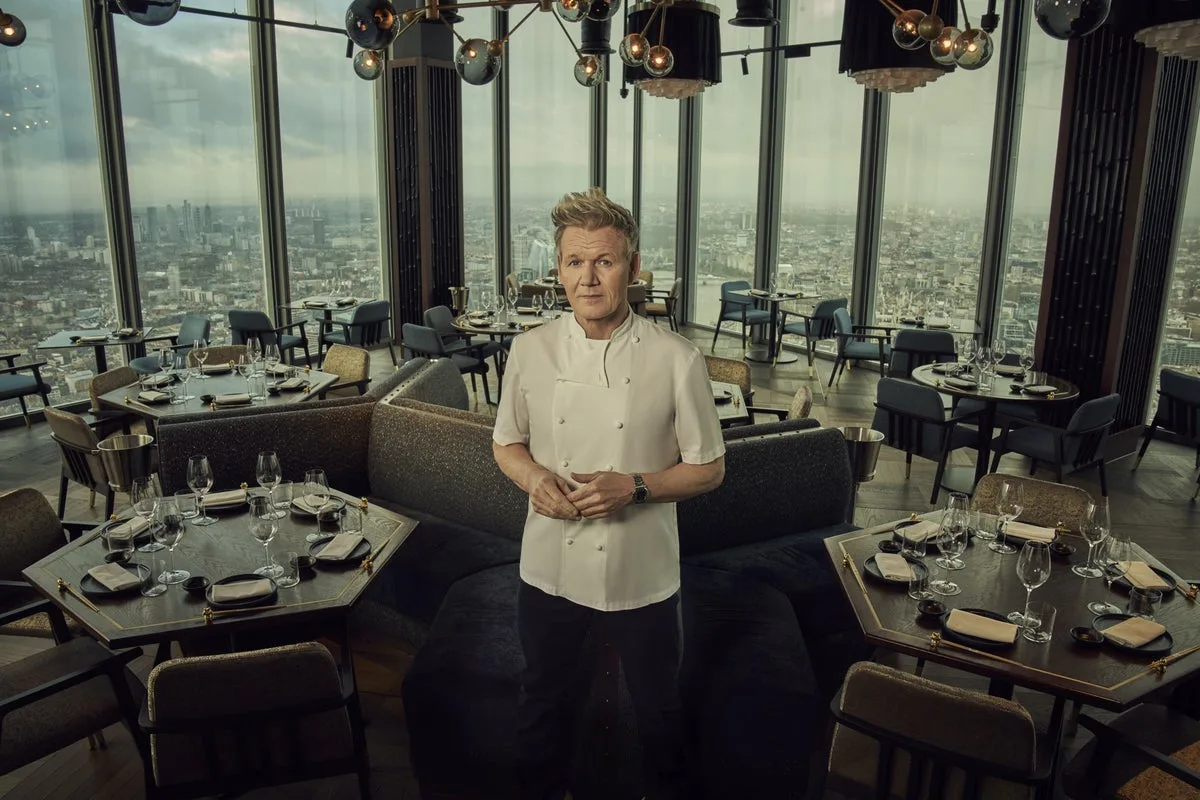
When Gordon Ramsay added a charge to Christmas and New Year menus at his Lucky Cat restaurant at 22 Bishopsgate – albeit for a limited period – it reignited a familiar question: when did eating out in Britain get quite this complicated – and quite this expensive?

It is tempting to frame it as the creeping Americanisation of dining. But the reality is subtler – and perhaps more uncomfortable. Service charges have not suddenly appeared; they have simply been inching upwards, from 10 to 12.5 to 15 per cent, and now, occasionally, beyond. The language has not changed, but the expectation has.

Wide Pickt banner — collaborative shopping lists app for Telegram, phone mockup with grocery list

Yet in restaurants across the UK, an uprising is brewing. More than a fifth of diners (22 per cent) are boldly opting out of paying optional service charges, according to research from 2024 by RSM UK. It seems the national penchant for avoiding a fuss has finally met its match in the form of a sneaky 12.5 per cent now routinely tacked onto the bill.

Two years on, that unease has not gone away – if anything, it has intensified, as those “standard” charges begin to creep higher. It is the tipping point, quite literally, where dining out in the UK becomes an exercise in ethical gymnastics. Do you dutifully cough up while secretly seething at being robbed of just leaving a few quid tip, or do you, like more than a fifth of Brits, gleefully refuse to pay it at all?

In the southwest, east Midlands and Yorkshire, the numbers jump even higher, to more than a third. So much for the stereotype of the overly polite Brit who would rather drown in a puddle than cause a scene.

I have been that person – sitting there, sweating slightly as the bill arrives, shocked at how much the meal has cost and then realising a hefty whack of it is thanks to the “discretionary” service charge. I spend a few panicky minutes calculating whether the service merits the extra charge, but then pay it anyway even if I decide it is not. It is the stuff of nightmares, really. And frankly, I am not alone.

Saxon Moseley, partner and head of leisure and hospitality at RSM UK, suggests that the rising cost of living might be driving this new frugality. With energy bills rocketing and inflation making everything from bread to a pint of milk feel like a luxury, the idea of handing over an extra 12.5 per cent for service that has been, shall we say, less than stellar, feels like an unnecessary indulgence.

But there is something else at play here, too. Tipping culture in the UK has always been a bit like Marmite. Nearly half of us would prefer to tip at our own discretion without being coerced into a mandatory-feeling, yet supposedly optional, suggested charge.

What has changed is not just how much we are being asked to pay, but how unclear that payment has become. Is it a tip, a fee, or simply the real cost of the meal in disguise?

Rory Cox, owner of The Prancing Stag in Jordanhill, Glasgow, is aware of this simmering resentment. At his restaurant, there is no added service charge, just a fair split of whatever tips the customers leave behind.

“I have always felt it should be up to the guests if they wish to leave the staff a tip or not. Adding one on puts the customer in an awkward position if they then feel they do not want to tip, if, say, the meal and/or service has not been up to standard,” Cox says. It is a refreshingly honest approach in an industry that can often leave customers feeling ripped off, whether they have enjoyed their meal or not.

Cox also notes the shift from cash to card tips, which means staff now wait until the end of the month to receive their tips – docked for tax and card processing fees. It is a far cry from the immediate reward of cash in hand at the end of the night, yet another way the dining experience has become increasingly detached from the straightforward pleasure it once was.


Pickt after-article banner — collaborative shopping lists app with family illustration

And let us be honest, we have all been there. You have just finished a disappointing dinner – your steak was overcooked, the wine list looked like it had been pilfered from a petrol station and the service was as sloppy. You are about to pay the bill when you notice that little line at the bottom, suggesting you add 12.5 per cent for the privilege of enduring a subpar evening. Suddenly, the meal has become extraordinarily expensive for what it was and the idea of opting out does not seem so unreasonable, does it?

Gary Townsend, chef and owner of Elements in Bearsden, outside Glasgow, knows this dilemma all too well. When he opened his restaurant, he wrestled with whether to apply an optional service charge or leave it off entirely.

“We pay the national living wage [£12ph] before tips, and do not use service as a way of topping up wages either,” he says. In the end, he decided to add a discretionary 12.5 per cent, but with a crucial caveat: 100 per cent of all tips and service charges go directly to the staff.

“We feel this takes some hassle and ambiguity away from our customers and provides them with clarity around how our staff are paid too,” he explains.

It is an admirable stance, but let us not pretend all restaurants are run this way. The reality is that many use service charges as a sneaky way to supplement low wages, passing the buck to the consumer. It is a tactic that leaves a bad taste in the mouth – but many restaurateurs would point to rising operating costs and the unfairness of one waiter being left a tip while kitchen staff go without, in their defence.

When new legislation came into force in October 2024, it was supposed to fix at least part of this problem, making it a legal requirement for businesses to pass 100 per cent of tips and service charges on to staff.

Kate Nicholls, chief executive of UKHospitality, certainly hoped it would make a difference. “These figures show that the overwhelming majority of consumers are more than happy to pay service charges in order to reward hardworking staff.”

And in some ways, it has. Transparency has improved. But the bigger question – how much diners are being asked to pay in the first place – remains unresolved.

And should not good service be part of the job in the first place? Is that not what their wages are supposed to cover? It is not like I am tipping my postman every time he manages to actually deliver a letter.

Should not a decent wage come with the expectation that the service will be good anyway? When I go out to eat, I expect a certain level of professionalism and courtesy – it is part of what I am paying for when I see those often eye-watering prices on the menu.

Tipping, in my view, should be reserved for those rare occasions when the staff have gone above and beyond the call of duty. Maybe they have helped create a special moment by accommodating a surprise celebration, stayed open late because you lost track of time, or perhaps they have graciously handled a group of diners who have had one too many. That is when a tip feels truly deserved – when it is a token of appreciation for something extra, not a top-up for merely doing the job they are already paid to do.

What we have now is something more muddled: a system where menu prices, service charges and tips overlap, leaving diners unsure what they are actually paying for – and whether the headline price ever reflected reality at all.

Nearly a fifth of UK consumers would prefer no tipping or service charge at all, opting instead for staff to be paid well with service included in the menu prices. It is a notion that is both radical and simple.

As one diner, Tsara Taylor, I spoke to astutely puts it: “Service charge is a necessary evil in much of the industry as a way to compete on wages because almost everyone does it. We need a mass movement of operators to change, or at least a couple of big brands to go first.”

Because ultimately, this is no longer just a debate about tipping. It is about pricing – and whether the true cost of eating out in Britain is being quietly shifted away from the menu and onto the bill at the end.

So next time you are handed the bill with that little extra at the bottom, do not be afraid to pause and consider your options. If the service was exceptional, go ahead and reward it. But if it was not, do not feel guilty about saying “No, thanks”.

After all, dining out should feel transparent as well as pleasurable – and right now, it is often neither.

This article was originally published in October 2024 and has been updated in April 2026 to reflect recent developments.