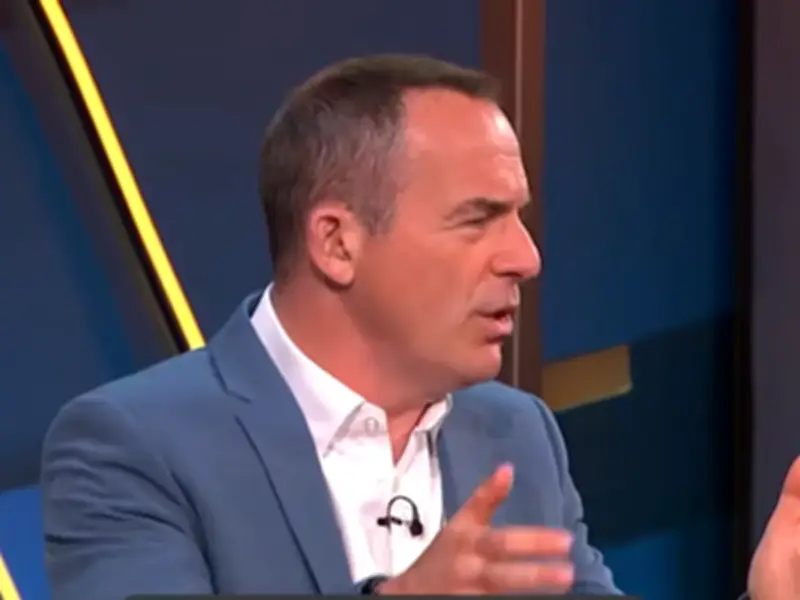
Money-saving expert Martin Lewis has urged pensioners to check whether they are missing out on thousands of pounds a year through Attendance Allowance, an "underclaimed" state benefit that is not means-tested.
Attendance Allowance, which is administered by the Department for Work and Pensions (DWP), is designed for people aged 66 and over with disabilities or serious health conditions requiring regular care. It is paid at two rates - £76.70 or £114.60 per week, depending on the level of care needed - potentially delivering an extra £3,988.40 or £5,959.20 each year.
Crucially, the benefit is not means-tested, meaning eligibility is not determined by income or savings, so all qualifying claimants receive the payment regardless of their financial circumstances.
1.1 million missing out
Mr Lewis said: "So 1.1 million people potentially in the UK - State Pensioners, you have to be of state pension age - are missing out on Attendance Allowance. Now, that 1.1 million number is one from myself and my team, and Policy in Practice have worked out it is not a government figure."
"Now, this is a payment that helps you if you need help-it's to give you extra money if you need help and support. Crucially, it isn't means-tested, so they don't look at how much money you have. It's pretty binary: you either qualify for it or you don't qualify for it."
Around 1.9 million people are currently claiming Attendance Allowance. The most common conditions among entitled claimants include arthritis (533,990), dementia (213,742), heart disease (135,639), unknown conditions (116,898), respiratory disorders and diseases (113,567), diseases of the muscles, bones or joints (96,257), back pain with no precise diagnosis (82,070), cerebrovascular disease (81,883), malignant disease (65,140), visual disorders and diseases (55,167), and terminally ill claimants (50,324).
Who is eligible
Mr Lewis cautioned that individuals receiving certain benefits are ineligible: "I should say, if you're entitled to PIP (Personal Independence Payment) or Disability Living Allowance, you can't get both, and they tend to be better for you, so you wouldn't want it."
"Now, to qualify for this, you need to have supervision for six months. So help or supervision for six months, I should say. Help means help with daily living; supervision means avoiding dangers to yourself. Now, the daily living one, just to give people what this is all about: what does help mean? You don't actually have to be getting the help, you just need to need help."
He referenced a definition of help from Lord Denning, who was Master of the Rolls in 1981, saying it means "help with bodily functions, including breathing, hearing, seeing, eating, drinking, walking, sitting, sleeping, getting in or out of bed, dressing, undressing, eliminating waste products, and the like-all of which an ordinary person who is not suffering from any disability does for himself or herself."
How to claim
Attendance Allowance can be claimed online or by post, with a different claiming process in Northern Ireland and for those nearing the end of life. Applicants need their National Insurance number, address and contact details, details of the disability or health condition, details of their GP surgery or medical centre, and details of their care home, hospital or hospice if currently staying in one.
After sending a claim, applicants receive a text or letter within three weeks explaining when a decision can be expected, followed by a letter with the outcome once a decision is made.
A wide variety of common health conditions may make individuals eligible, including arthritis, vision problems, heart conditions, Parkinson's disease, and breathing difficulties such as asthma. The DWP confirms that while the benefit is designed to assist with care costs, recipients have complete freedom over how the money is spent.