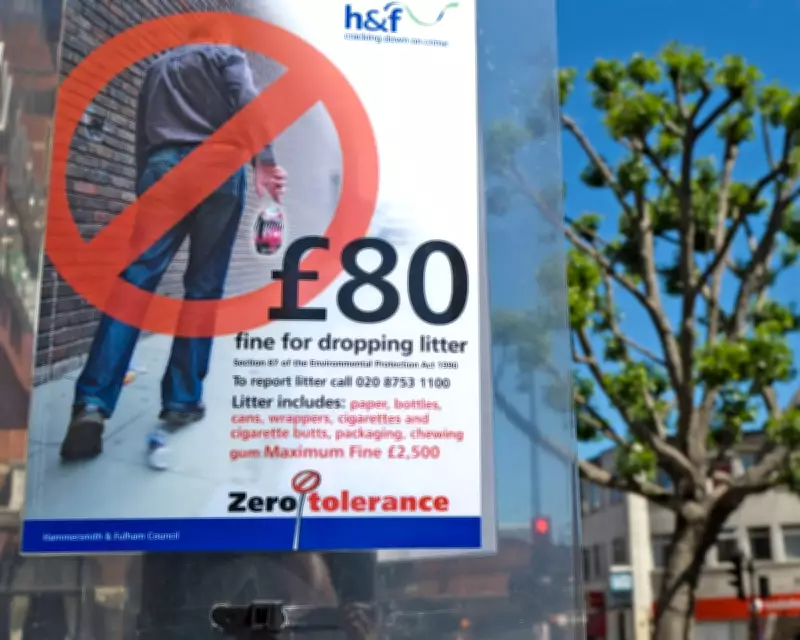
London's Litter Fines Spark Outrage Over Disproportionate Penalties
In London, a stark poster warns of an £80 fine for littering, with potential maximum penalties soaring to £2,500. This warning, however, masks a troubling reality of inconsistent and harsh enforcement across the capital.
A Shocking £500 Fine for a Single Cigarette Butt
One resident's son faced a £500 fixed-penalty notice after dropping a cigarette butt in Southwark, London. According to the account, an enforcement officer physically stopped him from retrieving the litter and issued the fine under pressure, threatening police involvement if identification was not provided. This penalty exceeds typical fines for more serious offences like speeding, highlighting a severe approach to minor infractions.
Postcode Lottery: Fines Vary Dramatically Across Boroughs
Investigations reveal a bewildering disparity in litter fines between London boroughs. For instance, Barnet charges £100 for the same offence, while just yards away in Enfield, the fine jumps to £500—a 400% increase. This inconsistency undermines fairness and proportionality, as identical actions result in vastly different penalties based solely on location.

Government Guidance Ignored in Enforcement Practices
Government guidance, recently made legally binding, emphasises that enforcement should aim to educate and change behaviour, being transparent, accountable, proportionate, and consistent. Yet, a £500 fine for a first-time minor offence appears disproportionate, and the lack of uniformity across London contradicts these principles. Moreover, only one borough reportedly complies with requirements to publish enforcement policies, leaving the public unable to hold councils accountable.
Private Companies and Enforcement Powers Raise Concerns
Many councils outsource litter enforcement to private firms, such as APCOA in Southwark, which also handles parking fines. These officers wield significant power, issuing face-to-face penalties with a 50% discount for prompt payment, pressuring individuals to pay without challenge. Once paid, fines cannot be contested, limiting recourse for those unfairly targeted.
Official Responses Defend Current Practices
When questioned, the Department for Environment, Food and Rural Affairs defended the system, stating that litter louts must be stopped and councils have clear guidance to focus on worst offenders. Southwark and APCOA asserted that their actions were proper and followed procedures, with APCOA noting it does not retain fine proceeds. However, challenges to fines are limited to council appeals or court, risking higher costs.
This situation underscores a need for reform to ensure litter enforcement aligns with government goals of fairness and consistency, protecting consumers from arbitrary penalties.