Why I Refuse to Dine Out on Valentine's Day – A Food Writer's Perspective
Overpriced set menus, hushed dining rooms, and romance orchestrated by spreadsheet – Valentine's Day has a peculiar way of making even the finest restaurants feel strangely unromantic. Food writer Hannah Twiggs presents a compelling case for opting out of the traditional dining experience on this highly commercialised occasion.
The Paradox of Valentine's Day Dining
I genuinely love Valentine's Day, which is crucial to acknowledge because any criticism of how people choose to celebrate February 14th risks being misinterpreted as bitterness. Let me be clear: I am unapologetically pro-romance, aggressively supportive of grand gestures, and entirely in favour of anything involving excellent wine and generous quantities of butter.
Yet I would never, under any circumstances, choose to dine out on Valentine's Day itself. This is not an anti-restaurant declaration. Restaurants represent one of life's great pleasures – I adore them passionately. I have built both a career and a meaningful relationship around culinary establishments. I will happily traverse London in torrential rain to discover a new trattoria.

When Dining Out Loses Its Charm
For countless couples, restaurants provide the backdrop to courtship and connection. For those working standard office hours, meals out serve as punctuation marks in structured weeks – Friday night celebrations, birthday commemorations, and special occasions. There is something genuinely romantic about reserving such experiences for moments that truly feel significant.
For parents, the calculation differs substantially. Remaining at home offers little respite when sharing space with young children. For them, dining out represents a precious escape – quiet, adult time away from domestic responsibilities. Some couples save diligently for months to book a meaningful venue for this single evening. That too constitutes genuine romance, for thoughtfulness always does.
The Valentine's Day Restaurant Transformation
However, Valentine's Day possesses an uncanny ability to transform even the most exceptional restaurants into something faintly unsettling. Set menus featuring oysters, steak, and chocolate fondant – the holy trinity of enforced seduction – replace spontaneity and choice. Themed cocktails materialise alongside surge pricing disguised as unmissable deals, because nothing communicates "I love you" quite like a bargain that isn't actually a bargain.
This approach isn't irrational from a business perspective. Restaurants must manage overwhelming demand on one of their busiest nights annually. Yet from the diner's viewpoint, the effect can feel curiously joyless. You aren't simply going out for dinner; you're participating in a mass cultural ritual with predetermined pricing. Romance, orchestrated by spreadsheet. A finance professional might swoon, but genuine connection suffers.
The Atmosphere of Forced Romance
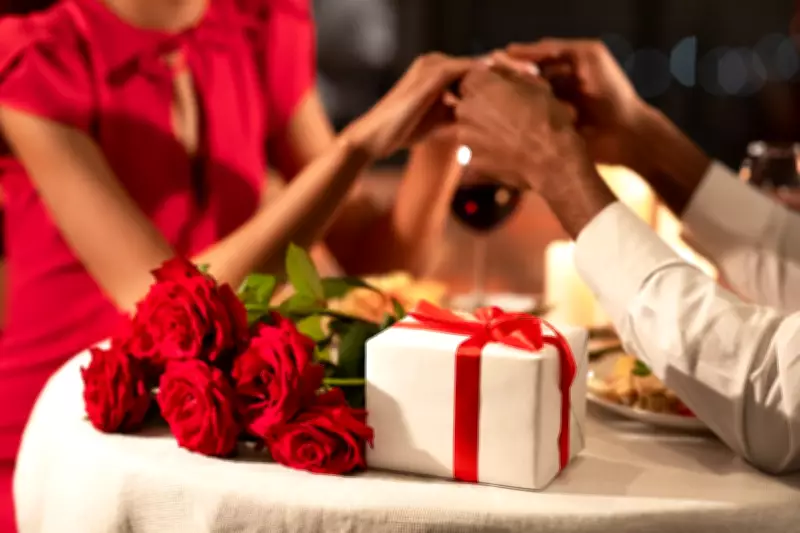
Dining rooms assume a peculiar intensity on Valentine's evening: tables of couples sitting slightly too upright, conversations conducted with excessive care, everyone acutely aware that this is supposed to represent A Special Night. The ambient noise either becomes too loud for sharing stories about your day, or grows so unnervingly quiet that every conversational pause feels amplified.
The service follows a similar pattern – either slow enough to confront briefly the existential horror that there's nothing left to say after twenty years together, or brisk enough that you feel swept onto a romantic conveyor belt, another couple efficiently processed through the love factory. Somewhere in the restaurant, inevitably, a relationship is dissolving over burrata.
The entire evening feels scripted and structured according to someone else's conception of romance. Authentic love, ultimately, has remarkably little to do with choreography.

The Alternative: Home as the Ultimate Luxury
This explains why I consciously opt out. My partner and I are both food writers who spend an extraordinary portion of our lives dining out. For us, staying home represents the genuine luxury, often involving minimal theatricality. There exists as much romance in beans on toast, comforting soup, or roast chicken as in steak, carbonara twirled in a pecorino wheel, or some architecturally precarious pink dessert.
Some evenings we collapse before brain-rot television with a bottle of wine chilling in the refrigerator. Other occasions, we embrace ceremony – table meticulously laid, candles glowing softly, record player murmuring in the background. Both approaches feel romantic in their distinct ways.
Where Real Connection Flourishes
But the authentic magic unfolds in the kitchen. I serve as sous chef to my partner's chaotic head chef, and we both function as pot washers. I handle preparation – watching him butcher an onion causes me physical pain – and side dishes, having discovered his definition of "salad" was essentially a bag of uncooked spinach.
He cooks creatively while generating heroic quantities of mess, I clean systematically, and somewhere between these activities we spend hours conversing about, well, nothing particularly significant. These are the evenings I anticipate most eagerly – not the three-Michelin-star tasting menu, not the hip new sushi counter, not even the trattoria discovered in the rain.
Romance doesn't reside in choreography. It thrives in spontaneity. Not in eye-watering bills masquerading as grand gestures, but in the small, ordinary acts performed for one another – preparing dinner thoughtfully, handing over a glass of wine upon arrival home, discussing nothing in particular.
The most genuinely romantic evenings are rarely those most aggressively labelled as such. They are simply the ones that feel authentically, uniquely your own.