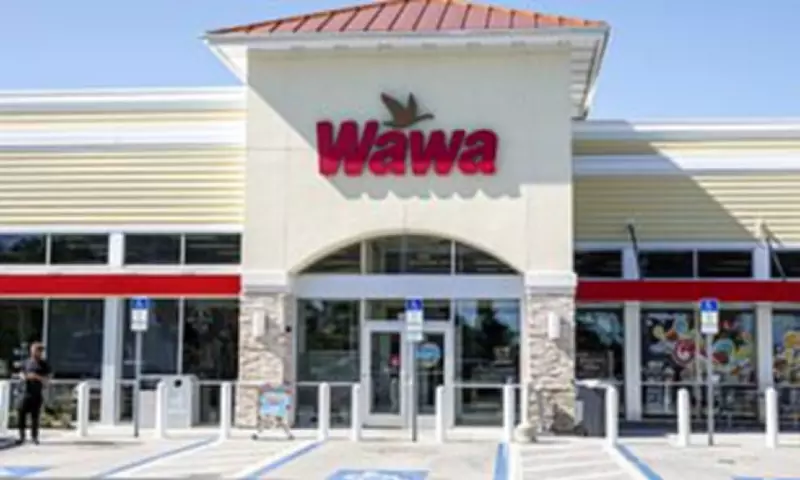
The US Food and Drug Administration has issued a significant update regarding a product recall affecting convenience store giant Wawa. The iconic rest stop chain is recalling approximately 22,000 units across four distinct milk products due to contamination concerns discovered during production.
Affected Products and Distribution Details
The recall specifically targets Wawa-branded reduced fat milk 2%, Double Dutch Chocolate Milk, Cookies & Cream Milk, and Chocolate low-fat milk. These products are packaged in 16-ounce plastic containers and are typically found in the refrigerated sections of stores.
The affected items carry UPC codes 0072619101438, 007261910, 0072619015158, and 00726191014908. Code dates on the containers range from March 2 to March 5, 2026, though specific expiration or best-by dates were not detailed in the official notice.

These products were distributed and sold exclusively in four states: New Jersey, Maryland, Delaware, and Pennsylvania. The recall was initially announced in February but received its formal classification from the FDA on Wednesday as a Class II recall.
Understanding the Class II Classification
A Class II recall designation indicates what regulatory authorities describe as "a situation in which use of or exposure to a violative product may cause temporary or medically reversible adverse health consequences or where the probability of serious adverse health consequences is remote."
This classification suggests that while there is potential for health impacts from consuming these products, the likelihood of severe or permanent harm is considered relatively low under current assessment.
Contamination Source and Health Implications
The recall was triggered by the discovery of foreign plastic material on the production line where these four milk products are manufactured. Investigators have not yet determined how this plastic material entered the production environment or identified its precise origin.
In similar historical recalls, foreign objects or substances have typically originated from production or manufacturing equipment failures or maintenance issues. It remains unclear whether the plastic material was found inside the actual milk products or solely on the production equipment itself.
Should plastic fragments have entered the milk beverages, they could potentially pose choking hazards to consumers. Furthermore, if the plastic material is sharp enough, it could cause cuts in the mouth or throat, or if sufficiently large, create blockages in the digestive tract.
No Reported Illnesses
Importantly, no illnesses, injuries, or adverse health events have been reported in connection with this recall to date. This absence of reported incidents likely contributed to the Class II rather than more severe classification.
Broader Context of Food Recalls
This Wawa recall occurs against a backdrop of increasing food safety concerns nationwide. Just last month, a separate and substantially larger recall affected rice and ramen products sold under popular brand names including Kroger and Trader Joe's.
That recall, initiated by Portland, Oregon-based Ajinomoto Foods North America, Inc., eventually expanded to include nearly 37 million pounds of chicken and pork fried rice, ramen, and shu mai dumpling products. The trigger was at least four customer reports of glass shards discovered in their food purchases.
The USDA classified that recall with its most urgent designation, Class I, indicating "a reasonable probability" of "serious, adverse health consequences or death" from consumption of the contaminated products.
The contrast between these two recalls—one involving potential plastic contamination in milk with no reported illnesses, the other involving confirmed glass fragments in food with multiple consumer reports—highlights the spectrum of food safety issues facing manufacturers and regulators.
Consumers who have purchased the affected Wawa milk products are advised to discontinue use immediately and return them to any Wawa store for a full refund. The company has established customer service channels to address concerns and provide additional information about the recall process.