FDA Announces Major Recall of Custom M&M's Bags Over Critical Allergen Labeling Error
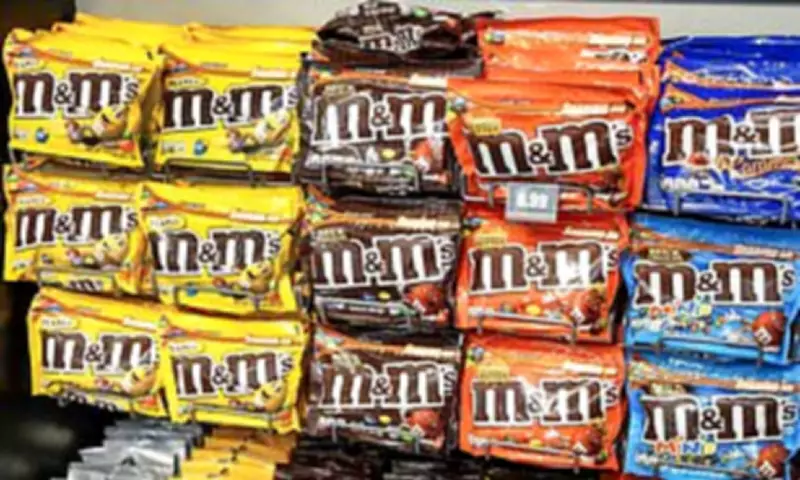
The U.S. Food and Drug Administration (FDA) has issued a significant recall for more than 6,000 bags of repackaged M&M's candies due to a serious labeling omission that could endanger millions of individuals with food allergies. The recall, initiated by Beacon Promotions Inc., involves 1.3-ounce bags of both Peanut M&M's and classic M&M's that were distributed in custom promotional packaging for various companies and events, not standard retail products.
Missing Allergen Warnings Pose Severe Health Risks
Beacon Promotions Inc., based in Minnesota, failed to include required allergen warnings on the outer packaging of these custom M&M's bags. While the candies contain milk, soy, and peanuts, these ingredients are not disclosed on the labels, creating a substantial risk for consumers with allergies. The FDA categorized this recall as Class II on February 4, indicating that use of the product could cause temporary or medically reversible adverse health consequences, with a remote chance of serious harm.
Allergic reactions to these ingredients can be severe and life-threatening. In the United States, up to six million people are allergic to peanuts, approximately 1.9 million are allergic to soy, and roughly six million have milk allergies. For these individuals, exposure can trigger symptoms ranging from hives and swelling to anaphylaxis—a rapid, full-body reaction that can close airways and cause shock within minutes, requiring immediate medical attention.

Identification and Distribution Details of Recalled Products
The recalled Peanut M&M's can be identified by the ‘Make Your Mark’ label with lot code M1823200 and a ‘best by’ date of April 30, 2026. The classic M&M's are marked by a variety of promotional labels from well-known companies, including Subaru, Adobe, Xfinity, and Morgan Stanley, with specific lot codes and dates provided in the official recall notice.
These custom M&M's bags were distributed as promotional giveaways in 20 states: Alabama, Arizona, California, Florida, Iowa, Kansas, Kentucky, Maryland, Massachusetts, Minnesota, New York, North Carolina, Ohio, Pennsylvania, South Dakota, Tennessee, Texas, Virginia, Washington, and Wisconsin. Prominent entities involved in the distribution include automotive manufacturer Subaru, financial services giant Morgan Stanley, software companies Adobe and Dropbox, media provider Xfinity (Comcast), hotel chain Best Western, and insurance conglomerate Berkeley Hathaway Guard, as well as institutions like the University of Maryland and Liberty University.
Health Implications and Consumer Advice
Peanut allergies are among the most severe and common food allergies, often requiring lifelong management and strict avoidance. Reactions can occur from trace exposure through ingestion, skin contact, or inhalation, leading to symptoms such as widespread hives, severe swelling, difficulty breathing, and a dangerous drop in blood pressure. Those affected typically carry an epinephrine auto-injector at all times.
Soy allergies involve an immune system overreaction to soy proteins, with symptoms including hives, itching, digestive distress, and swelling, potentially escalating to anaphylaxis. Soy is a common hidden ingredient in many processed foods, making avoidance challenging. Milk allergies trigger the body to release histamine and other chemicals, causing rapid reactions like vomiting, wheezing, facial swelling, and low blood pressure.
Consumers who have received promotional M&M's bags in the listed states are urged to check the labels and lot codes immediately. If the product matches the recall and you have a milk, soy, or peanut allergy or sensitivity, do not consume it. Discard the candy at once to prevent a severe or life-threatening allergic reaction. The recall process was initiated by Beacon Promotions Inc. on January 26, with the FDA's classification following shortly after to alert the public to this critical safety issue.