
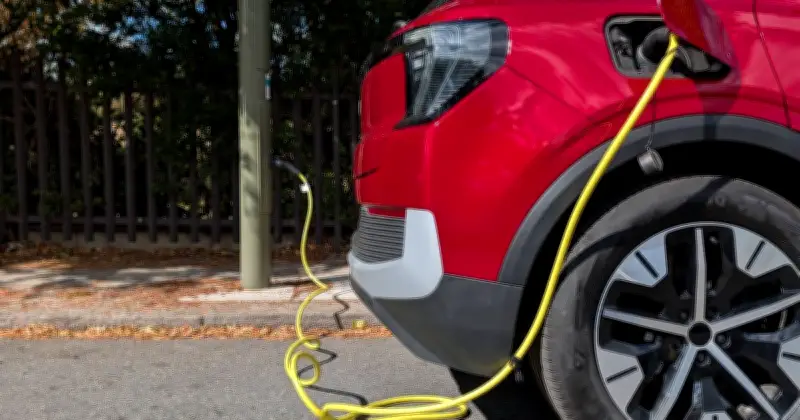
Electric car drivers without driveways are being urged to check that running charging cables across public footpaths does not pose a risk to others, as councils have powers to remove dangerous cables.
Car insurance experts at Quotezone.co.uk said many electric vehicle (EV) owners may be unaware of the hazards caused by trailing cables over pavements or highways. The cables present a trip hazard for pedestrians, which could result in injury and lead to legal action. In some areas, drivers may also need permission from the local council to run cables across a public path.
Pavement rules and the Highway Act
The Highway Act gives local councils the power to remove any cables on the pavement they consider dangerous. In 2022, rule 239 of the Highway Code was updated to state that drivers should park close to the charge point and avoid creating a trip hazard for pedestrians using trailing cables.
The rule also suggests displaying a warning sign and, after charging, returning cables and connectors to minimise danger to pedestrians and avoid creating an obstacle for other road users. Besides the trip hazard, cables can cause fires if daisy-chained together and pose an electrocution risk if left outside in the rain.
Expert advice on safe charging
Greg Wilson, CEO and car insurance expert at Quotezone.co.uk, said: “As the number of electric vehicles increases, we have to look at the challenges many face with charging. Without off-street parking, it can be tricky to charge your EV safely and owners need to be careful they don’t put themselves and pedestrians at risk. Steps such as remaining with the vehicle and covering the cables will help make it safer, but cables running across the path is not ideal and the only option for many.
“Installing a cable gully is a good way to overcome this problem - but drivers will need council permission. We’d encourage EV owners to look at alternative ways of charging including public charging stations and any on-street charging points.
“They may not be directly outside your home, but if it’s a fast speed charger, it shouldn't take too long. Ultimately, safety is paramount however you charge your vehicle, and hopefully the government’s increased investments in the UK charging infrastructure will open up many other charging possibilities for drivers across the country.”
Charging safely without a driveway
Quotezone urged drivers to use on-street charging points in their area, and if these are scarce, to contact the local council to request an EV charger be installed, asking neighbours to do the same to strengthen the case. Local authorities are being encouraged by the government to improve EV infrastructure.
Many supermarkets and car parks have dedicated areas for electric vehicles with charging points. Drivers should check the speed of charge to know how long the car will need to be plugged in, so they can plan their day.
Running a cable across a pathway is not illegal but is not recommended due to the trip hazard. If there is no alternative, drivers should stay with the vehicle while it is charging and remove cables as soon as possible. They should not use an extension cable, should cover the cable with a protective anti-trip cover where it crosses the path, and display a warning sign so pedestrians are aware of the hazard.
A cable gully is a channel installed in the pavement that can be used to safely trail an EV charging cable, and installing one requires council approval. It allows easier home charging for homes without driveways, as users can park, press the charging cable into the gully and plug in safely.
Some local councils prohibit any cables from being placed across public highways, while others require drivers to apply for permission, which is granted based on need and suitability on a case-by-case basis. Drivers are advised to check with their local council to ensure they comply with all regulations.




