

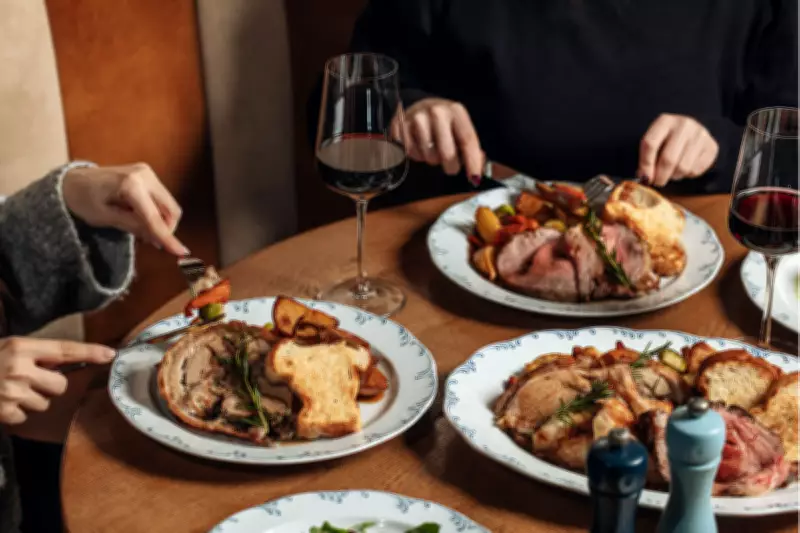
A traditional British roast dinner, complete with meat, vegetables, and gravy, may be accompanied by a cocktail of more than 100 pesticides, according to new research by Greenpeace. The environmental group analyzed data from the Food and Environment Research Agency (FERA) Pesticide Usage Survey, covering all vegetables typically associated with a Sunday roast, as well as strawberries for dessert.
Pesticide Cocktail on Your Plate
The analysis found that onions and leeks are treated with 43 different pesticides, while carrots and parsnips receive 40. Field potatoes are sprayed with 31 pesticides, peas with 29, and swede and turnips with 20. Stored potatoes, often used in winter, are treated with five pesticides. Strawberries, a popular summer fruit, are exposed to 42 different pesticides.
Of the 102 pesticides identified, seven are already banned in the European Union due to their links to cancer, endocrine disruption, and risks to bees, birds, mammals, and aquatic ecosystems. For instance, Dimethomorph, used on strawberries and onions, is banned in the EU for being toxic to reproduction. Benthiavalicarb, applied to potatoes, was banned because of evidence it is carcinogenic.

Among the nine most commonly used pesticides, eight are classified as Highly Hazardous Pesticides toxic to humans or wildlife. Three of these are known as forever chemicals, synthetic substances that can accumulate in the body and cause harmful effects, including cancer, depending on exposure levels.
Greenpeace Calls for Action
Nina Schrank, senior campaigner at Greenpeace UK, warned that the widespread use of pesticides could undermine food security. “A Sunday roast and strawberries might feel like one of the most natural and traditionally British meals imaginable, but behind the scenes they’re produced using an astonishing cocktail of pesticides,” she said. “Our countryside is being drenched in pesticides, with devastating consequences for bees, birds, butterflies, rivers, and the soil. Fields that once hummed with wildlife are falling silent while agrochemical giants rake in enormous profits and farmers are trapped in a costly cycle of chemical dependency. That doesn’t strengthen food security – it makes it more fragile.”
Greenpeace is urging the government to halve pesticide and fertiliser use by 2030, a target far more ambitious than the current 10% reduction goal. The group also calls for greater support for farmers to reduce reliance on chemical inputs and restrictions on pesticide use in public spaces and homes.
Government Response
A Defra spokesperson defended the UK’s approach, stating: “We place strict limits on pesticide residue levels in food, which are set after rigorous risk assessments to make sure levels are safe for consumers. These limits apply to both food produced domestically and imported from other countries. Our UK National Action Plan, published last year, sets out how we will support farmers, growers, and other land managers to increase their use of sustainable practices to reduce potential harm from pesticides, while controlling pests and pesticide resistance effectively and protecting food security.”
The government’s current Pesticides National Action Plan encourages growers to adopt holistic and sustainable pest prevention methods, such as crop rotation, encouraging natural predators, and growing pest-resistant crop varieties.






