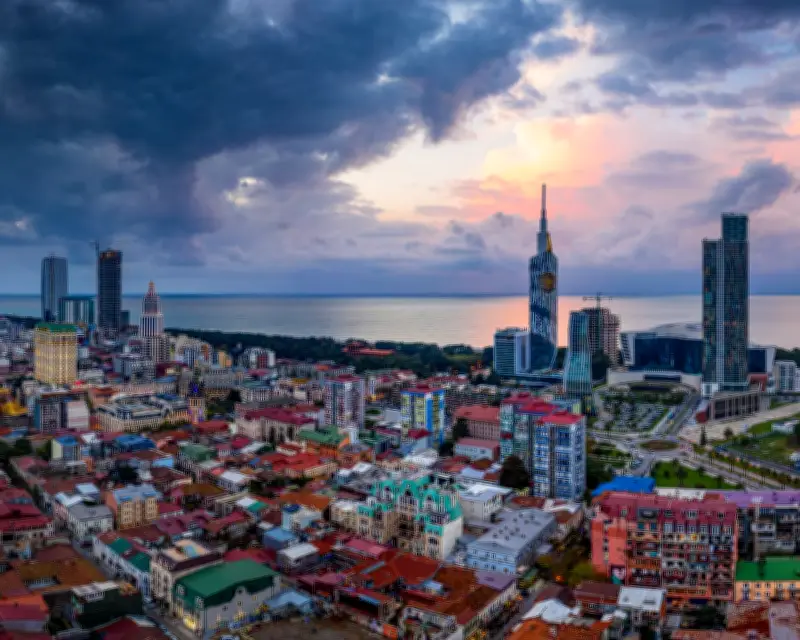
Jane Ripley* spent some time researching the best apartment to stay in for her family’s trip to Batumi in Georgia, eventually settling on one with an “exceptional” rating on Booking.com.
But when the Ripleys arrived at 11pm on the first day, they were directed to another property that was shabby and had stains on the furniture and ceiling.
“The host was unfriendly … We had genuine concerns about raising complaints directly. We were forced to find and pay for alternative accommodation for the remaining four nights at a further cost of £334,” she says.
Ripley made a series of complaints, starting the day after they arrived at the property. She says the property has since been removed from the site, but despite asking for a full refund of £570 for the original booking and the replacement accommodation, she has been offered only £36 in credits.
She is one of a number of readers who have contacted Guardian Money with stories of trying to get their money back after booking with the travel platform.
Terms and conditions
Millions of people use accommodation platforms such as Booking.com, Airbnb and Vrbo each year without a hitch, but when things go wrong, the sites’ terms and conditions suggest the companies have no liability for compensating people.
This remains a grey area in law – and holidaymakers are ending up out of pocket as a result.
If you have difficulties with your hotel when you book a package deal, you will be covered financially and legally by the Package Travel and Linked Travel Arrangements Regulations 2018, which means the holiday operator is responsible for sorting out any problems – from disruption caused by wildfires to the hotel not being up to scratch.
But if you book accommodation through Booking.com, the terms state that the contract is between you and the host. “When you make (or request) a booking, it’s directly with the service provider – we’re not a ‘contractual party’,” say the terms and conditions.
As a result, getting compensation or your money back is not as clearcut.
It is a similar story when booking with Airbnb, according to its terms and conditions. And also Vrbo, which says agreements are between guests and the travel providers. “We are not a party to any such agreements,” it says.
The consumer campaigner Martyn James says that by stating they are not part of the contract, these companies can argue they are only acting as a conduit and are not responsible for the supply of goods or services.
“This hasn’t really been tested in law massively, but I’d be willing to bet that the courts would take a dim view of the businesses operating in these grey areas,” he says.
Complaints
Travellers who have contacted Guardian Money have been frustrated by Booking.com’s inability to force hosts to pay up.
Before arriving at a hotel he had booked in Mongolia, John Taylor* was charged £1,177 – £120 more than the agreed price. When he cancelled, there was no refund, he says, even though free cancellation was part of the booking.
After “rounds of chasing” and giving Booking.com evidence of the payment, he was told by the website he was entitled to a refund but that the hotel had not engaged with Booking.com. He had still not received a refund when he contacted the Guardian in April. It eventually arrived in the middle of June.
Another reader, Kate Worthing*, booked a Parisian apartment for a weekend last summer. It was described as having an “elegant and refined” location. But the apartment building was in the middle of a refurbishment, with uncovered electrical wires in the communal hallway, and there were automatic lights that did not function. The rental itself contained worn fixtures and fittings and a melted electrical socket, she says.
“The main reason we left was because we didn’t feel safe. The electrical faults and wooden staircase, with no discernible fire escape, were not an option, and we were not prepared to put our family at risk,” she says. When she managed to contact the host, she was refused a refund of the £1,700 she had paid, as they claimed it was safe.
Booking.com told her that it “facilitates reservations between guests and accommodation partners, and in refund matters we are bound by the property’s policies and their final decision on waiving fees”. It said it could not issue a full refund but offered £417 in travel credits as compensation.
Booking.com’s response
Guardian Money contacted Booking.com about these and other cases. It said the hotel or apartment owner is responsible for providing refunds if something goes awry.
“We’d expect our accommodation partners to be on hand for guests during their stay, but if there is an issue at check-in, customers should contact us as soon as possible,” it said.
“As well as relocations, we can also advocate on their behalf and raise issues directly with the accommodation provider, and work to reach a resolution. If there are repeated issues with a property, we can and will address these with the accommodation owner to ensure future guests have a good experience.”
Advice
For travellers worried about being caught in the gap between a platform and a host, James says people should try to book directly with the provider, but use caution.
“I use these [aggregator] sites to compare and contrast, then look into booking direct,” he says. “If you call the hotel, you might even get a discount from them for doing so. Watch out for private apartments, though. This is where fakes have lurked, and any firm that asks you to pay by bank transfer knows that you can’t recall the money if things go wrong.”
* Name has been changed