UK high street banks have been urged to take steps to help millions of people who could benefit from a £92 document backed by Martin Lewis. A recent report said around 11 million people in the UK are acting as digital helpers to support others with their money online.
This is often seen with people supporting older relatives by checking account balances, helping with passcodes or online payments, or taking out cash. Yet such people are working in a grey area, consumer expert Claer Barrett is warning.
Why the LPA is 'more important than a will'
A lasting power of attorney (LPA) is a legal document that lets a person appoint one or more people to help make decisions or to make decisions on their behalf, the government says. The document is designed to give people more control over what happens to them if they have an illness or accident and cannot make their own decisions.
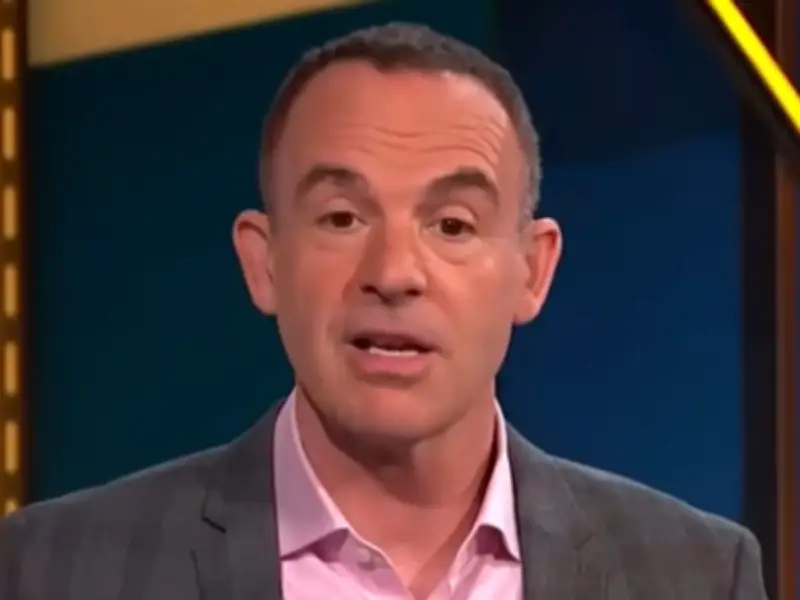
Martin Lewis says the document, which costs £92 to acquire, is very important. Speaking on his ITV programme The Martin Lewis Money Show, he said: "I think Power of Attorney is more important than a will. A will decides what happens to your assets if you die. Power of Attorney, what happens to your assets if you lose your faculties – you're still alive and you may have your own care and family that you need to look after, but you're no longer capable of doing it yourself."
Ms Barrett warns that many people struggle to get hold of such a document. As a result, they are forced to use 'risky workarounds' such as sharing security codes and passwords, or logging into a relative's account from their own device.
Banks 'shamefully slow' to bridge digital gap
She said: "The banks have been shamefully slow at bridging this digital gap." Now she is calling for banks to act so that more people can get an LPA or other support. Writing in the Financial Times, she said millions of people are waiting for banks in the UK to do more to help them.
Her call comes as Devon Fields Consulting, who authored the recent report, say many older customers want a 'halfway house' to help them with digital banking. Faith Reynolds, founder of the firm, said: "This report shows that we are desperately in need of innovation that serves the millions who aren't digitally native and the people bridging the gap for them: the 'hidden heroes' identified in our research. Current solutions do not reflect the reality of people's 'messy' lives or the combined emotional challenge of managing money and managing digitally. Relatives, friends and neighbours form the unpaid social safety net of our banking ecosystem, yet they remain underserved, lacking the tools to do the job conveniently and securely."
The report found that a key worry for people being helped is that they could make mistakes. The chief reasons offered for why people want help is because they find digital banking confusing, as well as stressful, overwhelming and hard to use. It found many struggle to navigate sites and apps to find the information they are looking for. The company is now calling for simpler versions of banking apps designed for older customers to be rolled out.
Branch closures and the need for banking hubs
Ms Barrett warned that for people who want to set up an LPA, doing so is getting harder and harder. Writing in the Financial Times, she said: "If you need to activate an LPA, it's increasingly hard to find a physical bank branch where you can do it." Which? said recently that around 6,700 bank and building society branches have closed since January 2015 in the UK. This is equivalent to 68% of branches that were open in January 2015, according to the House of Commons Library.
A banking hub is designed to offer people physical access to banking services and they are often seen in places where bank branches have shut. They aim to provide some banking services. In addition, they offer a community banker service to allow customers of individual banks to meet members of staff of that bank to discuss more complex banking matters. As of March 2026, there were 225 operational banking hubs, and the 250th opened in the UK recently. Ms Barrett says many more are needed to allow people to set up LPAs and deal with banks about other issues such as opening an account or speaking to someone about being the victim of fraud.
This month, the Access to Banking Services review is due to be published with recommendations for Andy Burnham's government. The review is designed to help the Treasury "better understand the impact of the current trajectory of access to in-person banking services, including the scale of detriment to consumers and the impacts it may have on vulnerable groups." Ms Barrett says it should call for more hubs to support more services. But she wants it to do more to make online banking more accessible for older people.
She said: "I hope the report also addresses what more banks should do to make online services more accessible so that customers with additional needs can be better supported. For the sake of millions of 'digital concierges' like me, banks shouldn't wait for legislation to force this much-needed innovation. Provide the services we need. There are 11 million people out there who would willingly become your customers."
How to set up an LPA
You have the option to select one or more people to serve as your attorney. Should you appoint more than one, you must determine whether they will reach decisions independently or jointly. Your attorney must be aged 18 or above. They could be a family member, a close friend, a professional such as a solicitor, or your spouse or partner. You must select somebody who possesses the mental capacity to make their own decisions, according to the gov.uk webpage on the subject.
An LPA can be arranged either online or via paper forms. Regardless of the method chosen, you will need other parties to sign the forms, including the attorneys and witnesses. You can appoint somebody else to use the online service or complete the paper forms on your behalf, for instance a family member, friend or solicitor. You must register your LPA, otherwise your attorney will be unable to make decisions on your behalf.
The process takes 8 to 10 weeks to establish an LPA, provided there are no errors in the application, the government says. It is meant to be faster if you complete and pay online. There is a £92 application fee to register an LPA.
Martin Lewis said on his ITV show: "This is where you nominate a friend or relative to take over your finances if you lose your faculties. Doing it does not mean you give up control now. It does not mean that. There are safeguards in place. You nominate other people to check whether it's right that you've lost your faculties or not, and don't think this is just for the elderly. I mean: accidents, stroke, early onset dementia." He added: "Power of Attorney is not just for the elderly. Everybody in this room should be considering one. I've had one for a decade now. I have no foreseeability of losing my faculties."