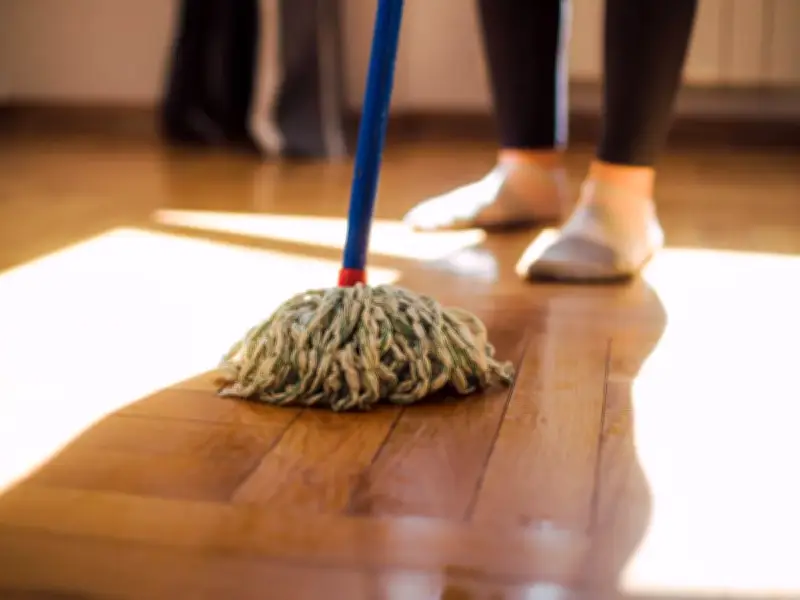
Using too much water when mopping can damage certain flooring materials over time, according to a floorcare expert. While mopping remains the go-to method for keeping floors clean, excessive moisture can cause swelling, staining, and deterioration of protective finishes.
Why Too Much Water Harms Floors
Tailang Bu, a floorcare expert at Philips, says many households use far more water than necessary when cleaning floors. "Many people think a floor needs to be soaked to get it properly clean, but that's not the case," he explained. "In fact, too much water can do more harm than good, particularly on certain types of flooring."
Instead of using a dripping-wet conventional mop, Bu suggests a slightly damp mop is typically sufficient for effective cleaning. He identifies three floor types that householders should be especially cautious not to drench.
Wood, Stone, and Laminate Risks
Wood is one of the biggest floor types to be careful with, particularly if it is unsealed, untreated, or has a damaged protective finish. "Too much water can work its way into the material rather than simply sitting on the surface, which can lead to problems over time," Bu said.
Natural stone is another material that can catch homeowners out. "People often assume all stone floors can handle lots of water, but that's not always true," Bu said. "Some stone surfaces are more porous than others and can absorb moisture and cleaning products, so you shouldn't assume every stone floor can be treated in exactly the same way."
Laminate flooring also requires care, despite its durability and ease of cleaning. "If water is left sitting on the surface or works its way into joins and edges, it can create problems over time. The key is keeping moisture under control," Bu explained.
Controlling Moisture for Better Cleaning
Floors do not need to be saturated to be cleaned properly. "It's not about avoiding mopping altogether," Bu added. "It's about controlling how much water you're putting onto the floor. Less is often more, and a lightly damp clean is usually all that's needed."
For those wanting to minimise water left behind, the Philips OneUp electric mop pumps clean water onto the floor while simultaneously removing dirty water. This helps avoid excess moisture sitting on the surface and keeps clean and dirty water separate throughout the cleaning process. "Removing dirty water as you clean means you're not repeatedly spreading moisture around the floor," Bu explained. "It's a much more controlled way of cleaning, particularly for flooring types that don't respond well to being saturated."