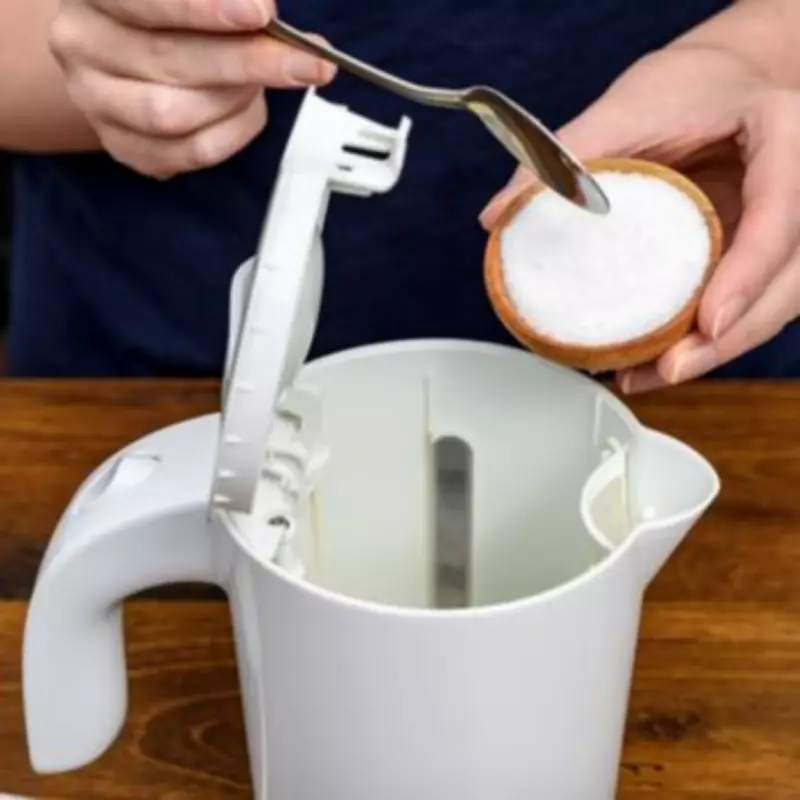
A professional cleaner has unveiled a remarkably simple and inexpensive natural solution for tackling the persistent problem of limescale buildup in kettles, asserting it is superior to the commonly recommended vinegar method. This cost-effective hack, which utilises a household staple, offers a fresh approach for British households, particularly those in hard water areas where chalky deposits are a frequent nuisance.
The Lemon Juice Solution for Sparkling Kettles
Marie Robinson, a cleaner who shared her advice on the popular Mrs Hinch Cleaning Tips Facebook page, detailed her proven technique. She explained that she regularly encounters severe limescale in clients' homes and emphasises the importance of regular kettle maintenance, a step many overlook.
Step-by-Step Cleaning Method
Marie's method is straightforward. She partially fills the kettle with water, adds a generous squeeze of fresh lemon juice, and then brings it to a boil. After allowing the appliance to cool slightly, she empties it and boils plain water once more to rinse. "Vinegar doesn't work for me like I've seen people claim, and this works so much better," Marie stated, highlighting the efficacy of her natural alternative. She also noted that lemons are a common household item, making this method both accessible and economical.

Why Lemons Are a Powerful Natural Cleaner
The secret lies in the citric acid contained within lemons. This natural acid is highly effective at dissolving the mineral deposits that form limescale. Furthermore, lemons possess inherent antibacterial properties, meaning this cleaning process not only removes scale but also helps to disinfect the kettle interior simultaneously.
Financially, the trick is exceptionally cheap. With a single lemon costing around 20p, using only half for one cleaning cycle brings the cost down to a mere 10p. For extremely stubborn limescale deposits, using a whole lemon and repeating the process may be necessary, but it remains a fraction of the cost of commercial descalers.
The Problem of Hard Water and Limescale
For many UK homes, especially in regions with hard water, limescale is a constant battle. It accumulates inside kettles and on taps, often appearing as tiny white flecks floating in boiled water. While these particles pose no direct health risk, they are unsightly and can affect the taste of tea and other hot beverages. This natural lemon technique promises to combat even the most tenacious buildup, restoring kettles to a like-new, sparkling condition without harsh chemicals.
Beyond kettles, the versatile lemon can be used for various other household cleaning tasks, such as sanitising chopping boards, thanks to its acidic and antibacterial qualities. This simple fruit, therefore, represents a powerful, multi-purpose tool in the natural cleaning arsenal, offering an effective and pleasant-smelling alternative to traditional products.