
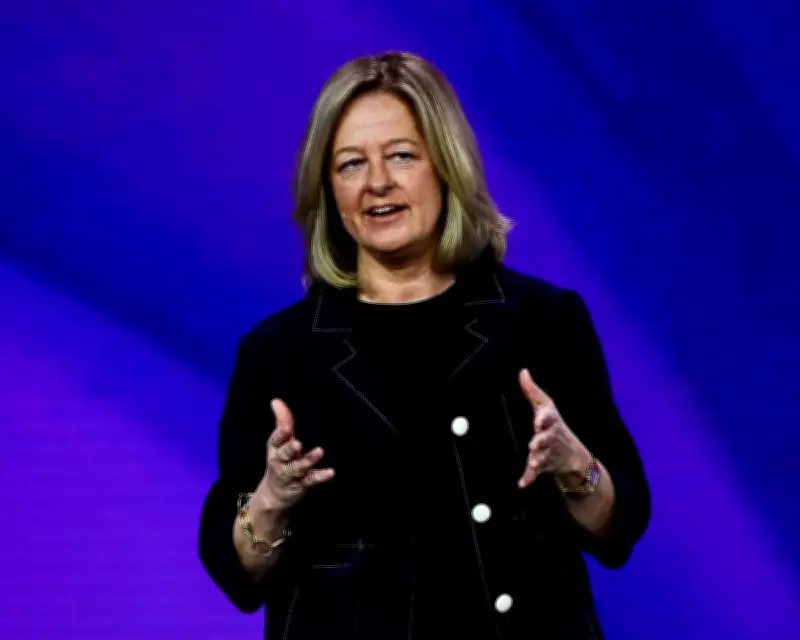
Allison Kirkby, BT's first female chief executive, took home £5.6m in pay and bonuses last year, the largest package for a BT boss in over a decade, as the company's share price climbed 80% under her leadership. However, questions persist over how much credit she deserves for the apparent revival.
Kirkby's Compensation and Share Price Surge
Since becoming CEO more than two years ago, Kirkby has overseen a significant turnaround that has pleased investors. The 58-year-old Glaswegian, who joined BT's board in 2019 while CEO of Swedish telecoms firm Telia, received plaudits for finally engineering a solution to deal with the group's struggling international division, which had been a drag on BT for years.
An exit from the international division to focus on making BT a "national champion" has been slowly progressing since a scandal at BT Italia wiped more than £8bn off its market value a decade ago and cost former CEO Gavin Patterson his job.
Infrastructure Investment and Cost Savings
Years of huge investment in addressing the UK's status as a global internet laggard are tapering off. Full-fibre broadband now covers more than two-thirds of the UK, and BT could generate £3bn in annual free cashflow by the end of the decade. The need for fewer engineers and the rollout of AI will see BT's workforce shrink by about 40% to about 75,000 by the end of the decade. Kirkby last month raised the company's savings target from £3bn to £3.7bn.
Credit for Turnaround Debated
Some believe the foundations for much of the benefit Kirkby is now reaping were laid by her predecessor, Philip Jansen. Jansen's tenure has been described as that of a wartime general, from instigating only the third dividend cut in BT's history to pay for the national infrastructure upgrade, while also facing a pandemic and the company's first national strike in 35 years, to huge staff and cost cuts and off-loading the costly BT Sport pay-TV business.
"I think she inherited a good hand with a lot of good fundamentals in place; some might say she has been a lucky general, but she has also been a driving force," says one former senior executive. "She is no-nonsense, a clever operator, and subsequent decisions have been smart. And she is still facing plenty of challenges."
Competition and Market Challenges
BT is facing competition from a resurgent Vodafone, which overtook EE as the UK's biggest mobile operator after a mega-merger to create VodafoneThree and has seen its market value surge a quarter over the last year. Shares in BT, which reported a 3% decline in total revenues last year, have fallen more than 3% over the same period.
A U-turn on a decision to retire the venerable BT as its flagship consumer brand in favour of EE has also proved confusing. The relaunch of the brand, which included sponsorship of Euro 2028 and the return of BT Mobile, was held in May at Wembley, where EE has been the stadium sponsor and lead partner since 2014.
"It is going to be confusing because it is flip-flopping," says Polly Hopkins, UK managing director of branding agency Elmwood London. "But the rationale behind it is sensible. As a brand BT is emotionally hard-wired into our culture; EE has only delivered in the mobile space really, and what they are trying to do is be seen as the nation's brand for all connectivity. It makes sense."
Subscriber Growth and Openreach Challenges
BT's fightback is bearing fruit with subscriber numbers across its consumer operations – EE, broadband, mobile and television – showing growth for the first time in eight years. However, it has been haemorrhaging customers at its infrastructure arm, Openreach, losing 825,000 broadband customers last year in the fight against heavily discounting "alt-net" rivals. The company is forecasting it will lose another 800,000 this year, taking the total over a five-year period to 3.2m, almost 16% of its current 21 million user broadband base. However, losses have now peaked and are expected to fall to 288,000 annually by 2030.
Unlocking Openreach Value
Kirkby has been vocal about her frustrations at the value of Openreach, which will reach 30m homes with full-fibre broadband by 2030, not being reflected in BT's £19bn market value. Analysts at New Street Research estimate that Openreach is worth £30bn on its own.
"Openreach is the perennial question," says Matthew Howett, chief executive of Assembly Research. "Looking at the future, the big one is realising the value of the constituent parts of BT. The wider group does not reflect the value of its constituents. Openreach is now probably the most valuable component of that, particularly when the fibre build is complete. How will she realise that?"
Every few years there is speculation that BT may look to sell the whole or part of Openreach, but this has always been dismissed due to the complexities involved, mostly relating to the BT pension scheme which the telecoms company pays hundreds of millions into annually. However, one insider says that by 2030, as the numbers in the scheme start to drop more quickly due to age (the main BT pension scheme closed to new members in 2001), the value could finally be realised – and maybe under Kirkby.
When asked why he was drawn to leading companies with immense challenges, fellow Scot Adam Crozier, BT's chair who has also led Royal Mail and ITV, once attributed it to a trait he described as "thrawn", a Scots word meaning difficult or intractable. To achieve her aims at BT, the no-nonsense Kirkby will need to be thrawn.




