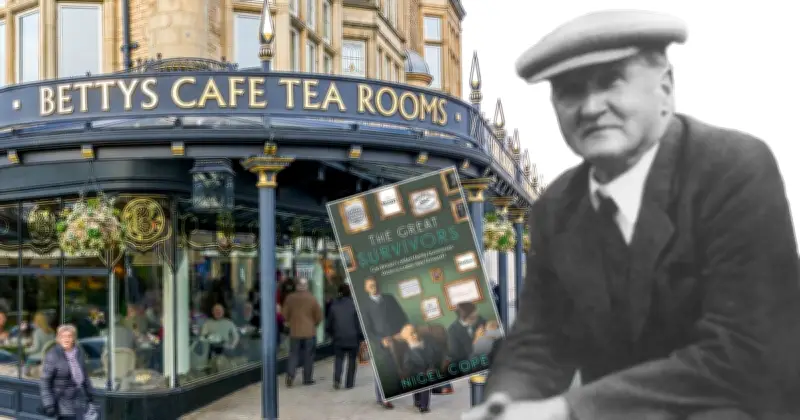
Britain's family businesses are the backbone of the UK economy, with more than five million of them employing 15 million people, yet they often stay out of the spotlight. Author Nigel Cope argues these firms, some dating back centuries, could show a new way forward for sustainable economic growth.
Everyday products from historic firms
Products made by Britain's historic family businesses are part of daily life without most people realising it. A breakfast of Yorkshire Tea from Bettys & Taylors, whose history traces to 1919, could be followed by Warburtons bread from 1876, topped with Wilkin & Sons of Tiptree strawberry jam from 1885. Lunch might feature Baxter's soup from 1868, and the evening could end with Scotch from William Grant & Sons, established 1887.
Mostly small and privately owned, these businesses tend to avoid the media headlines that larger, stock market-listed companies dominate. They simply get on with running their businesses, employing people, paying taxes and contributing to local communities.
Broader definition of success
Family firms are often criticised as sleepy and underperforming, but Cope says this is not true. Many have a broader definition of success beyond financial measures. They want to make a profit, but not at any cost, and to grow without overstretching the business. What matters most is continuity and maintaining a business to pass on to the next generation.
With talk of economic growth, Cope points to Andy Burnham's desire for growth in every postcode. Family businesses are present in every postcode in a way few other business types could match.
Lessons from five great survivors
Cope's book, The Great Survivors, examines a dozen of Britain's oldest family businesses to draw out common denominators. The biggest shared attribute is long-term thinking, with these firms often planning 25-30 years ahead.
RJ Balson & Son, a butcher established in 1515 in Bridport, Dorset, is Britain's oldest family business. Richard Balson, the 26th generation to run the firm, highlights good customer service. He says: "Because we have served generations of the same families, we can say to them, 'How's your mum doing in the nursing home?' or 'How's your son doing at university?' People really like that."
Stephen Walters & Sons, a silk weaver founded in London in 1720 and now based in Suffolk, made silk for Princess Diana's wedding dress in 1981. The firm produces six fabric collections a year and recently invested in digital IT and robotics. Managing director Julius Walters, the 10th generation, says: "There has been this spirit of progression, to change with the times."
CPJ Field, a funeral director tracing its roots to 1690, provided services for Queen Victoria and the Duke of Wellington. After losing control of the business in the 1990s, the family set up again the same year and now has nearly 40 funeral homes. Jeremy Field says: "We're not good because we're old. We're old because we're good."
Timpson's, the shoe repair business established in 1865, offers jobs to ex-prisoners who make up 12% of the workforce. Chairman Sir John Timpson says: "We are looking generations ahead. We'd like to do better each year, but it's not a disaster if we don't."
Walker's Shortbread, founded in 1898 in north east Scotland, exports to nearly 100 countries. Managing director Nicky Walker says: "It's almost the way you run your household. If you haven't got the money then you go without."
Cope concludes that the government should do more to understand family businesses and their contribution to the economy, so the right incentives and taxation policies can nurture them. Family firms also need senior leaders prepared to speak up, he adds, as a basis for sustainable economic growth delivered with strong values.