
Oil prices have climbed and stock markets faced renewed pressure as hostilities between Israel and Iran resumed following a fresh round of airstrikes. Investors reacting to the escalation contributed to a downturn in global financial markets.
Oil Price Surge
The price of Brent crude oil surged approximately 5% on Monday morning, reaching over $97 per barrel. Despite this increase, prices remain below the $100 mark and significantly lower than the $120 peak seen in April. Oil prices had eased in recent weeks amid hopes for peace talks following a ceasefire agreement in the US-Israeli war with Iran in April. However, those hopes were dashed after Iran launched missiles at Israel in the first strike since the fragile ceasefire, with Israel retaliating through airstrikes against Iran early Monday.
Global Stock Market Decline
Asian stock markets suffered steep losses overnight. Japan's Nikkei 225 index fell by 3.8%, while South Korea's Kospi index tumbled more than 8% amid a sharp sell-off in technology stocks. This followed a bruising session on Wall Street on Friday, where the S&P 500 index dropped 2.6% due to renewed inflation concerns.
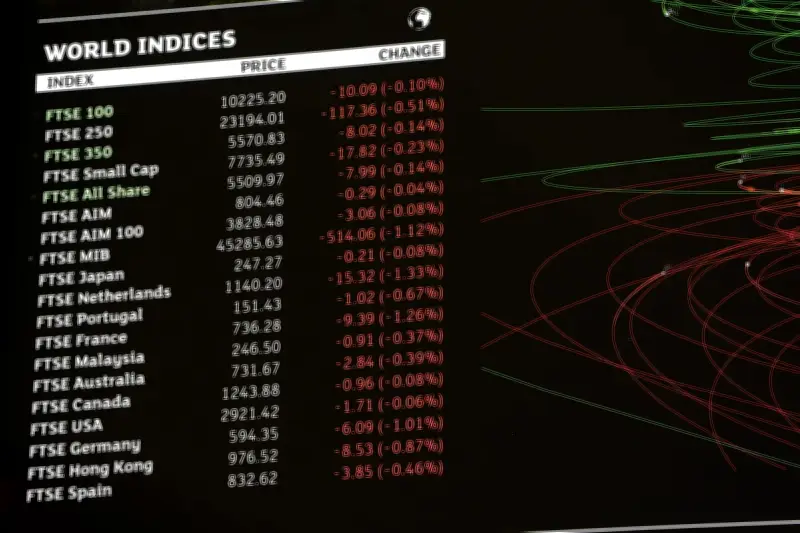
European stock markets opened in negative territory on Monday, though losses were more moderate compared to their international counterparts. The UK's FTSE 100 fell about 0.3% to 10,336 in early trading. Germany's Dax declined around 0.8%, and France's Cac 40 was down 0.6%.
Market Expert Commentary
Richard Hunter, head of markets at Interactive Investor, commented: "An ugly collision of the forces which have propelled markets so far this year – technology, economics and geopolitics – sent investors on a selling spree which resulted in a sharp sell-off across global markets." He added: "The inevitable pressure on Asian markets, which saw circuit breakers being triggered in South Korea as the index fell by more than 8% at the open, was exacerbated by news that Israel had launched airstrikes on Iran, despite earlier calls for restraint from the US president. Oil prices rose by more than 4% as a result, further underlying the inflationary pressures which much of the world will be facing in the coming months."




