
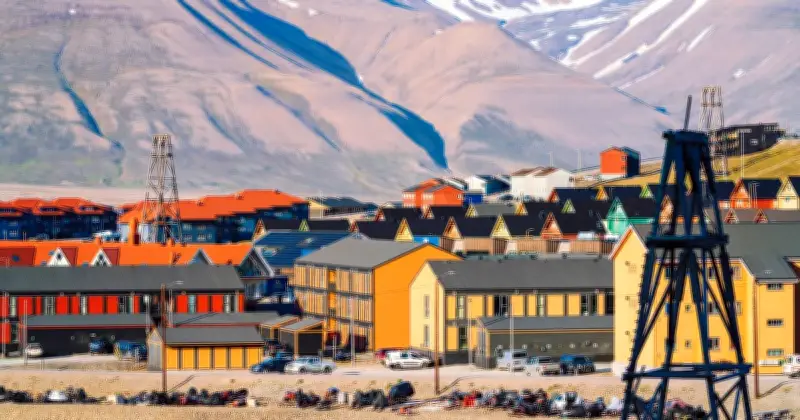
Longyearbyen, the world's northernmost settlement with a population exceeding 2,500, enforces a ban on burials due to permafrost that preserves infectious diseases. The town, located in Norway's Svalbard province, recorded 2,512 residents in the 2026 census. This isolated community spans four square miles and features brightly coloured homes, a single grocery store, a kindergarten, school, church, post office, gourmet restaurant, and a museum, according to Svalbard's official website.
Unique Regulations in an Arctic Hub
Longyearbyen's streets are numbered rather than named. The University Centre in Svalbard, the world's northernmost research and higher education institution at 78° latitude, offers courses in Arctic biology and geophysics. The town sits in a valley on the Adventfjord shore, surrounded by mountains and glaciers. Reindeer and whales are frequently sighted, but polar bears pose a threat, requiring residents to carry firearms when leaving the settlement.
History and Tourism
Contrary to its name's implication, Longyearbyen translates to Longyear Town, named after founder John Munro Longyear, not its isolation. Despite sub-zero temperatures year-round, the town thrives as a research and educational hub. Tourism is growing: in 2016, Longyearbyen received 115,000 visitors, with 35,000 arriving via cruise ship. Access is via a three-hour flight from Oslo or a 90-minute flight from Tromsø to Svalbard Airport.
Burial Ban and Other Prohibitions
Visitors must adhere to unique regulations, including a ban on cats and limits on monthly alcohol purchases. While it is often reported that dying in Longyearbyen is illegal, the actual rule prohibits interments in the settlement, prompting terminally ill residents to relocate to mainland Norway. The burial ban was implemented in 1950 after discovering that remains from the 1918 flu pandemic had not decomposed due to extreme cold, raising fears of active viral strains.




