
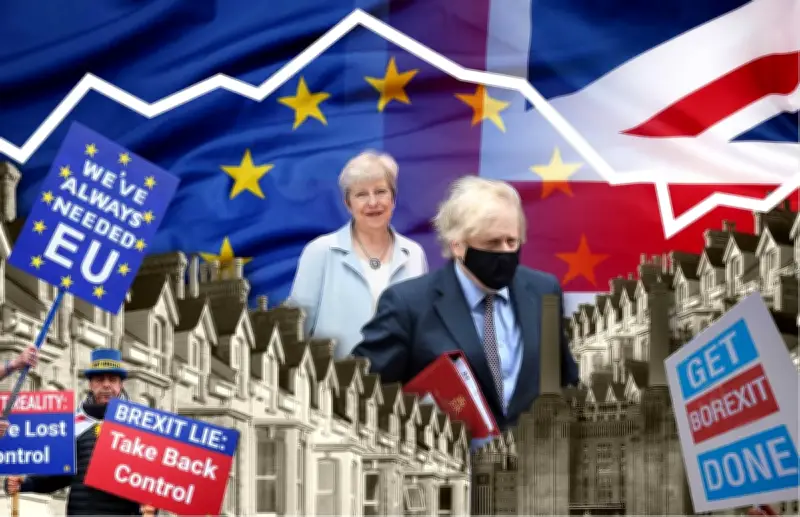
Ten years ago, the Brexit referendum marked a turning point for London's property market. After a decade of soaring prices, the capital saw a dramatic slowdown. But was Brexit the sole cause? Experts weigh in on the complex factors that reshaped the landscape.
The Brexit Shock
From 2006 to 2016, London house prices surged 92%, far outpacing the national average of 29%. The 2016 vote triggered immediate uncertainty. Savills research shows annual price growth dropped from 15% in March 2016 to a 3% decline by May 2019. Lucian Cook of Savills notes, "Political turmoil before and after the vote dragged on buyer confidence, especially in cosmopolitan London." Buyers adopted a wait-and-see approach, fearing job security in the City.
Stagnation and Supply Chain Woes
Tom Bill of Knight Frank highlights a period of stagnation from 2017 to 2019 under Theresa May's government. Brexit also disrupted supply chains and labor, reducing construction worker availability. By 2018, new home starts in London began a downward trend that persists today.
Compounding Crises
Jennet Siebrits of Ripley describes Brexit as a "slow puncture." A brief recovery after Boris Johnson's 2019 election win was cut short by the pandemic. Despite a stamp duty holiday, inner London saw less activity as buyers sought space elsewhere. Since the pandemic, London has been the worst-performing UK region for price growth, with three separate price dips versus one nationally. Siebrits argues, "Covid, furlough, inflation, interest rate rises, and the cost-of-living crisis were far more damaging."
Grenfell's Legacy
The 2017 Grenfell Tower tragedy shifted demand away from flats, previously a market driver. New fire safety regulations slowed home delivery and diverted funds from social housing. First-time buyers turned away from high-rise blocks, leading some developers to halt construction.
Inevitable Correction
Post-2008 recovery was fueled by quantitative easing and low interest rates, inflating prices. By 2014, annual price growth hit 20.6%. Jon Byers of Anderson Rose recalls a Thameside apartment selling for £600,000 in 2005, rising to £1.35 million by 2016, then dropping to £800,000 today. Government tax hikes on overseas buyers and landlords aimed to cool the market but also hampered downsizers.
Rental Market Strain
Rents fell post-Brexit and during the pandemic but rebounded sharply, rising 42% over ten years. Increased regulation and taxation on landlords reduced rental supply, exacerbating the housing crisis.
Inner vs Outer London
Since Brexit, demand shifted from central to outer boroughs. Kensington and Chelsea saw prices fall 12% in the decade after Brexit, while Waltham Forest rose 24%. Top performers include Barking & Dagenham (32%), Redbridge (31%), and Havering (31%).
London's Resilience
Despite six prime ministers, two wars, inflation spikes, and lockdowns, London retains its appeal. The Elizabeth line, Battersea Power Station, and Euro 2028 preparations signal renewal. Cook concludes, "London's access to Europe, language, culture, and education make it resilient." However, unaffordable housing threatens growth, with graduates choosing other cities and international workers hesitating.




