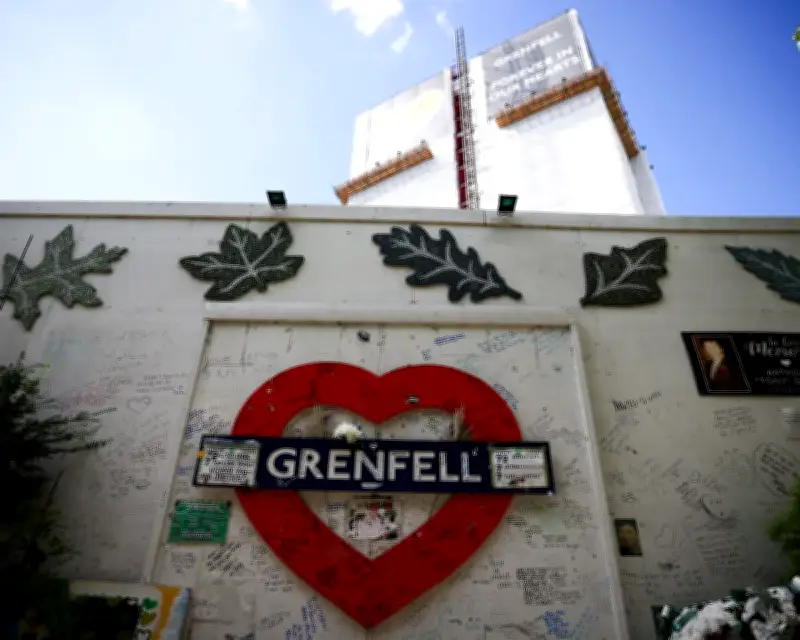
Arconic, the company behind Grenfell Tower's flammable cladding, paid more compensation to its shareholders than to victims of the disaster, an investigation has found. The company paid $74m (£54.7m) to shareholders for economic loss after the blaze, but only $43m (£31.8m) to the estates of victims and survivors after a lengthy legal battle. Across both payouts, all but $2m was covered by Arconic's insurers.
Report highlights corporate accountability failure
The findings are part of a new report by thinktank Common Wealth and financial investigations group FIND, which calls for stronger corporate accountability laws in England and Wales. The report said Arconic 'successfully avoided consequential accountability for its role in the fire through a series of ordinary business practices.'
Grenfell United, which represents the bereaved and survivors, said the investigation showed how 'corporate structures and legal systems have allowed those responsible to move on while our community continues to live with the consequences.' They added: 'Grenfell was not just a tragedy – it was a preventable disaster. We hope these findings help drive the legal and political changes needed to ensure no company can evade responsibility in this way again.'
Arconic's role in the fire
A total of 72 people, including 18 children, died in the fire in June 2017. Arconic sold Reynobond PE, the flammable aluminium composite material used to clad the tower. The inquiry found the company 'deliberately and dishonestly concealed from the market' the product's true danger. Arconic has repeatedly denied wrongdoing, and a criminal investigation by the Metropolitan police has yet to bring charges.
The report revealed that Reynobond PE used on Grenfell made up less than 1% of annual Reynobond sales at the time, and there was no evidence Arconic has tried to trace the rest of the product it sold. It had been selling Reynobond globally for at least 20 years before the fire, and previously said it had sold 12.75m square metres in total. The report urged Arconic to publicly reveal where the rest of the material had been sold and said it should be debarred from public contracts in England until it does so.
Calls for legal reform
Common Wealth researcher and report author Leela Jadhav said the findings 'outline a near-total failure of legal mechanisms to hold corporations accountable.' The report called for stronger laws in England to punish corporate misconduct, including making punitive damages available in cases where corporate illegality is implicated in death. Courts should be given the power to direct a portion of shareholder settlement recoveries to victim funds, and insurance companies should conduct human rights and environmental due diligence.
The UK government has committed a maximum of £5.1bn to cladding removal, with £600m of public money in an ACM Cladding Remediation Fund. The report said 'an order of punitive damages against Arconic could cover these expenses, at no public cost.' Arconic declined to comment.