
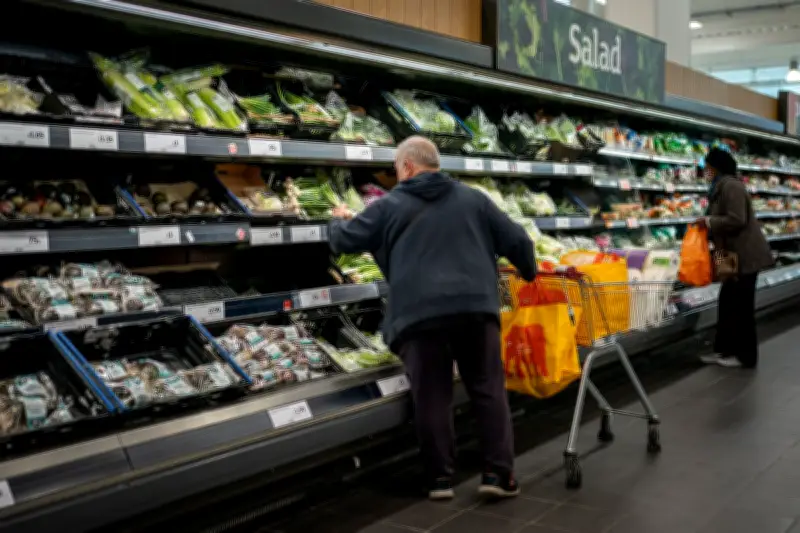
Food inflation may not reach the worst-case scenario but will extend into 2028, far longer than expected, industry leaders have said.
The latest predictions suggest households with children would need to find around £203 extra for food and drink this year, as well as another £207 for next year compared with current prices, the Institute of Grocery Distribution (IGD) said.
In March, the IGD offered “moderate” and “severe” food inflation scenarios based on the price of energy, which is involved at every stage of food production and has a direct impact on inflation. The latter suggested a food inflation peak of 8%, but the IGD said energy prices were more moderate than forecast, although the impact would last for longer.
The IGD is now forecasting food inflation to peak in the second half of this year, averaging 3.7% to 4.7% across the 12 months. It warned that despite a peace deal having been announced by the US and Iran, the impact on food inflation was still feeding through with a time lag, meaning geopolitical, energy and supply chain pressures were overlapping each other.
As a result, there would be sustained margin pressure for food businesses and ongoing uncertainty for shoppers, the group said. It expected food inflation to average 3.2% to 4.2% next year, and to average 2.3% to 3.3% in the first half of 2028.
The figures follow a sustained rise in prices that began in 2021, with the IGD suggesting that the retail cost of food was likely to be up by more than 40% on pre-Covid levels. The IGD’s Shopper Confidence Index remained “subdued” at minus two in May, with 94% of consumers worried about food prices and 86% concerned about energy bills.
Food price concerns reached their highest level for three years, with more shoppers worried about the cost of groceries now than during the height of the cost-of-living challenges.
IGD chief economist James Walton said: “The impact of geopolitical conflict usually takes time to filter through to raised food prices and therefore, despite the peace deal announced by the US, we expect food inflation to peak at 5.5% due to the disruption already experienced.
“Energy, labour and policy costs are continuing to build gradually, with many becoming structural rather than easing quickly, as well as climate risks which can affect supply. This is keeping sustained upward pressure on prices, which is expected to continue into 2028.
“While inflation may not peak as high as the most severe scenario, there is little room for relief as prolonged pressure will continue to weigh on both industry and household budgets, with an extra £203 to find this year for households with children.
“The businesses that pull ahead in this environment will be the ones building resilience and making sharper choices while uncertainty is still unfolding.”




