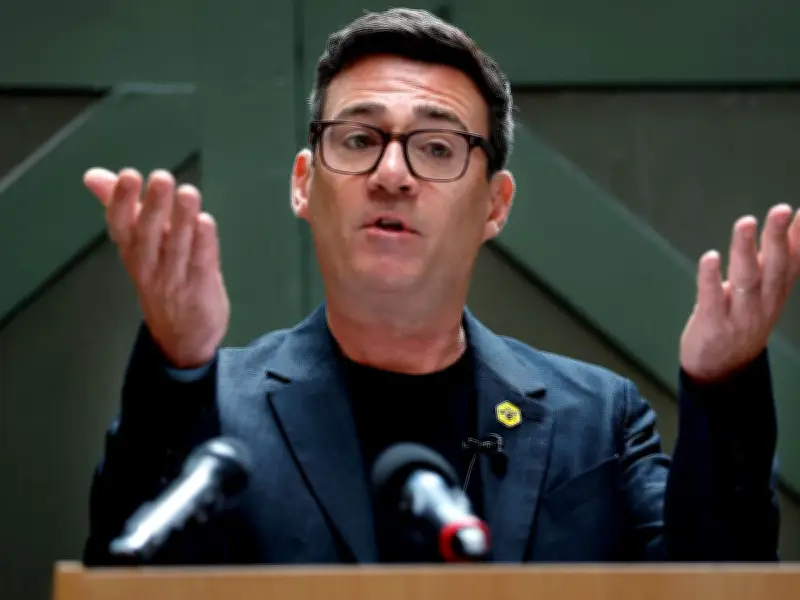
Andy Burnham has committed to the biggest council house building programme since the post-war period if he becomes the next Prime Minister. The MP for Makerfield made the announcement in a speech on Monday to party members and Labour officials at the People’s History Museum in Manchester.
Council Homes as a Foundation for Aspiration
"When I grew up in the 70s… There were two things that were the foundation of working class aspiration: a council home, a secure home, was the foundation for everything," he told the audience. "And then a good, technical education. But those things have been taken away in the decades since."
Burnham argued that focusing on council homes again and building in all parts of the country would represent a decisive shift to a more preventative, productive state. "If you don’t give people a good home, what chance have they got?" he added. "The housing crisis has had a ruinous impact on public finances."

Radical Devolution and a 'No 10 in the North'
In a radical plan to shift decision-making power away from Whitehall, Burnham made the biggest pledge to transfer authority to England’s regions in modern times. The former mayor of Greater Manchester argued that there had been a decade of "political turbulence since Brexit", as well as 20 years of a fall in living standards since the 2008 financial crash, adding: "Westminster hasn’t been working for people and it hasn’t been working for a very long time. In fact, it is broken. And, as a result, the country isn’t where it should be."
Central to his vision is a "No 10 in the North", which will be "the nerve centre for a rewired Britain." He explained: "It will be the conduit through which we redistribute power and resources across the UK. It will coordinate all parts of government, at national and local level, to agree a long-term economic strategy and help all places set new growth ambitions."
Burnham said Whitehall will need to "get behind this", adding: "And let me say this very directly: the days of Whitehall fighting the devolution of power into the regions and nations are over, for good. I have had 10 years of fighting the Whitehall machine – blocking this place’s progress – the progress of people here, and I am simply not prepared to accept the same for any area coming after Greater Manchester. The whole of Whitehall will now be required to get behind our places and work together with them to make quicker, more joined-up decisions." This, he continued, will "give Britain the circuit-breaker it needs."
Economic Reform and Reindustrialisation
This decade of reform, he said, will help raise Britain’s living standards through reindustrialisation and a reform of essential utilities. "We will consolidate public and private investment at a place-based level and help all areas establish Good Growth Funds, as we have done here in Greater Manchester," he continued. "We are such an inventive country and, going forward, we can be the world’s leading innovation nation. This is the key to higher growth and I want more world-beating British manufacturers and service providers at the frontier of new technology and exporting to the world."
He also called for "good growth in every British postcode", adding: "What a sea change that would be in the way the UK government thinks about our own country."
Education Overhaul and Mental Health Support
Burnham also set out his vision for a major reform to the education system for young people, so that it is no longer overly focused on the university route. "The days of a school system configured entirely around the university route will be brought to an end. University is great for those who want it, but when are we going to focus on the life chances of those kids who want something different?" he said. "People have argued for many years for an education system based on parity between academic and technical and that is what we will build, giving every young person growing up here a clear path into a reindustrialised Britain."

He also said young people would be offered mental health support in workplaces. Burnham's education shake-up was a response to a report by former health secretary Alan Milburn, who warned a "whole system failure" has led nearly one in seven of the UK's 16 to 24-year-olds to become NEETs – meaning they are not in employment, education or training. In his report in May, Milburn stated that lack of work experience is "the single most-cited barrier to work amongst young people."
Welfare and Economic Breathing Space
Burnham also pledged to "reduce the welfare bill in a way that is fair and lasting and helps people move forward." He added: "I know people can’t wait forever for change. I heard on doorsteps in Makerfield how people need a bit extra now to help with rising costs. I will do my very best to deliver it and, whilst not taking risks with the public finances, will seek to give Britain some breathing space as soon as I can."
A Call for Hope and Change
Claiming that people "need hope", he made a reference to the Peterloo Massacre in 1819, which was a catalyst for democratic reform in Britain. "Imagine what things could be like if we succeed. Imagine what it would feel like to live in a country wired to work for ordinary people rather than against them," Burnham said, before closing the speech with: "Well imagine no more. Let’s make it happen. People need hope."
Nominations for the Labour leadership close on July 16. If Andy Burnham is the only candidate he will be formally declared the Labour leader the following day, and Prime Minister on July 20.