
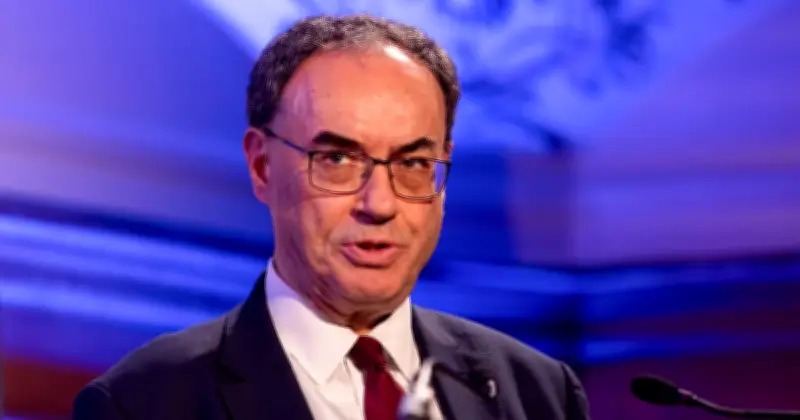
The Bank of England is preparing to convene on Thursday for a pivotal decision regarding UK interest rates, amid global uncertainties linked to Iran and domestic political shifts surrounding Sir Keir Starmer's leadership. The meeting occurs just hours before a by-election in Makerfield, where Andy Burnham could potentially reclaim a parliamentary seat, a move anticipated to challenge Starmer for the Labour leadership.
Burnham has previously advocated for the UK government to reduce its reliance on bond markets, a stance that has unsettled investors concerned about the implications for bonds, government debt, and the broader UK economy under a possible Burnham administration.
Interest Rate Decision Expected to Hold Steady
Against this backdrop, economists forecast that Threadneedle Street will maintain borrowing costs at 3.75%, following better-than-expected inflation figures and the prospect of a US-Iran peace deal that diminishes the likelihood of a rate hike.
Fresh inflation data has reinforced expectations that policymakers will not need to increase interest rates at Thursday's announcement, a decision critical to all facets of the UK economy.
Official statistics revealed that the Consumer Prices Index (CPI) inflation rate remained unchanged at 2.8% in May, matching April's figure. This result fell below economists' forecasts, which had anticipated a rise to 3%.
Although inflation remains above the Bank's 2% target, the absence of an increase in May offers some reassurance to the Monetary Policy Committee (MPC), which uses interest rates as a tool to control inflation.
Global Factors Influencing the Decision
Additionally, the forthcoming decision follows US President Donald Trump's announcement that a peace agreement with Iran has been reached, scheduled for signing on Friday. The deal is expected to reopen the Strait of Hormuz, a crucial waterway for global oil supplies.
Trump indicated that the agreement would allow oil to flow freely again through the strait, which normally carries a fifth of the world's oil and gas. While the agreement has not yet been formally signed, the prospect has already helped push oil prices back toward levels seen before the Middle East conflict erupted.
Expert Analysis
Victoria Scholar, head of investment at Interactive Investor, stated that the softer-than-expected inflation data strengthens the case for the Bank of England to keep interest rates on hold on Thursday. However, she cautioned that the Bank's current strategy is to buy time to assess the extent of inflation pass-through from this year's Iran war energy shock.
Despite falling oil prices and the US-Iran peace deal, UK inflation is expected to rise over the summer following the next Ofgem price cap in July, which could mark peak inflation. Scholar described today's data as "the calm before the storm."
UK inflation is still broadly anticipated to accelerate in the coming months as the repercussions of the Iran war continue to ripple through the economy. The Bank will closely monitor the cost of living, with lingering questions about whether policymakers may be forced to consider raising interest rates later this year.
Last week, the European Central Bank raised its interest rate for the first time in nearly three years, acknowledging that the conflict was generating inflationary pressures. The US Federal Reserve is also set to announce its next interest rate decision on Wednesday evening and is widely expected to hold rates steady.




