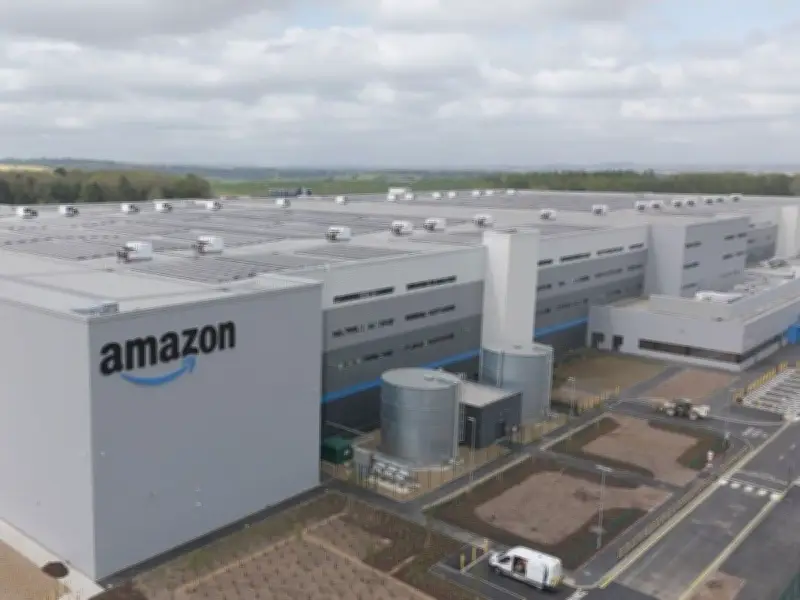
Amazon's UK footprint has expanded to 20 million square feet with the opening of its largest fulfilment centre near Northampton, a size that dwarfs many high streets and shopping centres. The new warehouse, located beside the M1, is the 32nd such facility in the UK and underscores the e-commerce giant's growing dominance as traditional retail continues to struggle.
Impact on High Streets and Jobs
The expansion comes amid a long-term decline in Britain's high streets, with around 300,000 retail jobs lost over the past 15 years. At the turn of the century, retail accounted for nearly 20% of all British jobs; today, that figure has fallen to roughly 13%. Warrington, a historic market town and home to a 250,000 square foot Amazon centre opened in 2017, is among the worst-hit high streets relative to its population size. Other affected locations include London, Ellesmere Port, and Devon.
Small business owners attribute their struggles to Amazon's ubiquity. Erkan Colak, 52, owner of Avocado in Warrington Market, told the ECHO in 2025 that closure was imminent due to high rent and overheads, adding that people are buying "more online" especially with offers of "guarantees and free returns." Warrington Council's 2020 Town Centre Masterplan acknowledged the decline in traditional shops was partly due to "internet retailing," calling for creativity and alternative uses to reinvigorate these areas.
Competition from Low-Cost Platforms
Amazon is not the only culprit; low-cost platforms like Shein and Temu also contribute. Michelle Rutter, 44, owner of Frock Off in Warrington's Hive, told the ECHO last year: "It's very difficult with overheads and low footfall. I don't think I'll be here much longer. Shein has taken over boutiques and there's no way to compete." She also cited the concentration of shops in large developments like the Trafford Centre as a factor. However, Amazon's new 2.2 million square foot fulfilment centre alone is comparable in total floor space to the Trafford Centre.
Amazon's Defense
Amazon insists its growth is not at the expense of the high street. A spokesperson called the contrast with physical retailers "simplistic," arguing it ignores long-term trends like rising operating costs and changing consumer behaviour. "Retail is multi-channel. It's not about online versus offline, customers want both, and so do retailers. Amazon is delivering jobs for the UK. We employ 75,000 people, are one of the country's largest employers, and support thousands of UK small businesses to grow by selling in our store," the spokesperson said.
Criticism Over Taxes and Working Conditions
Beyond high street impact, Amazon faces challenges from union leaders over working conditions and tax contributions. Rachel Fagan, GMB organiser, said: "Workers in Amazon warehouses generate enormous wealth every single day. Yet billions in UK sales and hundreds of millions in profit result in a relatively low corporation tax bill. At a time when public services are under huge pressure, it is only fair that multinational corporations like Amazon make a proper contribution." Amazon said it paid £1.3 billion in UK tax last year and offered to help the government tackle VAT evasion in online sales.
Rosie Venner, director of movement building at JustMoney, added: "Amazon's growth has contributed to the decline of local businesses and high street jobs because of the ease and convenience of its business model. Wealth is being extracted from local economies. Combined with concerns about market dominance and environmental impact, this raises questions about whether Amazon's overall economic contribution is as positive as it appears."