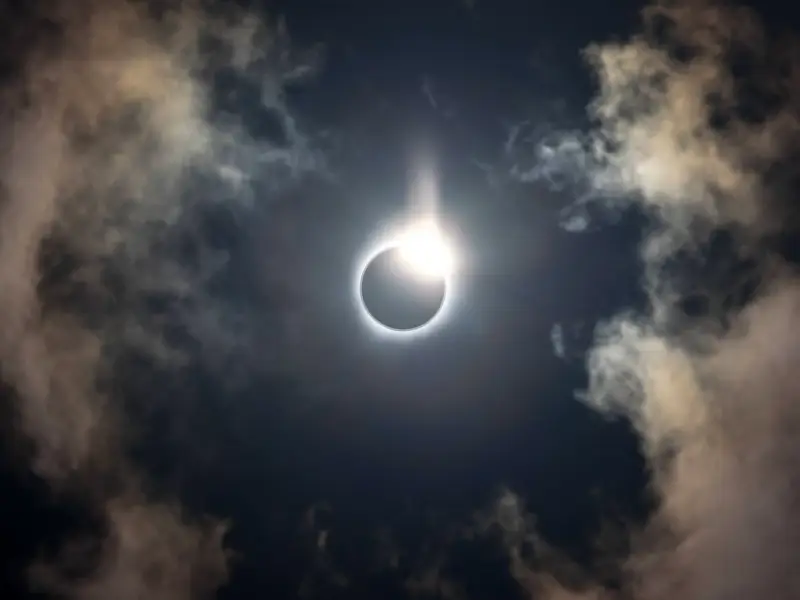
A deep partial solar eclipse is set to grace UK skies on 12 August, hailed as the finest such event in nearly three decades. The moon will cover up to 90% of the sun, making it the most impressive eclipse visible from Britain since the total eclipse of August 1999.
When and where to look
The eclipse will begin around 6pm BST, reaching its peak at about 7pm BST, and will conclude by roughly 8pm BST. Exact timings will vary slightly depending on location. Because the event occurs in the evening, the sun will be low in the western sky, so an unobstructed view towards the west is essential.
Safety first
Certified solar eclipse glasses are mandatory for the entire eclipse. Ordinary sunglasses do not provide adequate protection. Glasses must carry the safety certification 'ISO 12312-2' or 'ISO 12312-2:2015'. Old glasses should be checked for scratches or creases before reuse. Even when 90% of the sun is covered, the remaining light can cause permanent eye damage.
Effects and alternatives
Royal Museums Greenwich notes that the partial eclipse will cause a noticeable drop in temperature and a dimming of light, but the sky will not go completely dark—it will feel more like a cloudy day or dusk. Those unable to find a viewing spot can watch the Royal Observatory's free live stream from London on 12 August. Travellers in Greenland, Iceland or northern Spain will experience a total eclipse at that time. The next total eclipse over the UK is not expected until 2090.