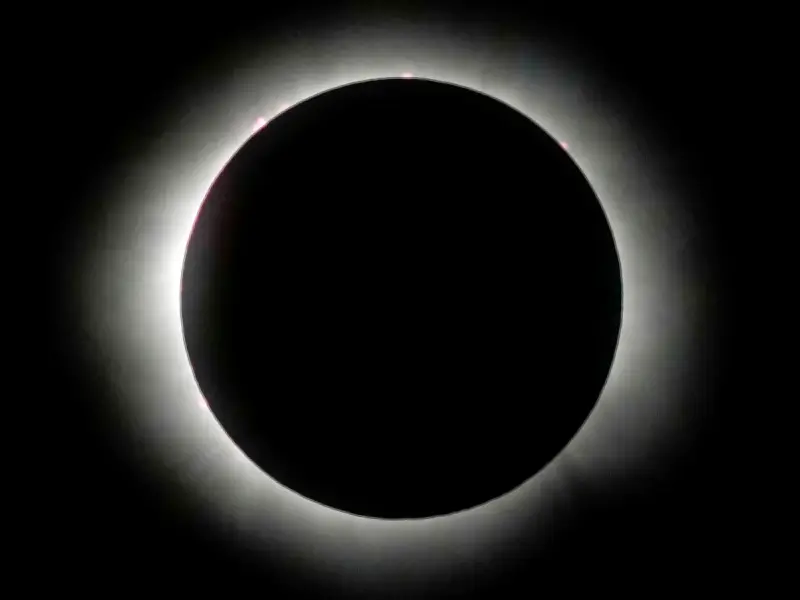
The UK Health Security Agency (UKHSA) has issued a safety warning ahead of a partial solar eclipse next week. On Wednesday, August 12, the moon will cover 90% of the sun, and people across Wales are expected to gather in the best spots to watch.
This eclipse will be the most coverage seen from the UK since 1999, and the next total solar eclipse visible from Wales won't occur until 2090.
Safety Warning Even in Cloudy Conditions
The UKHSA warned that people should take precautions even if it's cloudy, because "cloud cover does not make it safe to look at the sun." Many people mistakenly believe they can look directly at the sun without eye protection during an eclipse, as it appears dimmer. The reduced brightness can override the body's natural reflex to look away, allowing intense sunlight to reach and damage the retina.
Damage to the eyes happens without causing any pain, so you may not realize harm is occurring until it's too late. Following the 1999 total solar eclipse, the Royal College of Ophthalmologists reported around 70 cases of people experiencing vision problems after watching the eclipse, with around 40% having looked at it for less than a minute.
Proper Eye Protection Is Essential
Ordinary sunglasses do not offer enough protection for viewing a solar eclipse, as they still allow harmful solar radiation to reach the retina. The UKHSA advised: "Never use regular sunglasses to look at the sun during an eclipse. If you want to use eclipse glasses or handheld solar viewers, make sure they are genuine eclipse glasses with specially designed filters that meet the international safety standard ISO 12312-2:2015(E). Genuine eclipse glasses are available from reputable retailers."
Be cautious of products sold online that may not meet this requirement. If you're unsure whether a product is certified, don't use it. Don't use eclipse glasses if the lenses are scratched, torn, or damaged.
Safe Viewing Alternatives
There are other ways to watch the eclipse safely without any specialist equipment. Safe options include a pinhole viewer, which you can easily make at home; viewing the Sun's image projected through a colander or the gaps between tree leaves; and projecting the Sun's image onto a sheet of paper using a simple pinhole projector.
In Wales, the partial solar eclipse will be visible from 6.13pm until 8.06pm.