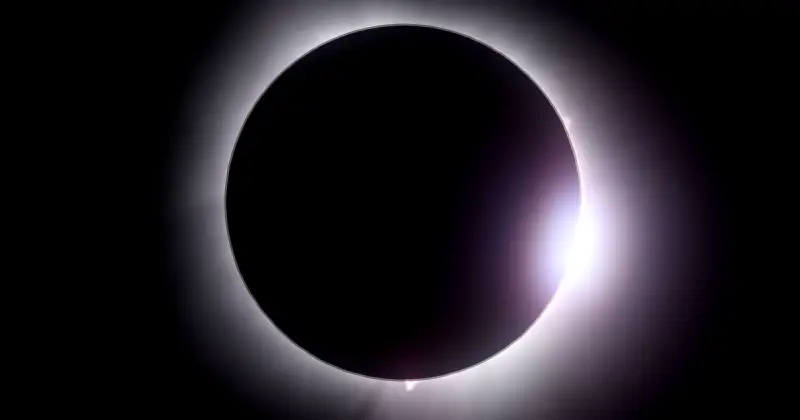
The UK is set to witness the most significant solar eclipse since 1999 on August 12, with up to 96% of the Sun obscured by the Moon. The Royal Museum Greenwich describes it as "the best solar eclipse so far this century."
Timing and Visibility
The partial eclipse will be visible across the UK and Ireland, starting around 6:17pm. The peak, when approximately 90% coverage is reached, occurs at 7:12pm. The entire event is expected to last about two hours.
Astronomers note that the new Moon and Sun will gradually converge in the sky throughout the late afternoon, making the western horizon the best viewing direction.
Safety and Viewing Tips
To watch safely, Royal Museums Greenwich advises using glasses with safety certification 'ISO 12312-2' or 'ISO 12312-2:2015'. Old glasses may not be safe, especially if scratched or creased.
Daisy Dobrijevic, Skywatching Editor at Space.com, emphasizes: "Remember, you'll need certified solar eclipse glasses for the entire eclipse. It's never safe to look directly at the sun without proper eye protection. Hopefully, we'll all get clear skies."
Impact and Global Context
While the UK experiences a partial eclipse, regions like Greenland, Iceland, and northern Spain will enjoy a full eclipse. The Royal Museum Greenwich explains that at maximum coverage, there will be noticeable changes in temperature and light, but the sky won't turn dark—it will resemble a cloudy day or dusk.
The last total eclipse visible in the UK was in August 1999, affecting only Cornwall and parts of Devon. The next total eclipse for the UK is expected in 2090.
For those unable to view directly, the Royal Observatory will stream the eclipse live from London on August 12.